

Avoid Red Wine Paired With This Pungent Cheese — You'll Be Left With A Rancid Taste
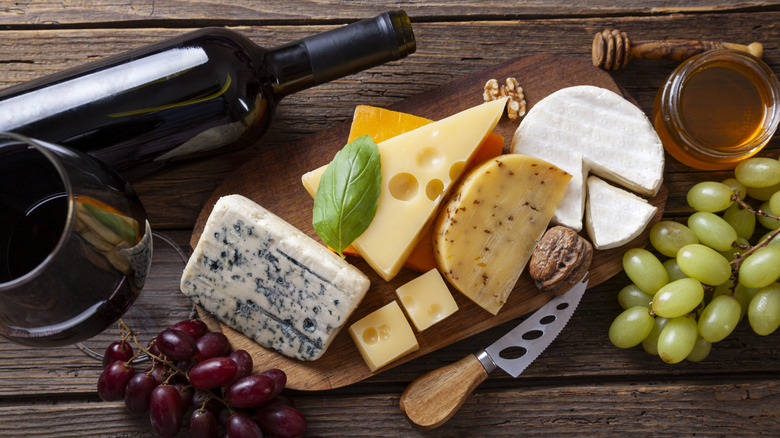
Wine and cheese are a match made in heaven — until you pair the wrong wine with the wrong cheese and wind up with a lingering, terrible taste in your mouth. There's no simple answer if you want to pick only one wine while building the perfect charcuterie board, but what you really need to know is that one combination ruins your pairings in a hurry: red wine with blue cheese.
While you want a perfect balance of flavors that complement each other, pairing a dry red wine with blue cheese usually goes south; some have described the resulting taste as rancid aluminum. Red wine is usually heavy on tannins (bitter compounds found in grapes), and blue cheeses are usually made with a mold called Penicillium (it's what creates those blue or green veins marbled throughout the cheese). That mold is also responsible for the distinct flavor of blue cheese by creating something called lipase enzymes. The problem is the combination of tannins and the mold in blue cheese, which can turn the flavor metallic and unpleasant. In other words, while there are wines for stinky cheeses, a dry red heavy with tannins is simply not it.
There is a time and place for blue cheese in a wine pairing
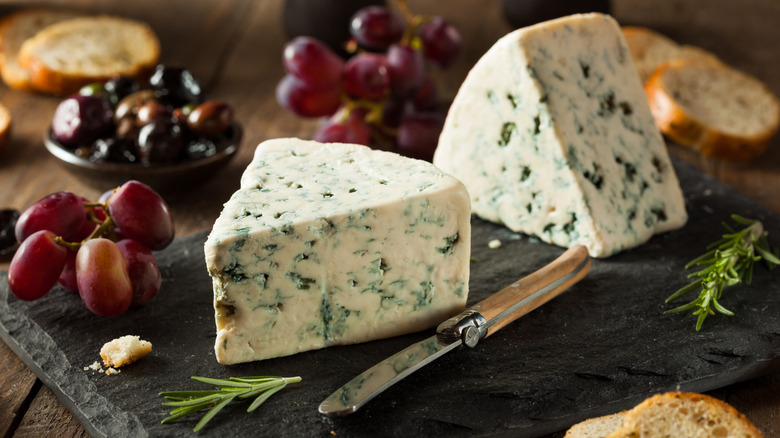
With all that said, don't despair if you love wine and love a nice, stinky blue cheese. There's a blue cheese for everyone — you just have to find the right wine to pair it with. A great option is often a sweet dessert wine, such as a vintage white Port or a Sauternes. The sweetness and complexity of these wines balances the strong, salty richness of the cheese for a pairing that contrasts and complements in just the right amounts. If you aren't a sweet wine type of person, find yourself a fruity chardonnay or a cabernet. They provide a decent balance to the bold flavors of a sheep- or cow-milk blue cheese.
Of course, no one should fault you for enjoying whatever combination you like, even if the science doesn't quite support it. Try your hand at different pairings to learn for yourself what suits your palate best. After all, you get to try more wines and cheeses that way — but you've been warned! If you're ever in doubt, a good sommelier should be happy to share their recommendations, help you figure out what you might like, and point you in the direction of a perfect pairing for you.