

What Happens To Unsold Food At Buc-Ee's?
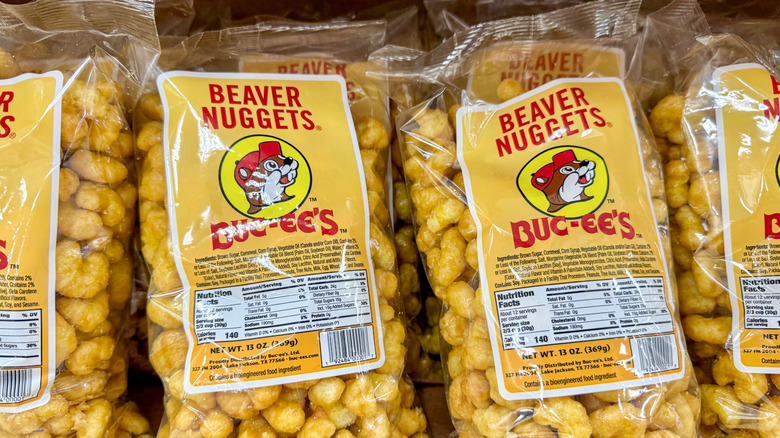
There's no shortage of people who love Buc-ee's: For some, the gas station chain with its sweet and savory kolaches and aisles of fudge and jerky is more of a destination than a necessary pit-stop on a road trip. Yet there's a less-flattering side to the parade of fresh brisket sandwiches, and that's the company's food waste policies (or lack thereof).
Before we get into the specifics, it's important to note that Buc-ee's as a company is fairly tight-lipped about its food waste practices. Unlike stores like Costco, Buc-ee's doesn't have any sort of webpage that spells out its approach to food waste, and doesn't appear to have made any public statements about it. So, the company effectively has no policies in place for what it does with leftover food (or at least none that are known to the general public).
In practice, this seems to mean that Buc-ee's throws food away. There are anecdotal stories that appear to back this up, although they tend to be posted on platforms like Reddit and are hard to completely verify. One notorious post claiming to be from a customer detailed staff at one Buc-ee's location apparently throwing around 50 sandwiches in the trash, and responses ranged from anger at Buc-ee's to suggestions that people email food banks and prod them to reach out to the chain. Another comment appearing to come from an employee noted that they would make 150 sandwiches on one shift and around 95 of those would ultimately be thrown away.
Is there a good reason for this?
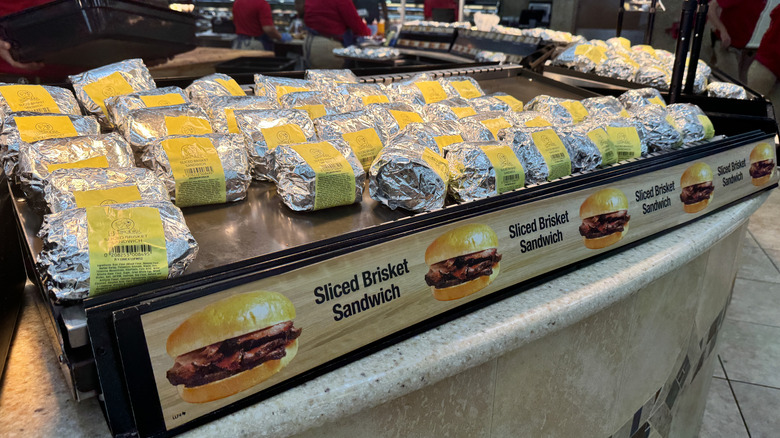
There are enough other stories out there to indicate that Buc-ee's has a food waste problem: One alleges that once 11 a.m. hits, Buc-ee's locations throw away breakfast food like kolaches. Another claim is that once aesthetic defects occur (for example, bananas in the chain's banana pudding turning slightly brown), entire batches of that product are also dumped into the trash.
Some argue that Buc-ee's throws away food because it worries about being held liable if somebody were to eat it and become sick. Yet such arguments may not hold up, as there have been laws in place since at least 1996 stipulating that companies can't be held liable for this kind of situation as long as they meet certain base requirements like being appropriately labeled. At least in the case of hot sandwiches like brisket, there may be some validity, as if the sandwiches fall below 135 degrees Fahrenheit for too long, they could be considered unsafe to eat and therefore donating them would be off the table.
However, there may also be an unwillingness on Buc-ee's part to donate at all: Commenters have also claimed that the chain shreds old merchandise (such as clothing) before throwing it away to ensure that nobody else can salvage it. Buc-ee's is hardly the only chain to receive such criticism — for example, Dunkin' has been called out for throwing away food — but by not saying anything publicly, it appears Buc-ee's may not be changing anytime soon.