

The Key Differences Between Purified Water And Spring Water

If you've ever noticed that some brands of bottled water taste different from the others, you're not imagining things. Bottled water companies not only filter and process things differently, they also acquire the water from various sources, all of which can affect the flavor of the H2O in the bottle. Some of these differences are reflected on the water's label, including whether it's "purified" or "spring" water. Though these descriptors may seem like little more than a marketing ploy, there actually is a distinct difference between spring and purified water.
Spring water comes from an underground formation from which water naturally "springs" up to the earth's surface. It can be collected at the spring or through a borehole that taps into the underground source. These underground aquifers usually contain rock formations that deposit minerals into the water as it flows, such as magnesium, calcium, and potassium, all of which give spring water its distinctive flavor. Spring water may be treated to make it safe for consumption, but its defining characteristic is its source.
Conversely, purified water can come from aquifers, but also frequently comes from municipal water reserves or other bodies of water, giving the water a more neutral flavor. Filtration methods vary, but many processes can remove contaminants as well as many dissolved solids, including naturally occurring minerals. In fact, some people believe it's best to avoid purified water because they believe the minerals provide health benefits.
Which water wets your whistle better?
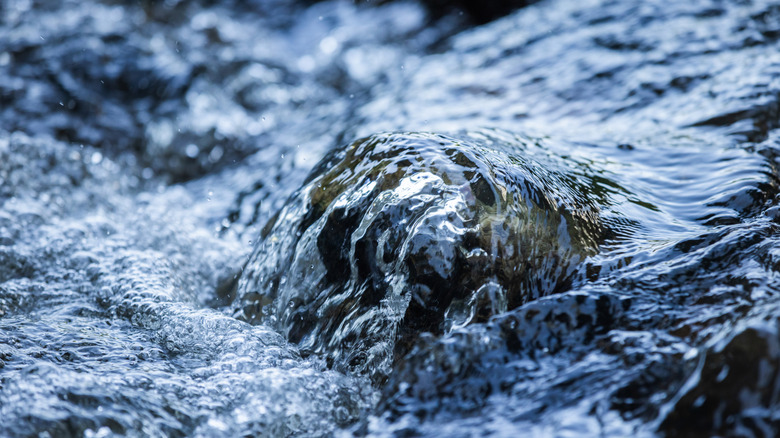
When choosing between spring water and purified water, there are several factors to consider, the most prominent one being taste. Depending on its mineral composition, spring water may have a more distinctive flavor than purified water. While minerals like potassium, magnesium, and calcium may have some health benefits, concentration levels vary widely among sources and brands, meaning spring water isn't a replacement for obtaining these minerals via food and electrolyte-infused beverages.
Purified water has very little distinct flavor, making it the more appealing choice for making things like coffee, tea, lemonade, and spa waters infused with fruit. Since there's no underlying flavor to detract from these infusions and blends, the end result will taste cleaner and more concentrated. For instance, if you're using spring water to make lemonade versus purified water, the minerals may alter the citrus flavor, while the purified water is more capable of showcasing it.
Spring water with a higher mineral content may also leave deposits behind, increasing how often you should be cleaning your coffee maker. Purified water generally contains fewer dissolved minerals, which can reduce scale buildup over time. Ultimately, choosing between spring and purified water depends on your personal preferences and how you plan to use it.