

How Often Should You Actually Be Cleaning Your Coffee Maker?
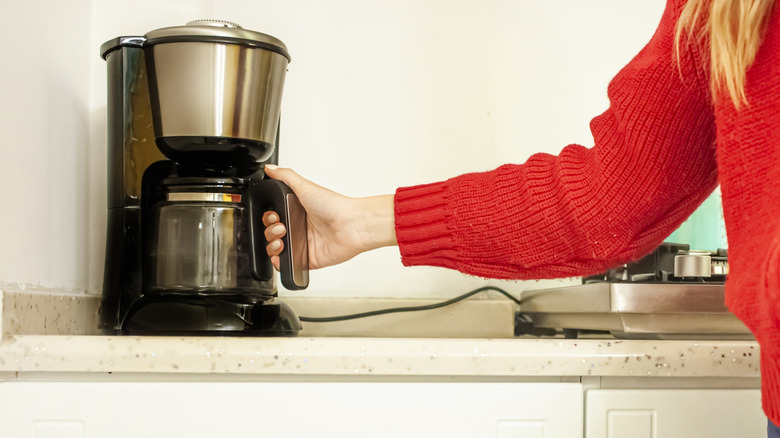
A good, old-fashioned drip coffee maker is a staple appliance in millions of homes throughout the United States. Whether displayed center stage in a beautiful homemade coffee bar stocked with flavored syrups or shoved into a convenient corner on your kitchen counter, many of us use our coffee makers daily. Of course, regular use can lead to grimy buildup that not only may lead to microbial growth, but ruin the taste of your daily cup of joe. This, then, begs the question: How often do these machines need to be cleaned?
Ideally, removable parts like the glass carafe, its lid, and the plastic filter basket inside the machine should be washed after each use. You can place them in the dishwasher (if labeled dishwasher safe) or wash with hot, soapy water in your sink, rinsing and drying thoroughly before brewing your next pot. This prevents mold and bacteria from taking hold, especially in the filter basket, which is typically housed in an enclosed space.
As for the machine itself, it's recommended that you run it through a cleaning cycle every 30 to 90 days, trending closer to a 30-day cycle if you use your coffee maker daily or have hard water (which is very common in the U.S.). One of the best ways to clean a drip coffee maker is to add a cleaning tab made for the purpose to the water reservoir, though diluted vinegar or mild dish soap will also get the job done. You can also consult your owner's manual to see what the manufacturer recommends for your machine.
Cleaning vs descaling for a better cup of java
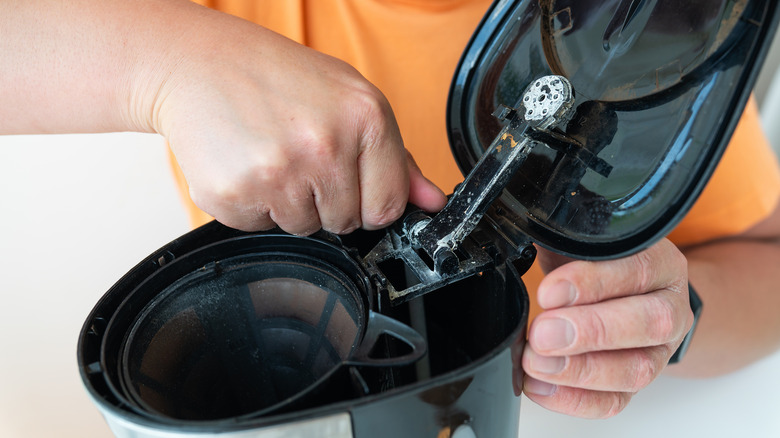
If you're unsure whether your machine needs to be cleaned, there are a few telltale signs to watch for. A dark film on the inside of your carafe indicates the presence of coffee residue where mold and bacteria can grow. This buildup inside both the machine and the carafe can also make coffee taste strangely musty or bitter. After scrubbing everything clean, it's a good idea to institute a cleaning schedule to ensure your coffee is always delicious and safe to drink.
If your machine is sparkly clean, but you notice your coffee is taking forever to brew or grounds are ending up in your carafe, it could be a sign your machine needs to be descaled. Most of us use ordinary tap water to brew coffee, which often contains magnesium and calcium. Over time, these minerals can build up and cause constricted flow points, resulting in slower brewing or an overflowing filter basket.
Though using a baking soda solution in your coffee maker can help clean oils and grime, you'll need to use white vinegar or a descaling solution made for coffee makers to remove mineral buildup. It's worth noting that descaling your coffee maker with white vinegar or commercial descaler also deep cleans the machine, so this also counts as your monthly cleaning. Use equal parts water and vinegar or dilute the descaling solution according to package instructions, and run your coffee maker as normal. Follow this up with several passes of plain water to thoroughly rinse all the flow points inside your appliance.