

Corned Beef And Cabbage Isn't An Irish Dinner — It Actually Originated In This American City
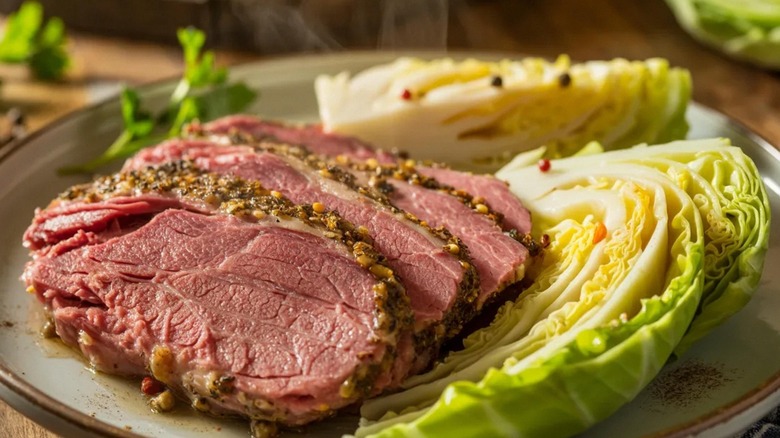
Corned beef and cabbage seems like a thoroughly Irish dish. After all, people eat it on the day we celebrate all things Emerald Isle, St. Patrick's Day, right? But once you start digging into the past, you'll find this dish may have some Irish roots, but corned beef and cabbage is an American invention. In fact, in Ireland the Irish don't typically eat corned beef and cabbage on St. Patrick's Day. They're more likely to eat bacon and cabbage, Ireland's national dish, since pork was the go-to protein in Ireland for centuries. Cabbage was also another important food since it's nutrient-dense and easy to grow there.
It was Irish Americans in New York City who made the switch to cheaper, more plentiful beef after settling in their new home following the Great Potato Famine of 1845 to 1849, which saw an influx of Irish immigration to the U.S. It's believed they eventually began buying corned beef from kosher Jewish butchers, who as fellow immigrants, lived in close proximity on Manhattan's Lower East Side. Besides being less expensive and easier to find than pork, corned beef was similar to the Irish bacon — the term "corned" originally referred simply to salt curing — from their homeland. Corned beef and cabbage on New Year's Day became popular among Irish Americans, too.
Corned beef's Irish and Jewish roots

Salt-curing meat has a long history in both Jewish and Irish cultures, so perhaps it makes sense that the two would come together in New York City to fashion a hybrid dish with beef replacing pork. In Ireland, the general populace used cattle as draft animals and for their milk, which made up a good part of their diet through the many dairy products cows produced. Beef was typically only eaten by Irish royalty who could afford to slaughter the animals. Although corned (salted) beef was being produced in large quantities in Ireland as early as the 1600s, following its full conquest by the English, it was almost exclusively for export. When the Irish arrived in the U.S., though, they found corned beef to be a cheap protein source.
Meanwhile, Jewish immigrants from Eastern Europe in New York City switched from dry salting to brining their beef, another ancient food preservation technique, in the late 1800s. Kosher butchers took tougher cuts of beef, typically brisket, and submerged them in a salt solution that included various spices, then boiled or steamed it. This produced tasty, juicy meat. While not all historians agree, many believe the Irish turned to their Jewish neighbors for this beef that they combined with their beloved cabbage for a new dish born in the melting pot of New York City.