

What Happens To Canned Soup Past The Best By Date?
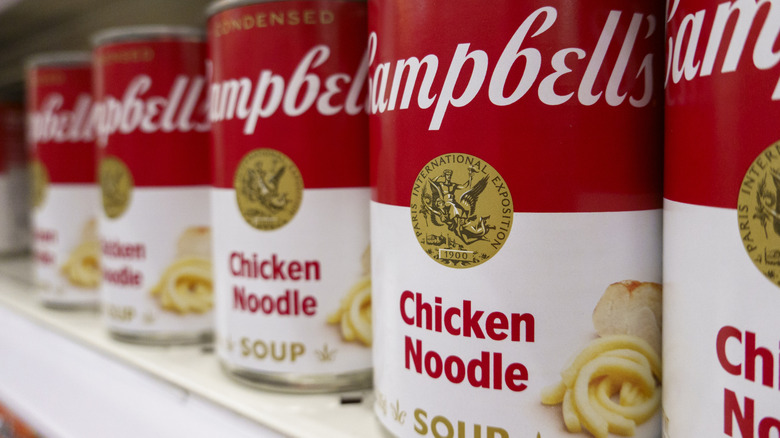
So you discovered a can of chicken noodle soup deep in your cupboard, and it's a few months past its best by date. Your instinct is probably to aim it straight for the trash, but that may be unnecessary. Best by or best before dates are not hard-and-fast boundaries for food safety (in fact, manufacturers tend to be overly cautious when determining these dates). In the case of canned food like soup, the USDA notes that these dates are more just guidelines for when the food will still be at peak quality. After the date has passed, the food is typically still completely safe, although it may not be as tasty — for example, the flavor or texture might not be ideal.
In the case of canned soup, nothing major will immediately happen to the food once that date passes. This is because of the way commercial canning functions: Canned soups are vacuum sealed and then heated until sterile, killing all microbes and stopping any new ones from getting in. That said, cans aren't infallible, so you won't want to keep canned soup around for decades. For best quality, the USDA recommends anywhere from two to five years for low acid canned goods (this covers most canned soups like cream of mushroom, vegetable, or beef broth) — that's two to five years total storage, not two to five years past the date. For high acid soups like tomato (or other acidic products like pickles), it's 12 to 18 months, as acid will degrade a can faster.
Keeping an eye out for spoilage
The best by date is not an indicator of safety, so if you're keeping canned soup in storage for long periods, it would be wise to know what an unsafe can of soup might look like. The big things you're looking for are damage to the can, as this can break the sterile seal, letting bacteria or other nasties in. Big dents in the can (say, a half-inch or more) are a red flag, particularly if they're around the seams of the can — even though you may not see soup leaking out, it's possible a dented can has breached its seal, meaning it's no longer safe to eat the food. Minor, superficial dents are not generally a big worry.
If a can is bulging or swelling, this means there's gas building up in the can, which could be from dangerous bacteria that cause botulism. If that's the case, throw it away immediately. The same goes for rusted canned soup: If you see any substantial rust that isn't just on the surface, the can is physically decaying, so it's possible there are microscopic holes that air and bacteria can get through into the can.
If the can seems fine but you're still a little unsure, open it up and pay attention as you do so. If there's a loud hiss sound or liquid that aggressively spurts out of the can, those are huge red flags that will warn you when canned good aren't edible anymore. These can be signs of potentially dangerous bacteria, so throw the it out. (That said, remember that cans are vacuum-sealed, so a small hiss of air when you open it is completely normal.) The same goes if there are unpleasant (particularly sour) smells or the soup looks off-color — you're better off discarding the can.