

Skip Scrambling: This Vintage Breakfast Tool Turns Eggs Gourmet

We may receive a commission on purchases made from links.
There's a reason that scrambling eggs is a timeworn method. It is quick, doesn't require much effort, and is almost foolproof, especially if you keep these scrambling secrets in mind. But, scrambling misses the mark on producing eggs that feel special. If you'd like to elevate your eggs to almost royal-feeling status without much more effort, why not try the vintage tool that is an egg coddler to coddle them.
Coddling eggs simply involves cooking them gently inside a vessel in simmering water on the stovetop. The preparation for coddled eggs is straightforward and similar to poaching, but while poaching sees the eggs cook directly in water, coddling requires sliding them into specially designed vessels called egg coddlers first. Coddling eggs is also easier than poaching, as you don't have to worry about all of the swirling, sliding, and timing. Each egg has its very own nest that is the coddler, and you can cook many at the same time, which makes coddling great for serving several people together. Plus, eating coddled eggs almost feels like you should be sitting on a throne. Egg coddlers are precious ceramic pots that you open like a present, revealing eggs that are silky in texture with jammy centers. It's enough to warrant a bit of morning giddiness.
Tips to make coddled eggs
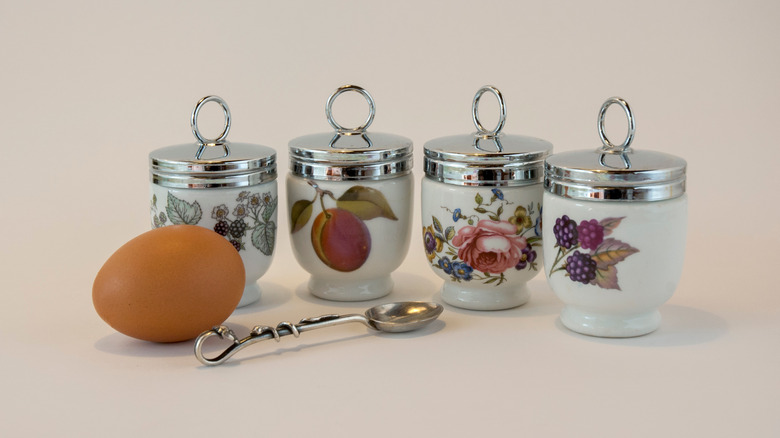
The only real limitation here is to get your hands on the actual egg coddlers. Some families have egg coddlers that have been passed down. They are historically made by famous china makers like Royal Worcester and were popular in Europe dating back to the 1800s. However, you can also buy cute ones online through Amazon, like these ceramic ones with a floral design by Xylarnoveth. Coddlers have screw-on lids that encase the contents and shouldn't be confused with eggcups that are used for serving boiled eggs. Once you have a coddler, the only real thing to remember is to butter it before adding the egg so that it doesn't stick to the vessel. Simmer the coddler in water (make sure that it is fully submerged in the water, lid included), and your egg should be ready in five or so minutes.
If you cannot find an egg coddler, you can Frenchify your eggs by making a slightly different variation called eggs en cocotte. Though both versions feature eggs cooked slowly in a vessel, eggs en cocotte are usually baked inside ramekins in a water bath in the oven, rather than in egg coddlers on the stovetop. For purists, using an egg coddler is the way to go as the diminutive vessel is intended to make eggs shine.
You can always add other ingredients that you'd use in scrambled eggs into the coddler along with the cracked egg, like bits of herbs or cheese. Or, you can simply cook it plain, unscrew the lid, and let your spoon drop in. Who knows, you might even start your own family tradition with egg coddlers that become treasured heirlooms. One thing is for sure, it's hard to believe how easily coddling can turn your eggs into such an elevated breakfast experience.