

Where Do Free-Range Eggs Actually Come From? The Meaning Behind The Label
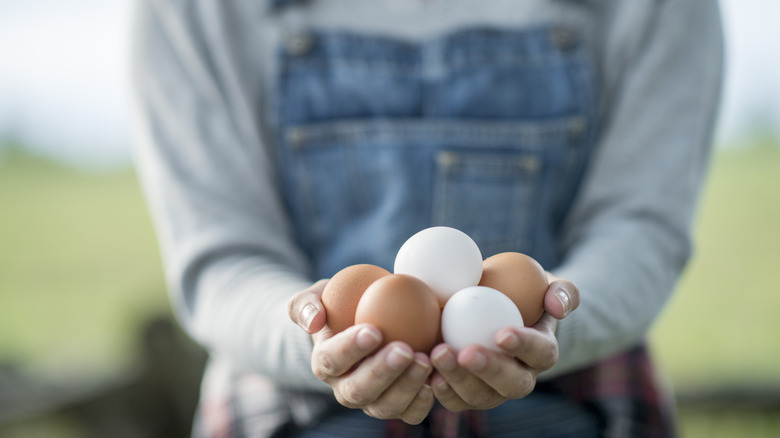
When you think of a "free-range" chicken, you're probably picturing a fluffy, feathered bird bopping around in a grassy field. If life were a fairy tale, then this would be true, but unfortunately, the free-range terminology isn't quite that dreamy. While free-range eggs do come from chickens that have access to the outdoors, there's virtually zero regulation on that outdoor space.
The U.S. Department of Agriculture's definition of free-range doesn't specify outdoor space requirements, and the hens are only required to have such access to outdoors during their laying cycles. The outdoor area itself doesn't actually need to be "free" — it can be a fenced-in or netted area. The hens' space needs to have certain amenities, such as scratch areas, nests, and places where the hens can perch, but the USDA does not specify that these need to be located outdoors. Free-range is not to be confused with cage-free; cage-free hens are not required to have any available outdoor space.
There are requirements for indoor spaces with free-range hens, too. The hens need to be protected from any predators fencing or netting, and the USDA uses specific wording about the available indoor space: The hens must "be able to move in a barn in a manner that promotes bird welfare." The downside is that there isn't an exact definition of what this means, so while the wording suggests the hens are well taken care of, it's hard to know if they truly have ample space to move around because the USDA doesn't give specific measurements for how much space is needed or for how many hens can occupy a space.
How to know you're buying free-range eggs
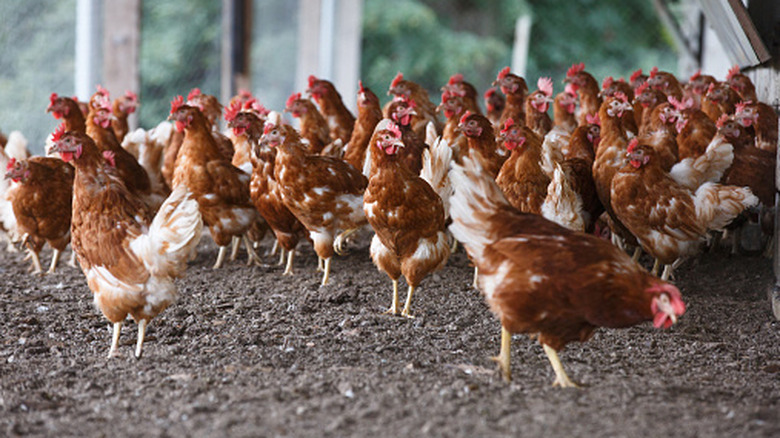
When it comes to buying free range eggs, the label is the easiest place to start. Look for a "free range" label on the egg carton, which at least tells you these eggs meet the USDA's certification. But to take things a step further, you can look for other labels, too. Labels such as "Certified Humane" and "American Humane Certified" go a step further, requiring each certified egg-laying hen to have access to a certain amount of outdoor space, among other specifications.
The best way to ensure you're buying free-range eggs from good-quality, ethical farms is to know where the eggs are coming from. If you want to purchase farm-fresh eggs rather than store-bought, talk to your local farmer to learn whether the eggs are free-range and what specific amount of space and lifestyle they provide for the birds; ask for any certifications, too. If you do buy farm-fresh eggs, you may want to wash them before using them. If you plan to buy store-bought eggs, look for the label, but don't be afraid to call the egg company or farm and ask more specific questions relating to the animals' conditions.