

Cleaning Vinegar Vs White Vinegar: What Makes Them Different?
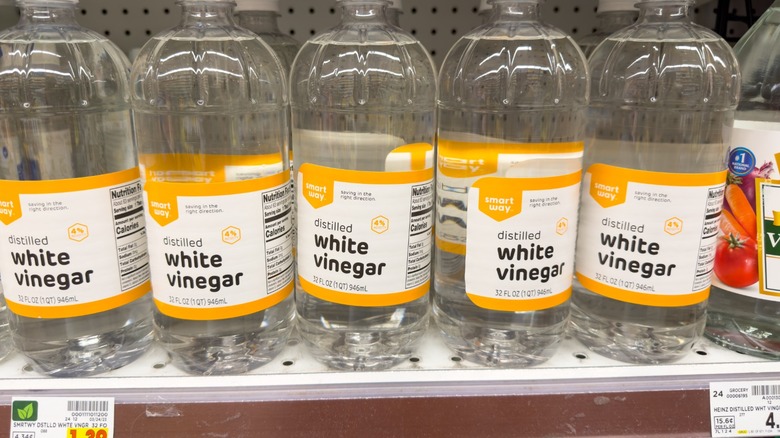
Vinegar is kind of a funny thing. Although it comes in many varieties and for different purposes, at its core it's just a combination of water and acetic acid, and it is considered to be among the foods that don't really expire (though some types of vinegar may still lose acidity over time). But on that note, there's at least one type of vinegar you should never consume: cleaning vinegar. It can be tough to identify at a glance, as white vinegar and cleaning vinegar look almost identical. They're both clear liquids, they both smell pretty much the same, and they're both known for cutting through grime. Despite their similarities, however, these two products aren't interchangeable in every situation. While white vinegar is safe and downright useful for consumption, you should absolutely not drink cleaning vinegar.
That's just part of what makes the two different, though it is arguably the most important factor to remember. It all comes down to acidity. Regular distilled white vinegar is typically 5% acetic acid and 95% water. On the other hand, cleaning vinegar is highly effective for keeping your kitchen fresh because it usually contains 6% acetic acid. Sure, that concentration difference might not sound like a huge jump, but that still results in cleaning vinegar being 20% more acidic in terms of strength than your standard white vinegar. That extra strength certainly makes it pretty effective at dissolving mineral deposits, soap scum, grease, and hard-water stains, but since it is more corrosive, it's unwise to consume it. Plus, while white vinegar is food-grade, cleaning vinegar may contain impurities that make further make it unfit for consumption.
You can still clean with white vinegar, but don't cook with cleaning vinegar
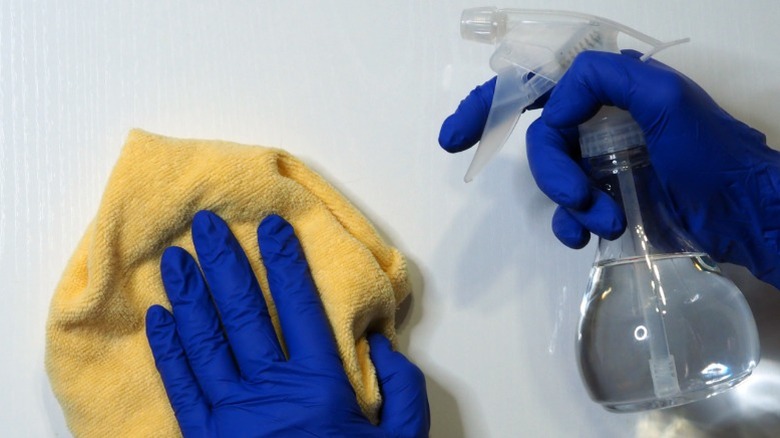
Since white vinegar contains a lower acidity, it's mild enough to use in cooking, baking, pickling, and salad dressings while still being effective for many household cleaning tasks. So if you're low on cleaning vinegar and are wondering if you can swap in the white, yes, you can. As long as you're not using it on any of the things that should never be cleaned with vinegar (like knives and cast iron), white vinegar is perfectly fine for this purpose ; you just may need a little more patience because it's less acidic. Be prepared for a longer soaking time or a bit more scrubbing when tackling stubborn messes. You can also combine the two vinegars for cleaning, but depending on the ratio you may still notice that the solution is a bit weaker.
As you may have guessed, you can't pull an Uno reverse card in return — cleaning vinegar shouldn't be swapped in to cover white vinegar. Some bottles will even say "not a food product" on the packaging, or otherwise indicate that this type of vinegar isn't made to food-grade standards. As multiple home cooks have found out when posting about making this error on social media, the best thing to do if you accidentally use cleaning vinegar in food is to just toss the dish out and start anew.
They're (usually) kept in separate sections at the grocery store
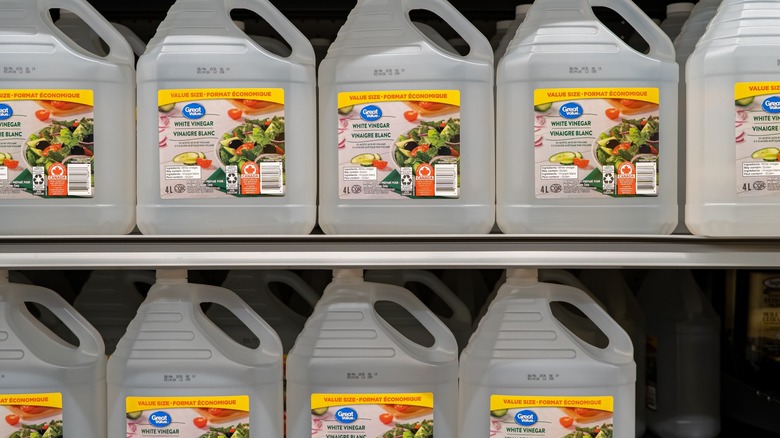
Not sure if you're grabbing the right vinegar at the store? Another difference between white vinegar and cleaning vinegar is that they're almost always stocked aisles apart. Although the bottles often do look incredibly similar (and depending on the brand, they may sometimes be the same bottle just with different labels), they're usually found in completely different departments because they're intended for different uses.
For example, white distilled vinegar is almost always located in the condiment aisle alongside cooking oils, salad dressings, pickles, and other pantry staples. Since it's a food-grade product, it's grouped with ingredients used for cooking, baking, canning, and meal preparation. Essentially, if you're shopping for ingredients to make a recipe or pickle vegetables, this is where you'll typically find it. Cleaning vinegar, meanwhile, is typically stocked in the household cleaning aisle near the usual all-purpose cleaners, disinfectants, and other cleaning supplies. That's because it's typically marketed specifically as a household cleaner. Keeping it separate from edible vinegars also helps reduce the chance of shoppers accidentally purchasing cleaning vinegar for cooking or baking, which, again, is just not a good idea.