

Should You Use Fresh Or Frozen Blueberries In Baking?
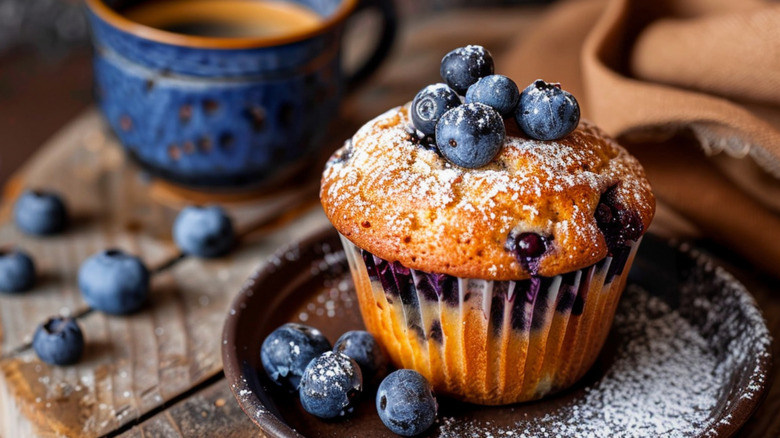
There's something about fruit-infused baked goods that's equal parts refreshing and indulgent; perhaps because fresh, ripe fruit is only available for part of each year. This is especially true of blueberries. They're pretty delicate, and don't always fare the best when transported to your local grocery store. That's why some bakers are substituting frozen blueberries for fresh in their favorite desserts — to avoid the moldy blueberries hiding in the center of the clamshell and to have access to their favorite fruit all year. In addition to these advantages, frozen blueberries are often more nutrient dense than fresh because they're picked and frozen at peak ripeness.
However, whether you should use frozen or fresh blueberries in your baked goods depends on a few more factors than preference and vitamin levels, and one isn't necessarily better than the other. For instance, fresh blueberries have a firmer texture than frozen since the freezing process causes the cells in the fruit to burst, resulting in a mushy texture when thawed. This makes frozen blueberries more suitable for baked goods with thick batters; the collapsed texture is hidden while the batter easily soaks up extra juice. Meanwhile, fresh berries are the best choice for pastries with an all-fruit filling, such as your favorite bakery-worthy blueberry pie or tart, because a filling made with fresh fruit is more stable.
When to use fresh, and when frozen will do
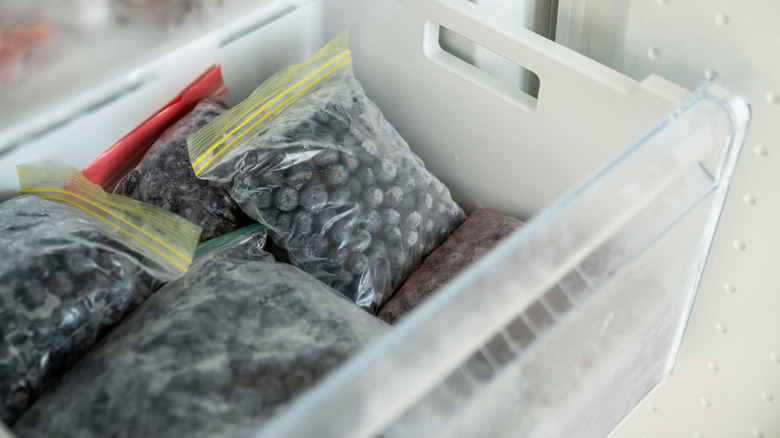
Due to their softer texture, frozen blueberries lend themselves well to muffins, cakes, and even fruity cookies. As mentioned, the baking process hides their texture and extra moisture without sacrificing a scrap of blueberry flavor. However, frozen fruits often have a distinct, lightly musty "freezer" aftertaste you may need to hide by giving your blueberries a flavor upgrade with specific spices and seasonings. Cinnamon, nutmeg, cardamom, and vanilla all work well.
You may also want to toss the thawed berries in flour to help evenly distribute them across your dessert instead of clumping together at the bottom of it. Frozen blueberries are also prone to discoloring your desserts, which can turn baked goods purple, green, or gray (which is impossible to predict). To prevent this, rinse frozen berries in cool water to keep them from bleeding an unappetizing color.
Frozen blueberries, however, are a poor choice for pies, crisps, and crumbles because the fruit filling's texture will be soft, runny, and unpleasant. Though you can use thickeners, such as cornstarch, to make these desserts with frozen fruit, the texture simply isn't the same. Ideally, it's best to use fresh blueberries for desserts like this to get that perfect firm, jammy texture, with bites of velvety, whole fruit distributed throughout. If all you have on hand are frozen berries and you want to make a quick fruity dessert, try whisking them into a sauce to pour over ice cream instead.