

Use The 3-3-2-2-1 Method For Lower Grocery Bills Every Time
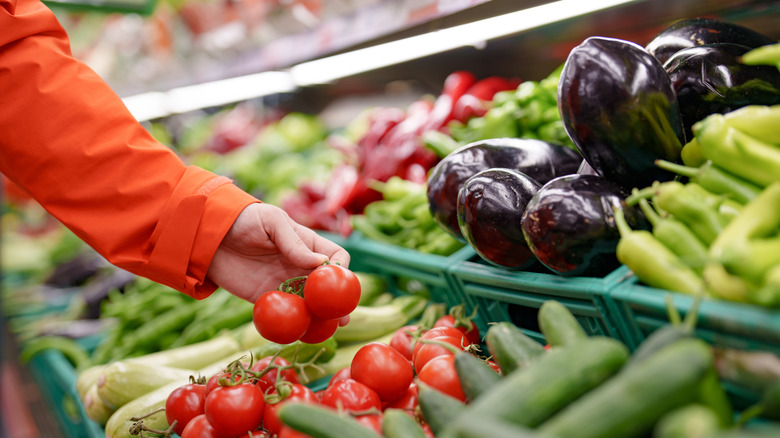
It's no secret that grocery prices are high right now — but to be honest, there's rarely a bad time to pick up a few tips on how to stretch your grocery budget. One money-saving hack that seems to have gained popularity since the early 2020s is the 3-3-2-2-1 method. Theoretically, not only can this method save you money, but it can make your grocery list more efficient and simplify it. Essentially, the numbers of the 3-3-2-2-1 method equate to: three veggies, three proteins, two grains, two fruits, and one dip or spread.
Cookbook author and registered dietitian Steph Grasso's TikTok post about this method caught attention across the internet. The overarching idea is to think about which items can be combined into a complete meal when creating your grocery list. For example, when it comes to the veggies, she explained in her video that you should choose one that can be paired with one of the proteins on your list, one that could be used as a leafy green in a sandwich or smoothie, and finally, one that's snackable. For proteins, she suggested choosing one protein you'd use as a dinner entree (like chicken or pork), one fish selection, and one meatless protein.
In a comment on the video, Grasso explained that this is generally her template for a weekly shopping trip; it may not sound like a lot of food, but if you consider your items carefully, they should be able to be combined into a week's worth of meals. And if you stick to the formula, you won't be buying a lot of extraneous items, or buying excessive amounts of food that ends up getting forgotten and tossed a couple weeks later.
Other methods and considerations
Besides the 3-3-2-2-1 method, there are a couple of similar frameworks you could use when grocery shopping. The first, the 3-3-3 method, is simply three each of proteins, fruits, and veggies. And there's also the 5-4-3-2-1 method: five veggies, four fruits, three proteins, two grains or starches, and one fun treat (yes, please!). Again, you do want to think about how you can combine these items in meals when selecting them at the store.
Stated benefits of using any of these methods include less waste, less hassle, and less time spent wandering the aisles. As some foodies have pointed out, consumers often have to choose between an overwhelming amount of options when they're at the grocery store. These kinds of "structured" shopping habits can feel like a return to simplicity.
On the other hand, in a thread specifically about the 5-4-3-2-1 method in the r/Loseit subreddit, commenters didn't seem terribly on board with the idea, speculating that the method itself seemed overly complicated. "Why not just meal plan and buy what you need for your chosen recipes?" was the general vibe. The original poster pointed out that, if you choose your items thoughtfully, the meal planning is taken care of — it's just a different method of doing so. So these methods might not work for everyone, but if you've been trying to reduce food waste, or simply save time and money at the grocery store, they could definitely be worth a try.