

What American Revolutionary War Soldiers Ate Every Day
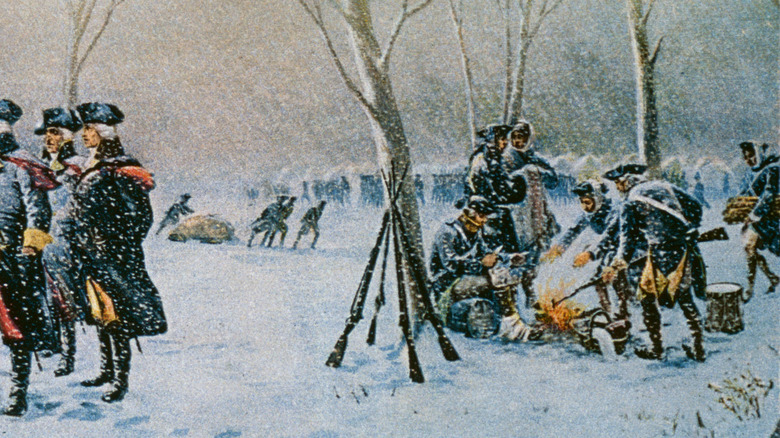
In October 1775, John Joseph Henry and his fellow soldiers of the 1st Pennsylvania Regiment took part in the invasion of Quebec. The Revolutionary War had been raging since April, and the Continental Congress was problems supplying American troops. As he headed farther north into Canada, on October 9, Henry's breakfast consisted of half a hard biscuit and nothing else.
The next month, the Continental Congress passed a resolution that earmarked what foods and how much each soldier would be given. Among the sustenance provided was a portion of beef, salted fish, or pork; bread or flour; and a pint of milk. Soldiers were also issued three pints of beans, peas, or other vegetables per week along with six ounces of butter, a half pint of vinegar, and a half pint of rice or cornmeal. To drink, soldiers were provided a quart of spruce beer, a low-alcohol drink made of spruce needles that prevented scurvy (it still exists and is one of the strangest soda flavors you can drink).
While this looked good on paper, getting these rations to troops in the far north was a problem. Due to that harsh winter in Quebec, along with other unexpected disasters, American soldiers were forced to eat their own boiled moccasins, among other unsavory foods, to stave off starvation. Still, soldiers had other ways of supplementing their diets.
Continental soldiers often supplemented their rations
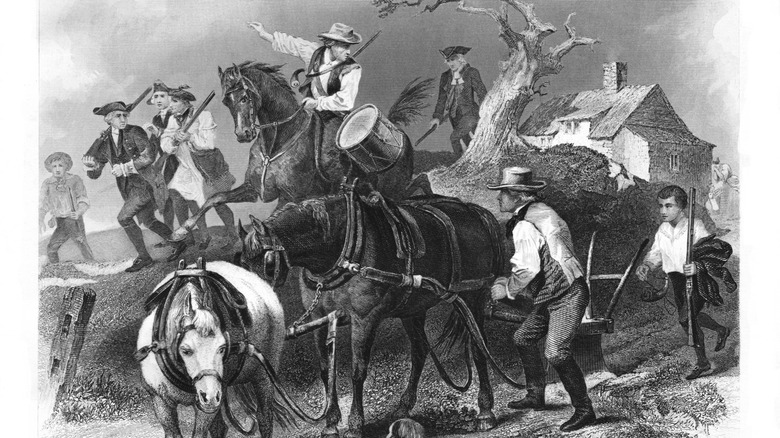
As they had during the doomed Quebec campaign, American soldiers often had to find ways to improve their daily meals. They would forage for edible fruits, nuts, and plants. Hunting and fishing were also common ways for soldiers to get more meat into their diets. They would hunt squirrels, game birds, deer, and even moose. What they didn't eat right away they could smoke to help preserve it for later meals. Their meat was often salted to help preserve it, and soldiers would make it more palatable by cooking it in a soup or stew with other ingredients they had on hand.
If garrisoned at a fort, soldiers often planted vegetable gardens or purchased delicacies like chocolate, tea, or rum from sutlers, civilians who were allowed to sell these items to members of the military. Not surprisingly, Washington ate better than his troops. His breakfasts often consisted of hoecakes (cornmeal pancakes), a breakfast dish that was invented in America. His dinners would include fresh beef, mutton, fish, pork, or calf's feet, among other foods. Perhaps Washington even got to dine on his favorite seafood delicacy, tiny parasitic oyster crabs. Considering the dietary problems Revolutionary War soldiers faced on a day-to-day basis, it's incredible that they were able to beat the British, but indeed they did.