

Does Distillation And Filtration Make A Difference For Vodka? Or Is It Just Clever Marketing?
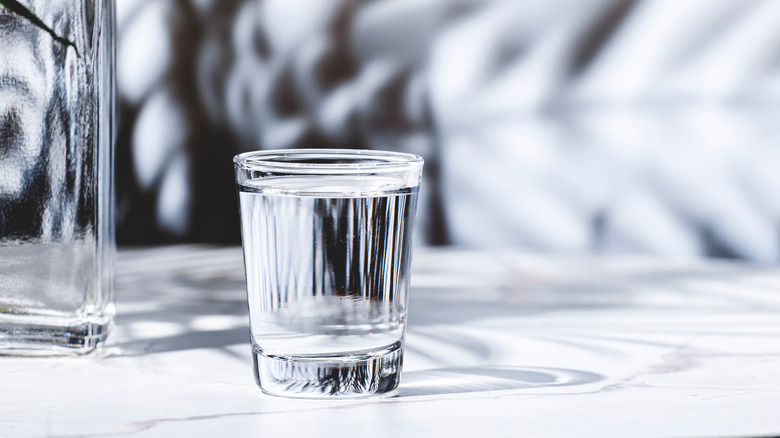
If you've ever stood in front of a vodka aisle at a liquor store, you've probably noticed the dizzying amount of brands available. With such a crowded market for a spirit that's traditionally known for being nearly tasteless, colorless, and odorless, brands must find ways to differentiate themselves. One way to do this is via the vodka's base ingredient, such as wheat, potato, corn, or even honey. Then, there's the number of times it has been distilled and whether it has been filtered. While both these processes can affect the vodka's flavor, mouthfeel, and smoothness, there are some caveats.
Distillation is the process of turning a fermented mixture of water and ethanol into a drinkable liquor. Most vodka is made using column stills, which usually require one high-efficiency pass to reach 95% ABV, the legal definition of a neutral spirit (it's later mixed with water to reach a lower ABV). While more distillation runs increase the purity, many people argue that, at most, two or three are all you need, and that anything beyond that becomes more about marketing. And more distillation runs may strip out subtle flavors and textures that some brands believe set them apart from competitors.
Equipment is an important factor here. If the distillery uses a copper pot still, as America's most popular vodka, Tito's, does, the smaller, simpler still requires more runs to reach the required purity level of vodka. Tito's is distilled six times, which doesn't equate to a column-distilled vodka that's gone through the same number of runs.
What makes a vodka good?

Many factors go into crafting vodka besides the base ingredient and the number of times it's distilled, from the quality of those ingredients to the water used. Filtration also plays its part. There are various ways brands can filter vodka, with the most common being charcoal, which helps remove impurities, rounds out the flavor, and improves mouthfeel. Other brands use everything from crystals to coconut shells to achieve similar results.
You can filter a cheap vodka at home with something like a Brita filter to slightly improve it by removing some of the alcohol burn, but you're not going to magically turn a poorly made vodka into something delicious. Higher-quality, expensive brands use better ingredients to start, among other differences. Some distillers don't even filter their vodka at all, such as Belvedere Intense Unfiltered or Vestal Vodka Unfiltered, which have much more flavor than your typical vodka.
This is part of the changing nature of the business. In 2020, the U.S. Alcohol and Tobacco Tax and Trade Bureau, which oversees the country's alcohol industry, changed the language of what constitutes vodka by removing the words "without distinctive character, aroma, taste, or color" from the definition. This allows for a wider range of flavor profiles. Still, most vodkas continue to produce a spirit that stays true to the former definition. And as long as they do, you're likely to see brands touting multiple distillations and various filtration methods as a selling point.