

The Japanese Delicacy That's Banned In The US Unless You Have A Specific License
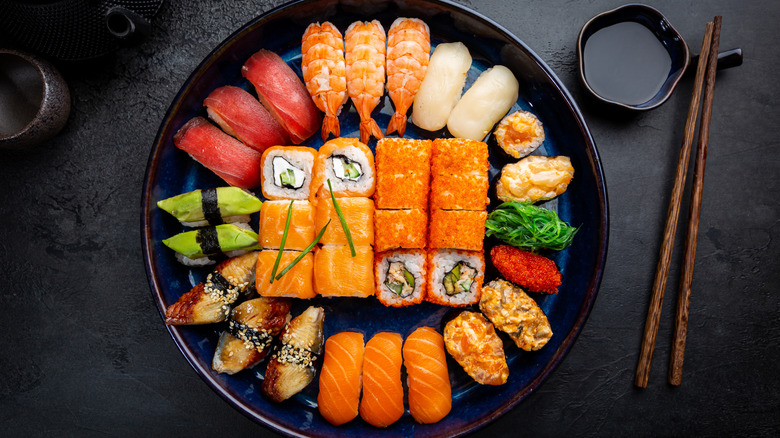
For us foodies, experiencing new tastes can be one of the most exciting parts of traveling abroad — especially when we get to try something that we'd never be able to get our hands on at home. Blowfish (also known as pufferfish or fugu) is one item that you certainly can't just buy at your fishmonger in the United States. It's considered a delicacy in Japan, where it is typically eaten raw, but you'd be smart to think twice before giving it a try. Generally speaking, pufferfish is incredibly dangerous (and, sometimes, deadly) to eat.
The US Food and Drug Administration and the Japanese Ministry of Health and Welfare have agreed to let pufferfish into the U.S. for special occasions. That being said, imports are strictly limited, and a license is required to serve pufferfish meat. While proper preparation can lower the risks, the chances of getting extremely ill or even dying from eating pufferfish are never zero, which is why you don't typically see blowfish or pufferfish on sushi menus. According to the Centers for Disease Control, tetrodotoxin — the poison in pufferfish — is incredibly potent (more so than anthrax). Symptoms of stage one tetrodotoxin poisoning include numbness and tingling in the mouth, weakness, difficulty talking, nausea, vomiting, stomach pain, and difficulty moving.
In stage two, paralysis of the limbs increases, followed by the rest of the body. Eventually, the respiratory system becomes paralyzed as well. Irregular heart beat, low blood pressure, seizures, coma, and death can follow. Survival is not unheard of, but there is no antidote for the poison, and anyone experiencing symptoms needs immediate hospitalization for supportive care.
A license to serve pufferfish: how it works in the US and Japan
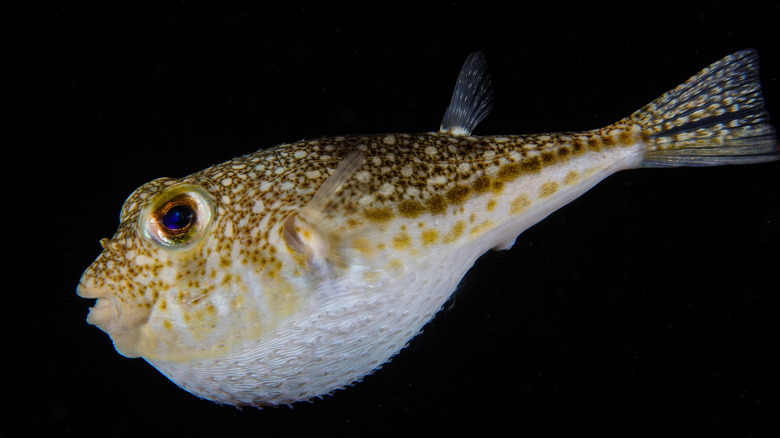
Pufferfish that's permitted to enter the U.S. is subject to rigorous rules and processing before it can be sold in the country. Only one species of the fish, takifugu rubripes, is allowed for import. Likewise, there is only one recognized export organization in Japan and one import organization in the U.S. These limitations help to control for safety variables.
The officials in Japan first ensure that all poison has been removed and the fish is officially certified as safe. Once the meat is stateside, the FDA verifies the certification. The meat then moves through the Torafugu Buyers Association — an exclusive, members-only club for restaurants in New York City interested in selling pufferfish to the public. In order to join the organization, restaurants must pass health inspections under New York City and FDA guidelines for three consecutive years. A chef from the restaurant has to attend at least one Fugu seminar (they're held by the Torafugu Buyers Association), and the restaurant must display a certificate letting customers know it's approved to sell fugu.
Fugu isn't available year-round, however. Restaurants are only allowed to import three times per year, and it must be used for special occasions. Once the fugu actually makes it to the restaurant, it has to be used within two months. One restaurant isn't allowed to sell to another — the fugu has to stay in the approved location.
If you're committed to trying pufferfish, here's what you need to know
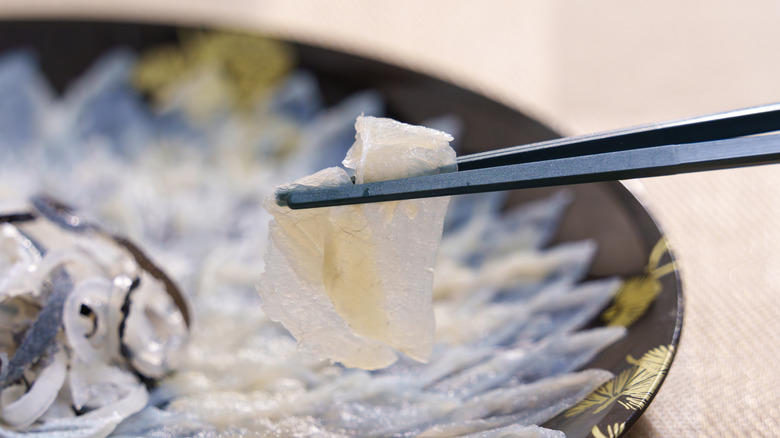
If you've decided to throw caution to the wind and give pufferfish meat a go, there are a few things you should know. Poisoning from eating pufferfish is fairly uncommon (it's estimated that between 20 and 40 people in Japan experience tetrodotoxin poisoning each year). While it's impossible to legally get your hands on a pufferfish in the U.S. (unless you're an FDA-approved importer), there are some ways that you can legally try the fish that finds its way onto most controversial foods lists regularly. Restaurant Nippon in New York City, for example, worked with the FDA to get approval to offer fugu on its menu, and it's still available seasonally.
Finding a fugu restaurant in Japan, of course, would be much easier than in the U.S. While not as numerous as in areas like Shimonoseki in Yamaguchi Prefecture, which is famous for the delicacy, Tokyo still has plenty of options, including well-established eateries and Michelin-starred venues. You may even be able to find non-poisonous versions of pufferfish, as some hatcheries have bred these varieties. The bottom line, however: If you decide that you'd like to try wild-caught pufferfish, only eat it from a certified restaurant — never accept it from individuals (though, again, it would be next to impossible for Americans to get their hands on a pufferfish). Wherever you eat it, enjoy it, but be on the lookout for symptoms, and if you notice early signs of tetrodotoxin poisoning, be sure to seek medical attention immediately.