

The Old-School Saloon Meal Deal You Won't Find At Bars Anymore
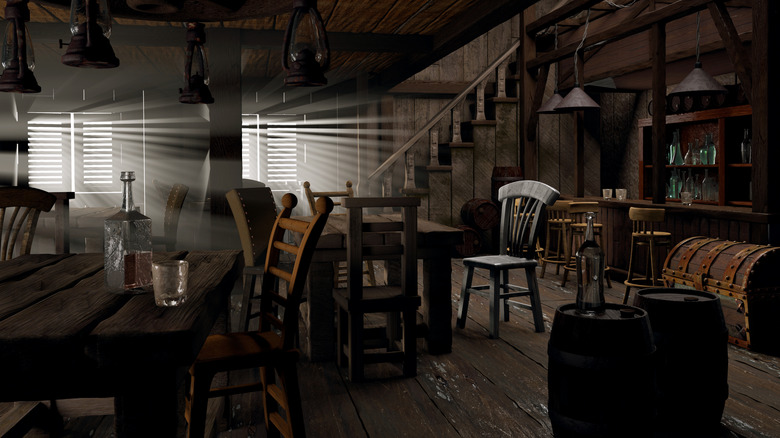
People's fascination with the era before Prohibition — when nearly all alcohol became illegal — never seems to fade. This is especially true of the old saloon, where a weary traveler or tired worker could buy a drink and get a meal to go with it: a free lunch, if you will. It's difficult to get anything for free at a bar today, but pre-Prohibition saloons across the United States gave away food to keep patrons inside buying drinks. Purchase a glass of whiskey or a beer and you might get a sandwich, beans, or whatever was still available at the saloon's lunch table. Sure, you might get swindled at the card table, but at least you wouldn't go hungry.
The question you might be asking is: Was the food any good? The answer actually depends on where you happened to be and how many options you had in town. Smaller towns had fewer saloons and less money to invest in a free lunch. You might get pickled eggs, baked beans, or a stew made from leftover meats and whatever vegetables were around. Bigger towns with more competition meant saloon owners had to work harder to keep patrons there. A New York Times article from 1875 describes one saloon in New Orleans with French waiters serving bread with butter, oyster soup, spoonfuls of vegetables, and freshly carved beef.
Why did the free saloon lunch disappear?
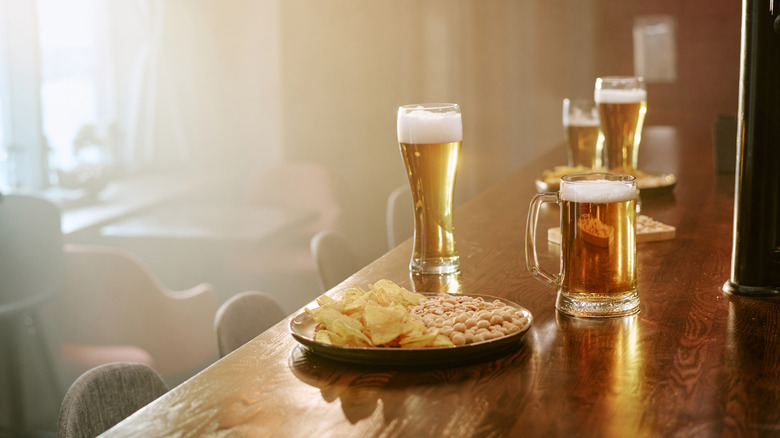
The initial problem with the free lunch was that it was a hook to get people to come in and buy drinks. It's likely where the idiom, "there's no such thing as a free lunch," originated. Some places deliberately served salty foods like pickles or sardellen (salty fish like anchovies) to get people to buy more drinks, a practice you could say lives on today through free bowls of pretzels or chips and salsa. There was also the condition of the saloon. Today, you have the option to visit a dimly lit, high-end whiskey bar. The saloons of the Old West had tobacco-spit-covered floors, dirty tables, and whiskey made out back. As for the lunch table, people reached into water jars of dirty utensils to scoop up food from communal bowls. If you were at a saloon, you were there to escape a harsh environment, work up a buzz, and satiate hunger.
Prohibition was the extreme result of a years-long movement to curb excess drinking and public intoxication throughout the country. Several cities looked to ban the free saloon lunch, partly because it promised a human need in exchange for excessive drinking. Chicago enacted a ban in 1913, and the state of Pennsylvania banned the practice in 1917. Prohibition began in 1920, and by the time it was repealed in 1933, most saloons did not restart that practice. While the free lunch was deceiving, it helped many through tough times. Perhaps that's why it's remembered so fondly today.