

Does It Matter If You Bake Salmon With The Skin Up Or Down?
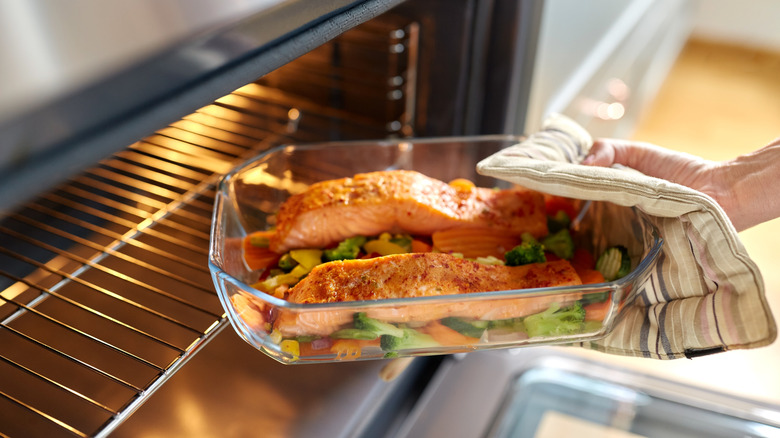
Life is full of important questions, like whether or not salmon should be baked with the skin up or down. Some people don't even like the skin and peel it off no matter how it's cooked. There might be a lot of debate over the issue, but whether you love the skin or hate it, there are a few good reasons to always keep the skin and bake your salmon skin side down.
When you bake fish in the oven, it tends to stick to the pan, and part of the fish often gets left behind. The best way to avoid losing part of the salmon to the baking sheet is by baking it with the skin on, skin side down. This method is perfect for people who don't care for the skin — you don't even have to bother removing it first. Let the baking process take care of that for you. If you haven't scored or oiled the skin, it will stick to the pan while the salmon cooks. When your fish is done, remove the filet using a spatula, separating it from the skin that is stuck to the pan.
However, the skin, which is sometimes referred to as the bacon of the sea, is not just tasty but full of nutrients. And, as an added bonus, when you cook salmon with the skin on, it helps keep the fish's natural moisture inside the meat, so the fish comes out juicy and tender rather than dry and tough. If you like the skin on your salmon, you might be surprised to learn that you can still achieve some level of crispiness in the oven, as long as you cook the fish right.
Tips for getting crispy skin on baked salmon
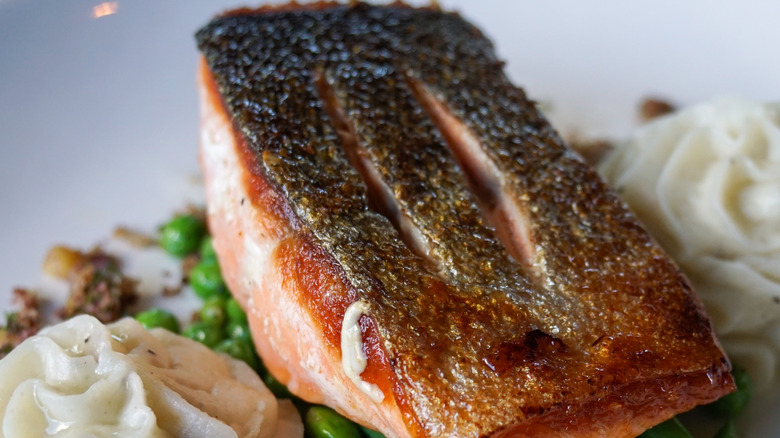
If your goal is to enjoy baked salmon with a crisp, brown skin, pat the fish dry first, rub it with a little oil, and bake it at 450 degrees Fahrenheit on a nonstick sheet. With the skin cooking directly against that much heat, it will crisp up, and if you take special care when you lift it out of the pan with a spatula, you'll have a good chance of getting it out with much of the skin intact.
However, if you want to ensure the skin is as crisp and brown as possible, preheat your baking sheet in a 500-degree Fahrenheit oven, so it gets nice and hot before you place the fish on it. Be sure to score the skin so the fat under the surface has a chance to render, and coat the fish lightly with oil to help prevent it from sticking. The skin will sizzle when you get it on the pan, and that sound of applause is a good thing. As soon as you get the fish in the oven, drop the temp to 275 degrees Fahrenheit and cook it until it's done the way you like it. The entire filet, skin included, should come right off on the spatula when it's done.
If you aren't sure which way you prefer your salmon (and salmon skin), then have fun experimenting with different cooking methods, types of salmon, and recipes to see what works for you. You just might find an unexpected new favorite by trying something like salmon baked with mustard greens and chickpeas.