

Skip The Meat Mallet: Tenderize Pork Chops With This Chinese Technique
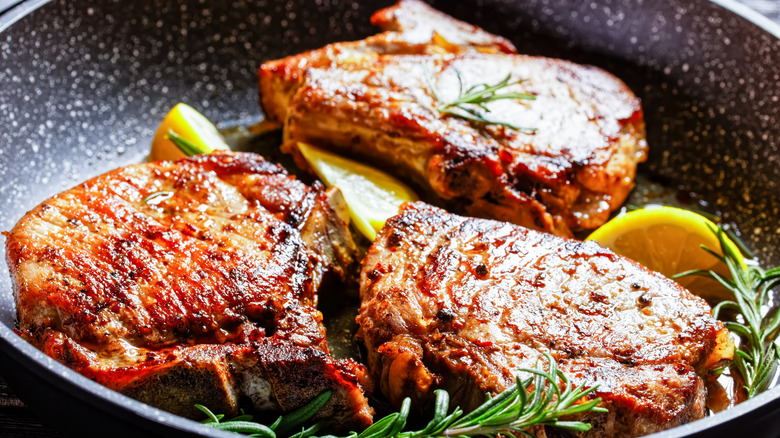
Pork chops can be absolutely delicious — if you use the right cooking technique. In 8 Clever Ways to Tenderize Pork, Chef Maricel Gentile explained how the Chinese technique of velveting can help make pork super tender, without requiring you to stand in the kitchen, pounding away at your pork chops with a meat mallet. All you'll need is some baking soda or cornstarch and a bit of time to get a fantastically succulent pork chop. "It will give the pork a silky texture and keep it from overcooking," says Gentile.
The concept of velveting is pretty simple. The method varies depending on whether you're using baking soda or cornstarch. Baking soda is often applied directly to the meat, while cornstarch is typically mixed with other ingredients, such as oil and other seasonings. A common guideline is about 1 teaspoon of baking soda or 2 tablespoons of cornstarch per pound of meat. Whichever method you choose, pop your meat into the fridge and let it sit for half an hour or so. Baking soda requires a lighter touch, as leaving it on the meat too long can affect the texture and make it mushy, while cornstarch-based mixtures are generally more forgiving. Rinse it off, then proceed with your recipe as normal.
Tips and tricks to create melt-in-your-mouth velvet proteins

Velveting doesn't just help make your pork chops tender — it also allows them to better absorb flavor. "In Asian cooking, we don't just focus on softening the meat. We also want to enhance its ability to absorb marinades and seasoning," says Gentile. Not sure where to start? A Caribbean jerk seasoning blend is a great option for making pork chops 10x better. If you'd prefer to go the marinade route, go through the velveting process first, or add your cornstarch or baking soda directly to the marinade. For pork chops, you'll only need to set aside an hour or so for marinating for maximum flavor and juiciness.
What you do next is a matter of personal preference — some recommend rinsing the velveting mixture off of the pork before you start cooking, while others say you should leave it on. Personally, I tend to leave my velveting mixture on, and it's always created super tender results (that said, I usually lean toward cornstarch instead of baking soda when velveting meat). If you're using a dry baking soda velveting method, however, you may want to rinse it, as the taste may become overpowering. The bottom line: whether you choose baking soda or cornstarch, and whether you choose to marinate or simply season your pork chops, velveting is key to taking them to the next level.