

Vine-Ripened And Counter-Ripened Tomatoes: What Are The Key Differences?
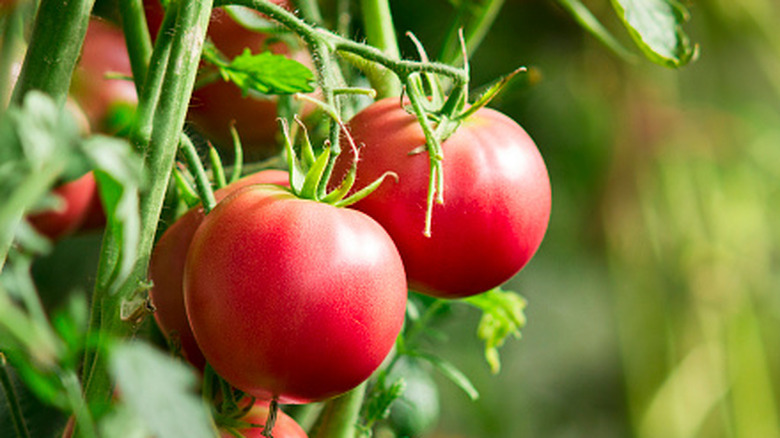
If you've ever bought a tomato labeled "vine-ripened" at the grocery store, thinking it sounds somehow fresher and better than conventional tomatoes, you may have been disappointed — and there's a good reason for that. It's that there's minimal difference between tomatoes ripened out on the vine and those that ripen on your kitchen counter. In fact, some would argue that vine-ripened tomatoes are a marketing ploy.
You may be thinking that vine-ripened tomatoes are picked when they're a beautiful, ripe red, but they're actually picked when they've just started turning yellow-green, during the "breaker stage." This is often only a few days later than conventional tomatoes, which are picked when they are still green. As long as your tomatoes have hit the breaker stage, there's not much difference whether you leave them on the vine or bring them inside. By the time the tomato has reached this stage, cells on the stem have drastically slowed down the transfer of nutrients from the vine to the tomato. The breaker stage fruit is no longer dependent on the plant for the elements needed to ripen as it has already absorbed enough, so vine ripening is barely any different to picking the tomato and leaving it to ripen at home.
It's generally accepted that after any color starts appearing, the tomato can be picked and ripened further with no loss of flavor or nutrition. There have even been studies where taste-testers couldn't differentiate between vine-ripened tomatoes and those that were picked at the mature green stage. All of this said, whether you're vine ripening or counter ripening, there are certain factors you should consider to get the best-ripened tomato.
Tips for vine- and counter-ripening
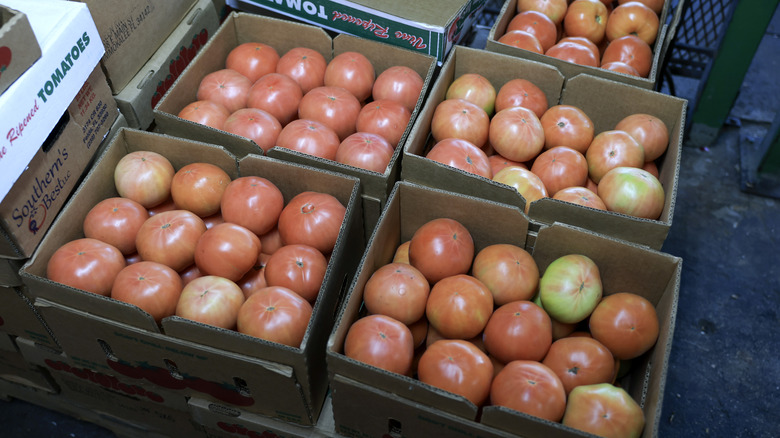
Whether you opt to leave your tomatoes on the vine or bring them inside to ripen, there are some pitfalls to be aware of. Firstly, the longer they stay in the garden, the more risk of them splitting open due to inconsistent watering. Though they aren't pretty, split tomatoes are usually safe to eat. In some cases, though, such as with large, vertical cracks, you may need to throw the tomato away as insects and bacteria can get in there. Even if your tomatoes don't split, they'll still be more exposed to the whims of nature, such as bugs or birds nibbling on them. You'll also have less temperature control, and temperatures above 86 degrees Fahrenheit can cause tomatoes to produce less lycopene and carotenoids. These are pigments that add color and flavor to the tomato. As a result, tomatoes ripening in the hot sun can end up with blotchy colors, white or yellow flesh, or a lesser taste — so if you're in a hot location or going through a heatwave, bring those tomatoes inside.
Ripening indoors has its own ups and downs. Firstly, if you're picking the tomatoes to ripen inside, don't forget you want them to hit the breaker stage, where there's a touch of color. Once indoors, keep them between 65 and 85 degrees Fahrenheit. Whatever you do, don't put them in the refrigerator — their ripening gets stunted and they'll be bland. You can also move them around for optimal ripening: Ideally, you can temperature control your kitchen, but if the space is getting warm, maybe don't leave the tomatoes in direct sunlight (they don't actually need it), and move them to a cooler corner.