

Traditional Soy Sauce Isn't Naturally Gluten-Free — Here's Why
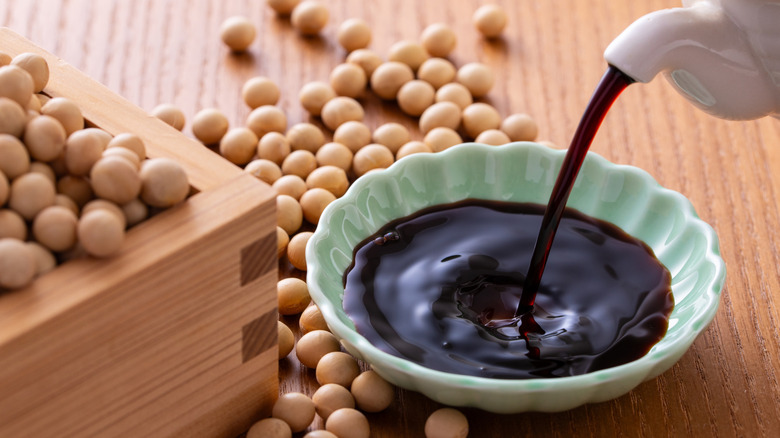
If you follow a gluten-free diet and have been reaching for soy sauce for your fried rice or dumpling dipping sauce, maybe it's time to think again: Soy sauce has wheat in it. However, for somewhat complicated reasons, it's sometimes classed as gluten-free.
First, soy sauce is traditionally made with soybeans, salt, water, and wheat, so boom, that's where your gluten is. That said, in parts of China during certain periods of history, soy sauce was made with just soy and water. Wheat became a more popular addition as Japanese production techniques caught on, and has mostly stuck around. Wheat is used in many standard supermarket soy sauces, and in China, wheat has been more common in soy sauce since the 1900s.
However, some argue that the fermentation process breaks down the gluten proteins enough for soy sauce to be considered gluten-free. Over the soy sauce aging process, gluten levels can fall under 5 parts per million, which is a strict threshold under celiac dietary guidelines. (The U.S. Food & Drug Administration's threshold for food to be considered gluten-free is 20 parts per million, though some celiac groups adhere to a standard of 10 parts per million.)
However, food safety authorities have mixed views on this: The FDA maintains that soy sauce can't be gluten-free because of the original presence of wheat, regardless of what fermentation does. On the other hand, there are celiac associations that take a less-cautious approach and say it's fine. Since there's no definitive agreed-upon answer, those on gluten-free diets are probably better off avoiding it, or seeking professional medical advice first. If you're at a restaurant and have concerns, you'll want the kitchen to be extra-sure that they're using an alternative and not just relying on the fermentation to eliminate the gluten.
Gluten-free alternatives
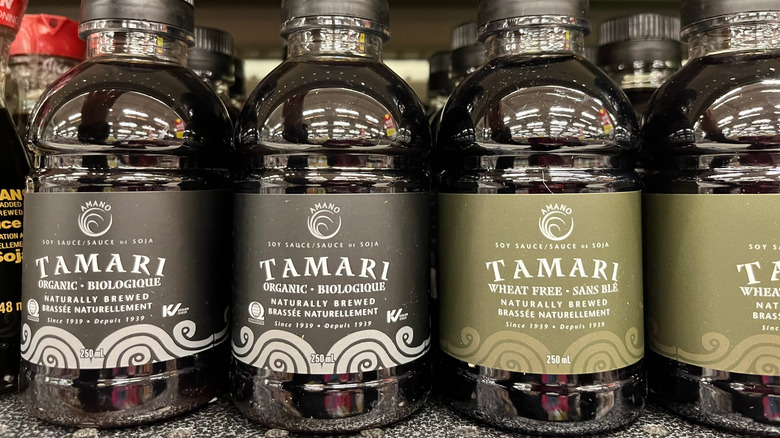
A go-to gluten-free soy sauce alternative is tamari, a Japanese sauce made from fermented soybeans and sometimes rice; it has a smooth flavor that's a bit richer than soy sauce and can be substituted one-to-one. But there's one catch: Despite its popularity among some gluten-free folks, some tamari brands do use a little wheat in the production process, so check any ingredient list carefully before you buy or look for a gluten-free certification.
If that faint prospect of wheat is worrying, you could consider coconut aminos, which is made from fermented coconut palm sap rather than soybeans or wheat. Coconut aminos is both soy-free and gluten-free. It also has a nutritional advantage in that it contains about 90 milligrams of sodium per teaspoon, while soy sauce has around three times that. It's not without issues, though: Coconut aminos has a lighter taste than soy sauce and can be a bit sweeter, leading some to argue that it interferes with savory dishes. They're also more expensive and not as easy to find in supermarkets.
One final alternative is liquid aminos, which is made with fermented soy protein. (Coconut aminos may also go by this name — check the ingredients if you want to know which version you're getting.) If sodium is a concern, know that they're better with this metric than soy sauce, but have about double the salt that their coconut counterpart contains. Taste-wise, they're decently similar to soy sauce, although a little less salty. They're also more expensive: A cheap liquid amino can be three times pricier per ounce than a cheap soy sauce.