

What's The Average Shelf Life Of Soy Sauce?
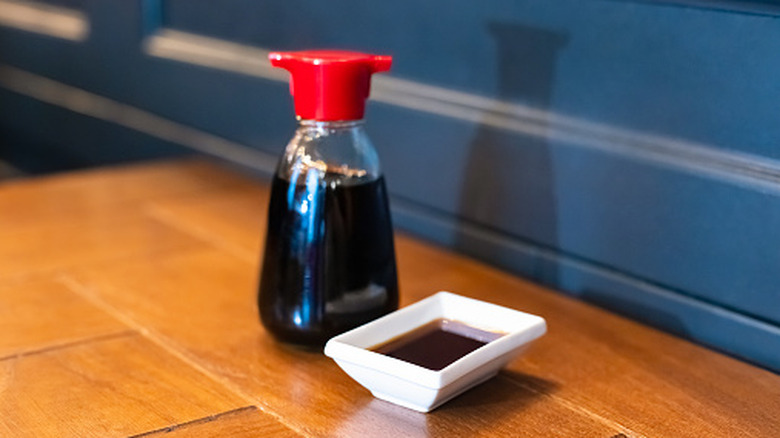
If you've had a bottle of soy sauce sitting around in your refrigerator or cupboard for months (or even years) and are wondering if it's still okay, here's your answer: It probably is. That's especially the case if the bottle hasn't been opened: Unopened soy sauce can retain its quality for around three years, particularly when stored in a cool and dry location. If you're unsure, you can always check the "Best by" date on the bottle (or equivalents like "best before"), but know that as with many other products' expiration dates, this isn't really a date after which the sauce will be unsafe — rather, it's just the producer's assessment of how long the sauce will stay at its highest level of quality. In fact, soy sauce can undergo changes in color and flavor and still remain totally okay to consume (more on what to look out for in a moment).
Once you open the bottle, the clock starts ticking faster, although not a whole lot faster if you keep it refrigerated. Unsealed but chilled soy sauce should keep its quality for about two or perhaps three years, and if it's kept at room temperature, around six months. Obviously, you should keep the bottle closed. There's one notable exception to be aware of: Low-sodium soy sauce has a shorter shelf life, as its reduced salt content means it doesn't keep so long (salt is a preservative). These bottles should be stored in the refrigerator and used up by around three months after opening.
Knowing when soy sauce has gone bad, and some storage tips
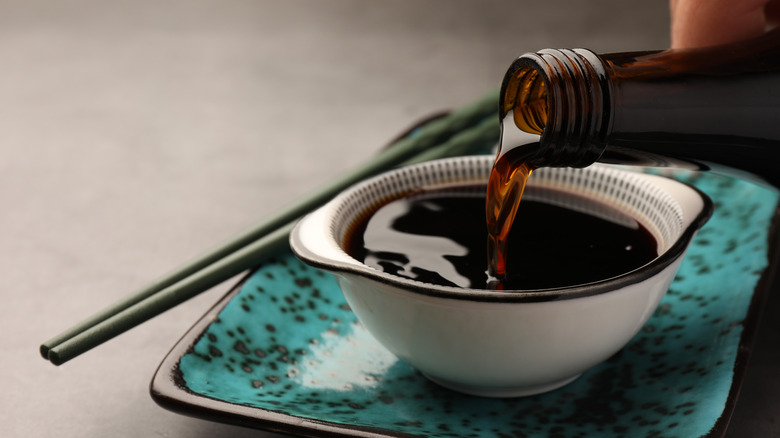
Soy sauce isn't particularly vulnerable to contamination from bacteria: It's just too salty (salt is one of only three ingredients in standard soy sauce). But one thing you do want to look out for is oxidation from exposure to air, which can impact its flavor and freshness. Popular soy sauce manufacturer Kikkoman also suggests putting the inner plastic cap back in the bottle after each use to keep the air out.
Some signs of oxidation include a flatter, less dynamic taste, or sour or metallic notes. Fresh soy sauce should be umami and with a hint of sweetness (this can vary a bit between light and dark soy sauces), and old soy sauce won't have this complexity. Oxidized soy sauce can also have a darker shade. If it smells nasty or if there are signs of mold, throw it out. There's one false red flag you can ignore: If you see white crystals in the bottle or the sauce, those are just salt crystals and are fine (you can shake the bottle to dissolve them).
As for storage: As mentioned, a cool dry place is ideal if you're keeping it out of the refrigerator. More specifically, this means keeping it away from the stove and oven, or appliances that generate heat, like a dishwasher. But you're still better off keeping it in the refrigerator if possible, as low temperatures help to prevent oxidation.