

Grill Steaks For The Entire Family With This Savvy, Budget-Friendly Tip
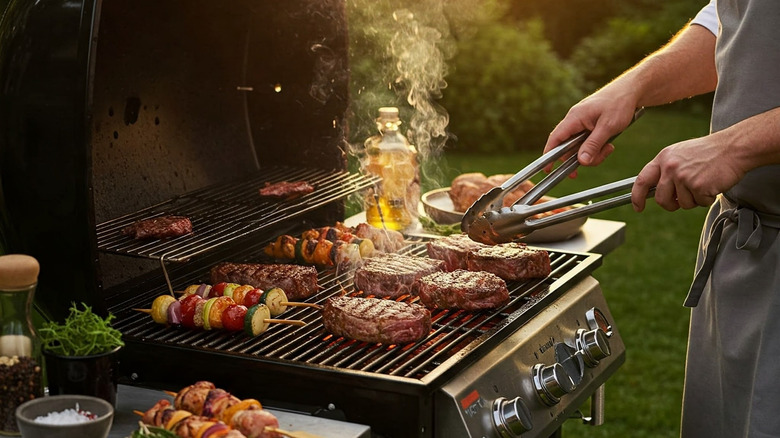
There's nothing that satisfies like a home-cooked steak dinner, but grilling steaks for the entire family can certainly hurt your wallet. Buying a whole beef loin and cutting your own steaks at home instead of buying them pre-cut from the grocery store or butcher typically requires a larger upfront investment, but it can save you some serious cash in the long run. While the idea can be a little intimidating at first, it's totally worth it when you see how much money you can save — and the process of cutting up your own steaks at home is easier than you might think.
Before you head to the butcher shop or the grocery store, you'll want to decide what type of beef makes the most sense for you. A boneless cut is certainly easier to cut than a bone-in option, especially if you don't want to figure out how to cut through bone in your kitchen. The savings can be kind of mind-blowing, though prices can vary, of course. My local Giant grocery store in Pennsylvania, for example, offers a whole grass-fed beef tenderloin for about $13 a pound. By comparison, a trimmed beef tenderloin steak from the same store sells for about $45 a pound. You don't have to be an expert to cut steaks at home, but there are a few things that you should know before you get started.
Tips and tricks for cutting individual portions of steak at home
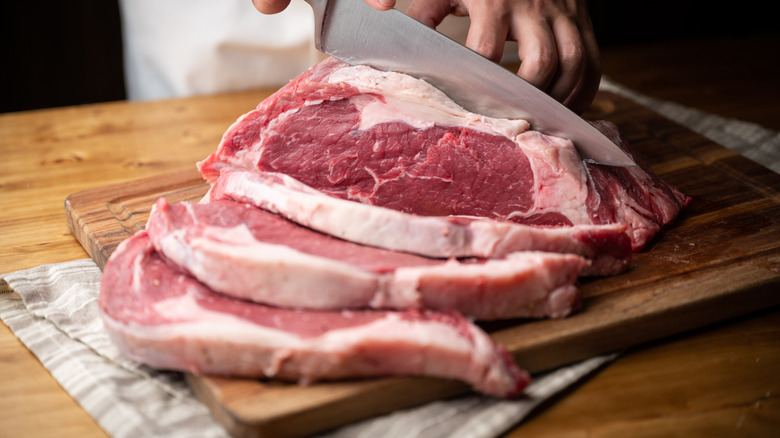
If you made the leap and purchased a strip loin to cut into steaks at home, it's time to get to work. First, you'll want to assemble a few supplies. Grab a sharp, non-serrated knife, freezer storage bags (this is one of the instances where a vacuum sealer will absolutely change your food storage game), and your best cutting board. Next, you'll want to slide your knife under the silvery membrane that's likely still covering some of your loin. Grab the end you loosened with the knife using a paper towel to prevent slippage, then try to pull it away from the loin. If you're lucky, it'll come off in one piece (I have yet to be so lucky, but it's always worth a try).
From there, you'll want to trim most (but not all) of the fat from your steak — leaving a little bit of fat on your strip loin will help to add flavor to the individual steaks. Finally, it's time to cut your steaks. You can make them however thick you'd like, leave some larger pieces for a roast, and even save tiny bits that won't quite stand on their own for stir-fry dishes. You might want to add a perfect steak marinade to your bags before you vacuum seal, allowing your steaks to soak in flavor over time. If your steaks are vacuum-sealed, they'll stay good in the freezer for six months or so — be sure to write the date on each bag so none of your hard work goes to waste.