

Make Restaurant-Quality Baked Beans Every Time By Adding This Savory Breakfast Meat
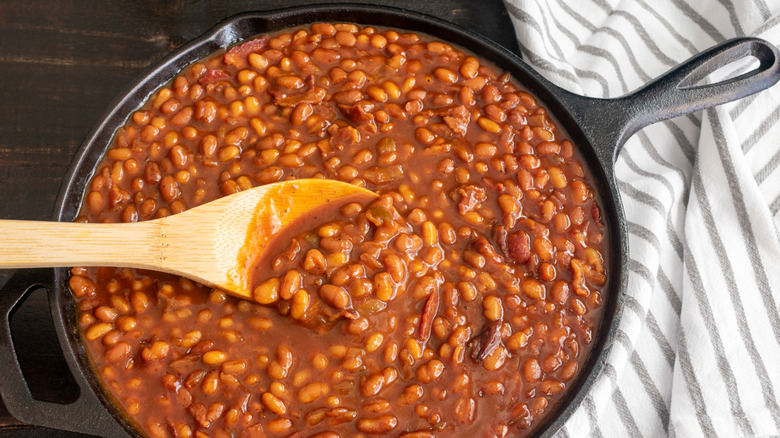
Baked beans are often written off as an underrated side dish served at barbecues, but they really should be on your weekly meal rotation. Serve them as a fiber- and protein-rich topping for a cowboy-style baked potato worth singing about or over Spanish rice to create an inexpensive, filling, delicious meal. On their own, beans don't have a ton of flavor, which is why baked bean recipes often call for additions like tomato paste, Worcestershire sauce, dry mustard, and the pièce de résistance: bacon.
If you've never crumbled a few strips of well-rendered bacon into your baked beans, you definitely need to start – there's a scientific reason why bacon tastes good with almost everything, and these sweet legumes are no exception. The combination of flavorful fat, saltiness, and light smokiness gives the beans a rich, umami flavor. Though baked beans are also delicious with a drizzle of maple syrup, molasses, or honey, they can sometimes skew a little sweet. Bacon takes care of this problem by softening that sweetness into an undertone rather than a main flavor.
Even if your favorite baked bean recipe is mostly spicy and savory, bacon can help marry individual flavors, add a touch of crunchy texture, and make the dish feel like it deserves its spot at a potluck. You can even deglaze the pan you use to crisp the bacon with a little apple cider vinegar and pour the whole mixture into the beans, as those pan drippings are the gold standard for flavor.
Bringing home the bacon to your baked beans
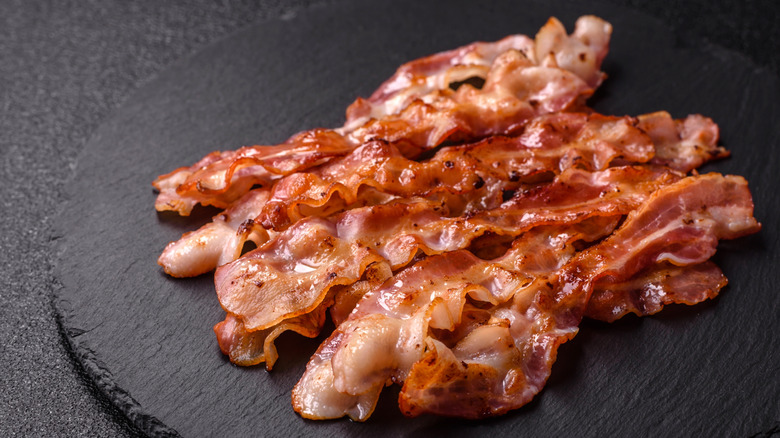
The key to adding bacon to baked beans is making sure it's crispy. Not only does cooking bacon in a pan develop bacon's signature mouthwatering flavor and produce delicious drippings, but it also makes the bacon crunchy to provide a textural element. Adding raw bacon directly to your bean mixture will cause it to steam or boil instead of allowing the fat to render, which will make it rubbery and prevent its flavor from developing fully.
If you're cooking your baked beans in a slow cooker, you can add crispy bacon and drippings at the beginning of the cooking process, as the low-and-slow method will help develop and blend the flavors. While it won't become rubbery and unpleasant to chew, even the crunchiest bacon will soften during long cook times, basically melting into the beans and offering more flavor than texture. If you still want a bacon-y crunch, simply reserve a few strips to crumble over the top when serving.
Consider the other seasonings in your baked beans when choosing which kind of bacon to add. Applewood-smoked bacon would be delicious with brown sugar barbecue baked beans, while cracked pepper-crusted bacon works well with lots of savory garlic and jalapeños. It's also easier to get thinner strips crispy, so you may want to veer away from thicker cuts for this dish.