

Why Yellow, Dijon, And Brown Mustards Taste So Different, According To Science
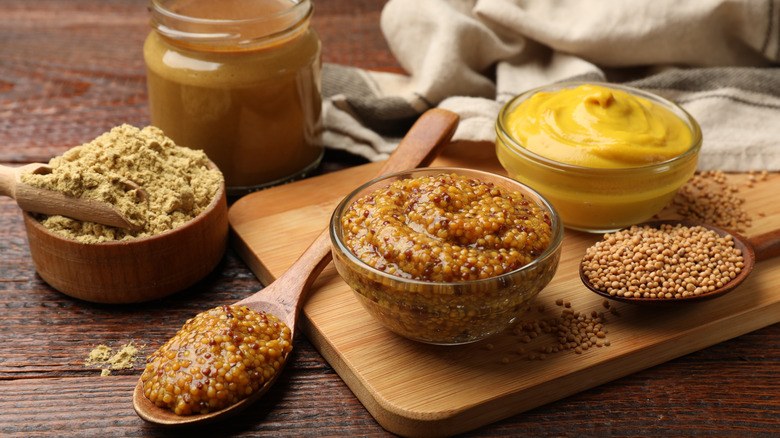
Cooks have been using mustard for centuries, adding its delightful tanginess and varying levels of heat to all sorts of foods. The wide range of seeds and seasonings you can use in mustard make for quite a few varieties; the most common being yellow, Dijon, and brown. The driving force between the different levels of heat and flavor in each type of mustard is rooted in science. Whether you're making your own mustard or choosing some at the store, it's easy to be intimidated by an ingredient if you aren't familiar with it. So, let's explore the "why" behind mustard's nose-clearing heat and three of its most common varieties.
Mustard is made by mixing the seeds of mustard plants with liquids, but if you just ate raw mustard seeds on their own, you'd experience a burning sensation on the tongue and throat. That's the result of the mustard seed breaking open. By themselves, the seeds create a powerful burn, which is the plant's natural defense for keeping bugs from eating it. But when those seeds are ground and mixed with liquids like water, wine, or vinegar, enzymes in the seeds (myrosinase) and chemical compounds (like sinigrin and sinalbin, depending on the type of seed) inside undergo a chemical reaction that makes that natural burn more palatable. Depending on the type of seed, the type of liquid, and the extra seasoning added in, the resulting mustard will have differing flavors and levels of heat.
Different types of seeds have their own levels of sinus-clearing pungency, with white mustard seeds being the mildest and black seeds producing the most heat. The type of liquid used in a mustard recipe also impacts that heat (water intensifies it while vinegar helps neutralize it). These different combinations give us the wide range of mustard options we see at the grocery store — and each type has its own ideal uses.
Best uses for different types of mustard
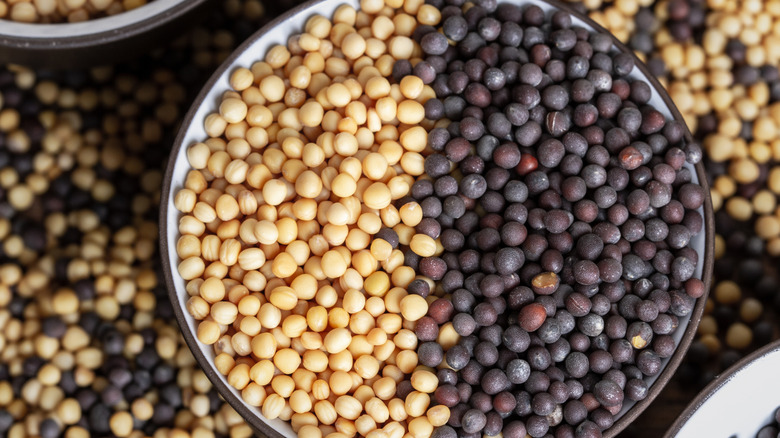
Yellow mustard, which is made from yellow mustard seeds, is a common type used in American cuisine. It goes great with sandwiches, burgers, hot dogs, and is used in many recipes like potato salad and barbecue sauce. It also shows up in Cuban cuisine: it's a key ingredient in a classic Cubano sandwich. Yellow mustard is created using a combination of vinegar and water, along with turmeric to strengthen the color. The result is a mustard with a tangy flavor and low level of heat.
Dijon mustard can be made from either brown or black mustard seeds (or a combination of both), which have a higher level of heat than yellow or white mustard seeds. In Dijon recipes, the seeds are paired with white wine and salt, along with the juice of unripe grapes to add some acidity. This combination gives Dijon a stronger flavor with more heat than you'll find in a yellow mustard. The flavor is perfect for upgrading dishes like oven-roasted vegetables, because if offers a spicy punch that complements the earthiness of foods like carrots and potatoes. Mix it with some mild vinegar, olive oil, salt, and pepper and you've got a delicate yet flavorful salad dressing that you can make from ingredients you already have in your pantry.
Brown mustard, which is also called spicy brown or deli mustard, is famous for its high level of heat. Like Dijon mustard, it is made from brown mustard seeds, but it is mixed using a minimal amount of vinegar, so the heat is stronger. Brown mustard is great as a condiment on meat-filled sandwiches, or as an ingredient in barbecue sauces or marinades. The process of making this mustard retains the seed bran so, in addition to the spicy flavor, it's got a texture that keeps things exciting.