

What's The Average Shelf Life Of Jam? How Long A Jar Lasts Opened Vs Unopened
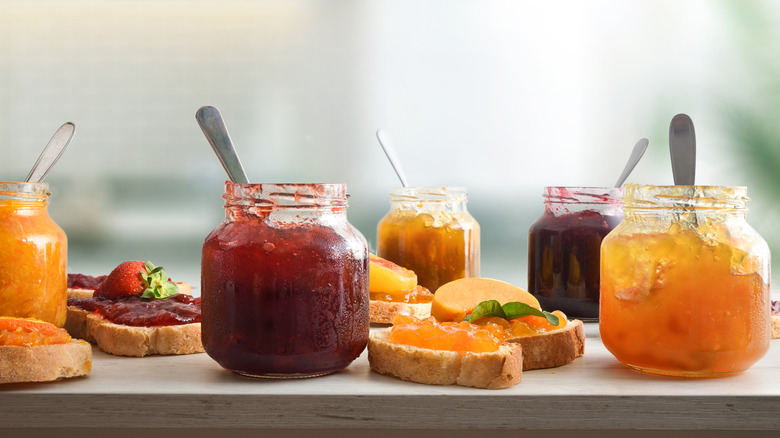
Peanut butter and jelly sandwiches. Thumbprint cookies. A perfectly toasted jam-and-butter English muffin. There are a ton of ways to enjoy jam, and it's smart to always keep a jar or two of your favorite varieties on hand. That being said, all of the sugar in jams and jellies can be a breeding ground for bacteria, so it's important to understand how long preserves stay fresh. (There are some slight differences between jams, jellies, and preserves, by the way, but we're using them interchangeably here.) There are a few different factors to consider, including whether your jam is opened or still sealed, and whether it's homemade or store-bought.
A homemade jar of jam (which is easier to make than you think — you don't even need pectin for three-ingredient strawberry jam) typically lasts for about a year unopened in the pantry if sealed and canned properly, while opened jars of jam can be stored in the refrigerator for about a month. Store-bought varieties can last longer than homemade jams. Typically, a jar of store-bought jam will stay good in the pantry for at least a year, potentially up to a year and a half. Once opened, a jar of store-bought jam will stay fresh in the fridge for up to three months.
Tips and tricks to help jam stay fresh for longer
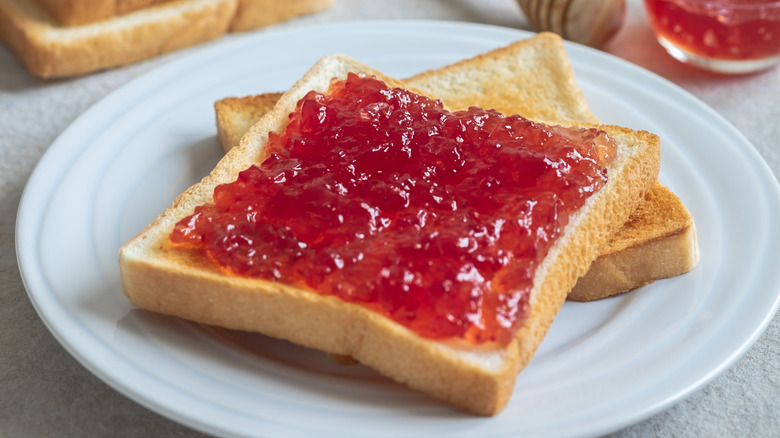
It's a pain to have to toss out a jar of your favorite jam, so it's smart to put proper storage techniques into practice in your kitchen. Keep unopened preserves in a dark, dry area (like the back of your pantry), as you'll want them to stay away from sunlight. Of course, you'll need to move jams and jellies from the pantry to the fridge once you pop them open. Each time you close the jar after use, make sure the rim of the jar is clean and you give it a hand-tight seal.
One more thing to keep in mind: Double-dipping utensils into a jar of jam isn't a good idea. While it sounds obvious, it's easy to put some jam on a perfectly toasted piece of bread (getting butter and crumbs on the knife in the process), decide you need some more jam, and put the now-buttered-and-crumbed-utensil back into the jam jar, adding new ingredients into the jar that can speed up the process of your jam going bad.
As we've said, jams and jellies generally last for a few months in the fridge, but common sense is key. If you notice signs that your preserves have gone bad (for example, you can see mold, or it starts to smell like alcohol), you'll need to toss it, even if it hasn't reached the point in time when it typically goes bad.