

What Happens To Leftover Food From All-You-Can-Eat Buffets?
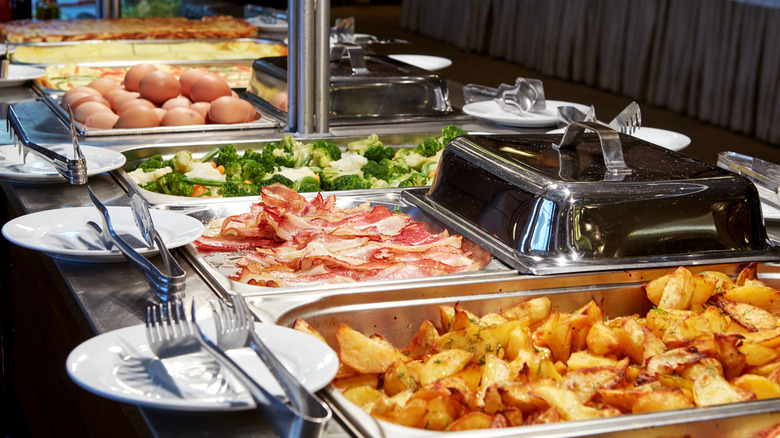
Buffets might be a great benefit when picking out a hotel or planning a budget-friendly family dinner, but the unfortunate reality that isn't often discussed is how much food is wasted. Closer attention is being paid across industries, including leftover food on cruise ships and even what grocery stores do with expired food, and when it comes to all-you-can-eat buffets, the endless supply of breakfast, lunch, or dinner options doesn't all end up in bellies.
Most buffet-providers waste almost half of what they offer to customers, and the majority of it goes to landfills, according to research by University of California, Berkeley. However, some restaurants deal with leftover buffet food in less environmentally harmful ways. For instance, they may be able to donate their surplus food to shelters provided it was safely held and hadn't hit the self-serve station yet. Other times, it may be offered to staff, though some businesses have policies against this practice.
More buffet-style restaurants are partnering with initiatives dedicated to reducing waste, like the Too Good To Go app. This allows consumers to get discounts on food that may otherwise be tossed out, while buffet restaurants reach new customers and make money on what would have become food waste. (You can also score cheaper Krispy Kreme donuts with the app.) Additionally, large pig farms can accept food scraps from buffets to feed their livestock if the scraps are cleaned and pasteurized first. This has been common practice in Las Vegas, to the point where the recent decline of casino buffets is impacting at least one local farm. While such partnerships handle the aftermath of overabundant buffets, the industry is looking for ways to stop the problem at its source.
What is being done to combat food waste at buffets?
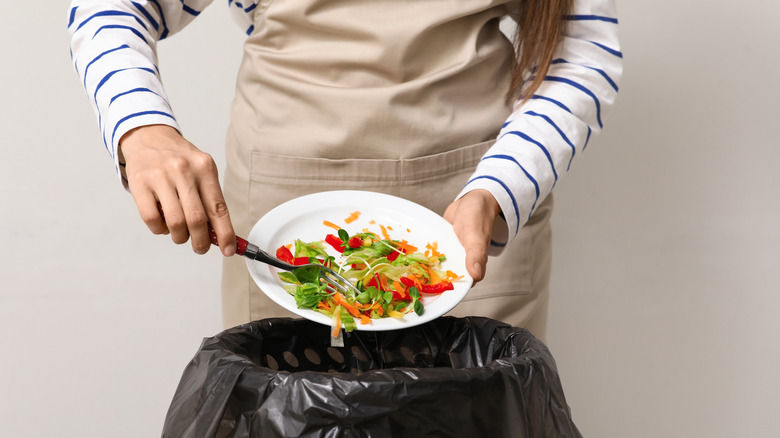
While it seems unlikely that buffets will be a thing of the past anytime soon due to their convenience and general appeal, there are a few shifts happening which may shape the way we approach buffet-style dining. Across the nation there are a number of educational initiatives and courses to help educate restaurant managers and owners about how to minimize food waste at a large and sustainable scale. Some strategic tactics include shrinking the pan size during slower times to reduce the potential for waste, or incorporating cook-to-service options that buffet diners can choose. Initiatives like The Sustainable Restaurant Association also provide insights and guidance to prevent excessive food waste.
Even in a standard restaurant, overordering is one contributor to food waste. All-you-can-eat buffets in particular promote piling one's plate high and not necessarily emptying it, and the kitchen has to overproduce to not only meet the demand, but also to exceed it. Staff trainings to provide guidance to diners at buffets and smaller portions refilled more frequently are two other measures the industry can take to curtail this. For the individual diner, the strategy is even simpler: Serve yourself only what you're sure to eat. And if you've ever felt a little bad about bringing home extra food from the buffet (if the restaurant allows), the good news is there's no need for any guilt: you might be saving food from ending up in the trash at the end of the day.