

In-N-Out Sources Beef From This Infamous California Ranch
The following contains brief descriptions of animal abuse.
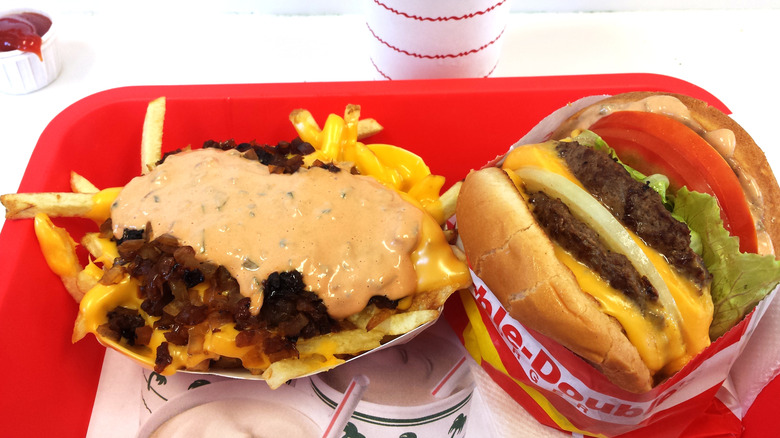
Every restaurant and fast food chain has its preferred suppliers for various ingredients. Many of them, like McDonald's, rely on multiple sources for different food items (including Keystone Foods, which supplies McDonald's fish). That's certainly the case with In-N-Out as well. When it comes to its famous burgers, the fast food giant doesn't indicate where it sources its beef from. But, according to many news reports over the last decade or so, In-N-Out gets its meat from the same company that supplies most of Costco's beef: Harris Ranch Beef Company, which operates one of the Western United States' most sizeable cattle finishing facilities.
Headquartered in Selma, California, Harris Ranch covers nearly 800 acres, feeding and finishing 120,000 head of cattle at one time. The company says it was on the forefront of beef branding when it established one of the first beef branding programs in 1982. With more than $600 million in annual sales, its product line now includes fresh boxed beef and value-added ground beef (such as Black Angus or Halal), among others. The ranch's retail division works with supermarkets, while its food service division supplies restaurants and caterers.
Avid readers might remember that it was the smell that emanated from this ranch that sparked Michael Pollan to write the 2006 best-seller, "The Omnivore's Dilemma." So, with that as background, you might suspect that In-N-Out's tight-lipped nature over its supplier is a strategic move. And, if that's the case, you might be right. As the famous saying goes, "Your silence speaks volumes," In-N-Out. That's because, despite what you might read on the Harris Ranch Beef Company's website — buzz words like "sustainability," "humanely," and "animal welfare" — many news reports tell a different story.
Harris Beef Ranch has plenty of beef with animal rights activists
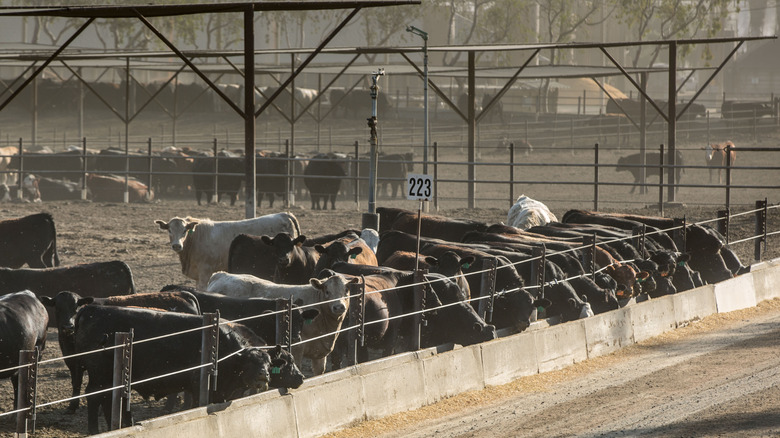
In 2021, The Fresno Bee reported that animal rights activists had obtained footage from inside the Harris Ranch facility that depicted cows jumping onto each other to avoid slaughter, in addition to having their throats slit while fully conscious rather than being stunned first. A few years earlier, Sentient Media reported that the activist group Direct Action Everywhere witnessed thousands of young calves that were living in crates they could barely fit inside; many of them had developed respiratory issues.
Interestingly enough, Dr. Temple Grandin — an expert on the humane treatment of animals — helped Harris Ranch Beef design its livestock handling facilities and also trained staff on proper livestock handling techniques. In a 2012 talk – prior to some of the worst reports about lots like Harris Ranch — Grandin said these massive feedlots are often misunderstood and mislabeled as places of large-scale terror and suffering. She said ranches like Harris Beef do a great job overall but should be more open with the public by giving tours and explaining their practices.
Whether you believe Dr. Grandin or not, eventually, something has to give. Some customers have outright stopped visiting In-N-Out due to its association with Harris Ranch. But if all the bad press and customer resistance isn't enough to spark a change, skeptics might believe — with good reason — that the burger chain is fine with where it sources its beef. Silence does indeed speak volumes.