

The Once Popular American Pie That Would Be Illegal To Make Today
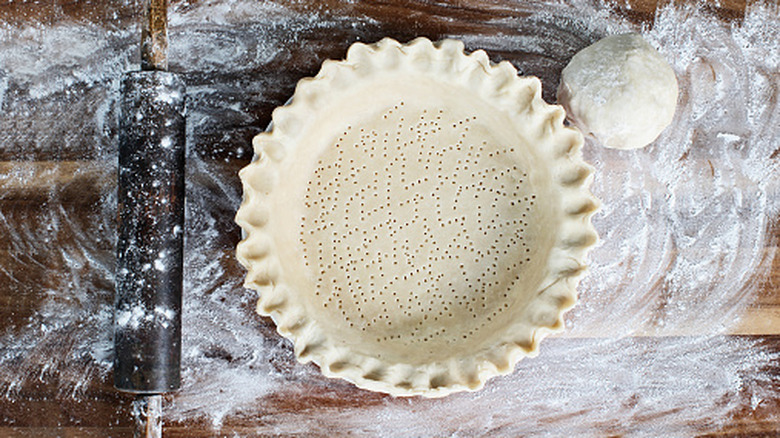
It might sound odd to describe a pie as "illegal" if you're not poisoning someone: After all, the secret to the perfect apple pie certainly isn't arsenic. But in the case of one 1800s recipe, it's not your health the pie is bad for.
The recipe in question is robin pie, and it's pretty much what the name sounds like: A savory pie made with robin meat (from the bird). And while it's hard to know how popular the robin pie was, it seems likely based on its presence in cookbooks at the time that it wasn't a hyper-niche dish. But you're unlikely to find any present-day American chefs publishing such a recipe, and the reason is pretty simple: Robins are now a protected species, so it's illegal to hunt them, much less prepare the birds for dining purposes, putting robins alongside other meats people used to eat but are now illegal, such as whale and dog.
Robin pie effectively became illegal in 1918, when President Woodrow Wilson signed the Migratory Bird Treaty Act into law. A treaty between the United States and Canada, it was one of the first environmental conservation laws to be enacted in the States. At the time, both commercial and leisure bird hunting had gotten out of control, with birds hunted for everything from meat to millinery (ladies' hat-making). The law bans hunting or otherwise catching a long list of bird species, including robins and other birds that were popular meals at the time, such as the bobolinks.
What robin pie would be like
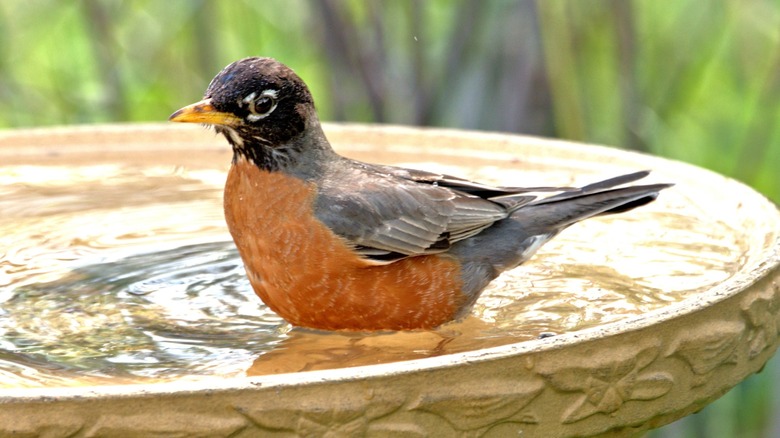
If you wanted to make robin pie (and to be clear, you shouldn't), one recipe from 1890 instructed cooks to start by layering beef and bacon slices in a pie dish. Up to a dozen stuffed and floured robins (presumably de-feathered, although this part of the recipe, along with what you stuff them with, doesn't appear to have survived to the modern day) would be stacked on top of this. This would then be seasoned with salt, pepper, parsley, bay leaf, and shallots; broth would be poured over the meat, and it would be capped with what they called "puff paste" in the language of the time — similar to a modern laminated puff pastry. Then, as it baked in the oven, the broth, flour, and meat created a gravy in the pie dish.
With chowing down on robin effectively illegal for decades now, it's hard to find reliable accounts of how the pie would have tasted. However, famed ornithologist John James Audubon, apparently a prolific consumer of many wild bird species, did sample it. He described robin meat (in general, not in pie form) as "fat and juicy," saying they "afford excellent eating" and that the bird was particularly popular in the South. Yet it apparently wasn't hard to find birds to put into pies: One tally by American butcher Thomas De Voe from the mid-1800s found some 120 different wild bird species in markets in cities like New York and Philadelphia (via Michigan State University Libraries). Over two dozen of them were songbirds: Some other popular additions to pies included grackles, cedar waxwings, and golden-winged woodpeckers.