

Cyclosporiasis Prevention: How To Wash, Prepare, And Store Produce
We may receive a commission on purchases made from links.
Cyclosporiasis is, unfortunately, making the rounds, causing major stomach upsets for those who ingest the cyclospora parasite. The Centers for Disease Control and Prevention logged 145 cases between May 1 and June 16, 2026, alone; other data multiplies that number several times over (cases typically rise throughout the spring and summer, with cyclosporiasis "season" being from May 1 to August 31). The first thing most folks think of when a nasty food- and waterborne intestinal infection makes headlines is how to avoid it.
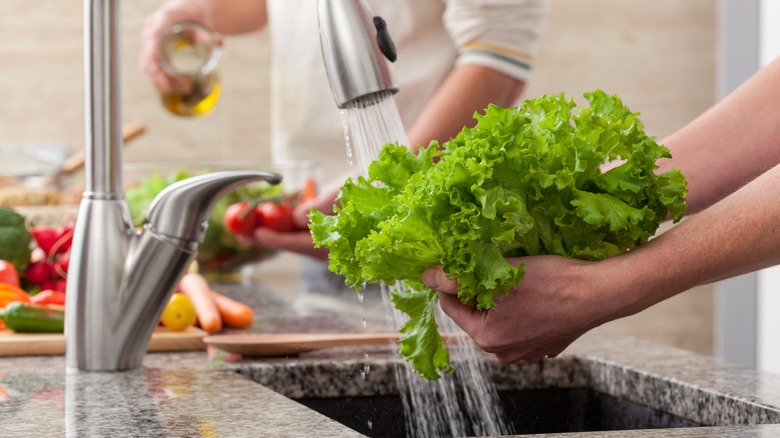
The CDC reports that it's not understood how the parasite breaches food and water, so broad food safety precautions are key. The CDC advises washing one's hands "before and after handling or preparing raw fruits and vegetables." Before is easy enough — you should do so any time you eat or handle any kind of food — but after might require more reminders. Tainted materials could transfer during or after that first scrub, so just assume they have, and get a good second lather once you unpack, peel, slice, or otherwise juggle your produce. The CDC also advises running said fruits and veggies thoroughly under water to wash. As a reminder, The U.S. Food and Drug Administration does not recommend those produce washes you see in spray bottles. Standard tap is typically fine for washing produce, though some prefer an extra vinegar wash.
More ways to keep produce safe, and when not to worry about cyclosporiasis
The CDC also advises that you scrub firmer items, such as cucumbers, with a scrub brush. You should still wash those cucumbers, and any other botanicals, even if you plan to peel them. Also, keep those brushes clean, lest the whole effort be moot. Some, including the OXO Good Grips Vegetable Brush, are dishwasher safe.
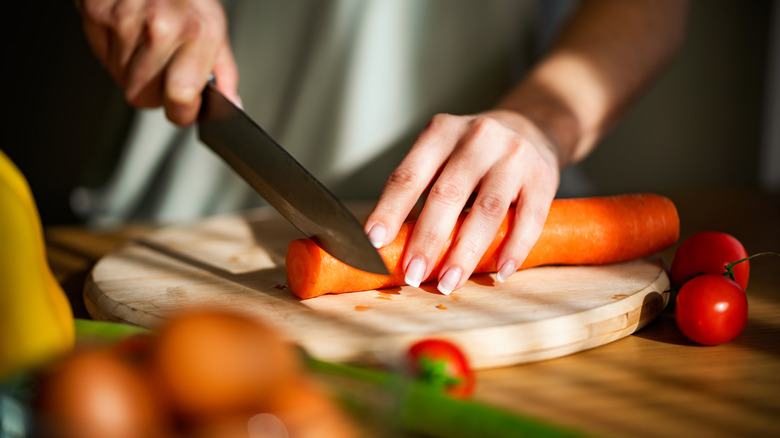
Additionally, don't eat those apple dings or peach imperfections — the CDC says to cut away those bruised or otherwise damaged sections. If you're cutting, slicing, or generally piercing produce flesh, pop leftovers in the refrigerator within a couple of hours max. Do so in airtight containers to further prevent cross-contamination.
One bright spot is a lot of prepackaged produce. The CDC says anything claiming to be prewashed does not need another dousing at home. Maybe switch to the cellophane-encased stuff while the agency continues monitoring the cyclosporiasis situation.