

Before Adding Vodka To Pasta Sauce, Remember This Tip
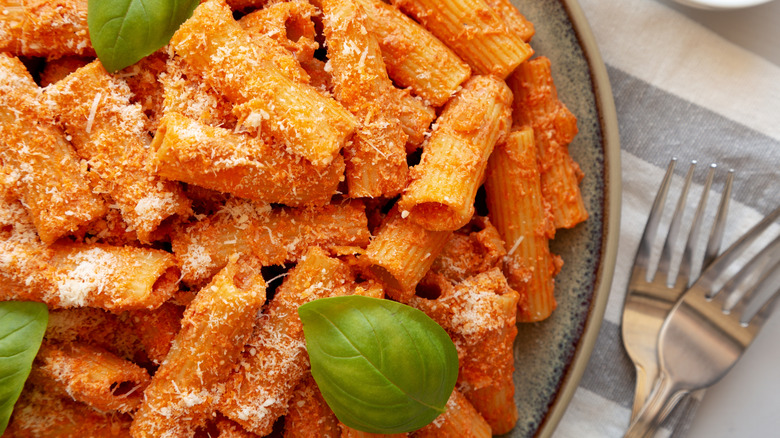
Whether you're new to the world of adding alcohol to pasta sauce or you're a pink sauce pro, there is one important tip to always remember: take the pan off the heat before you add the vodka in. It's the difference of literally a few seconds in cooking time that can make the process significantly safer due to the high alcohol content of vodka. At around 40% alcohol by volume, vodka is quite flammable, so pouring it directly into a very hot pan over an open gas flame can cause the alcohol to ignite. And yes, while any little flame flare-ups will possibly be quite brief, you can avoid them altogether and reduce any risk to safety by just taking the pan off the heat before the vodka goes in, then return the pan to a gentle simmer and get back to cooking.
If alcohol is flammable, you may be wondering, why even bother adding it to the dish at all? Well, there's very a good reason vodka has such a starring role in this classic pasta sauce. Tomatoes contain flavor compounds that dissolve more easily in alcohol than they do in water or fat alone, so the vodka isn't about making the sauce taste of alcohol — it's just about enhancing the flavor of the tomatoes themselves. Whoever figured out that vodka and tomatoes are a perfect pair is a genius (although the origins of vodka pasta sauce remain a mystery) because when used correctly, vodka helps create a richer and much more balanced tomato sauce than tomatoes alone ever could.
The best way to add vodka to pasta sauce
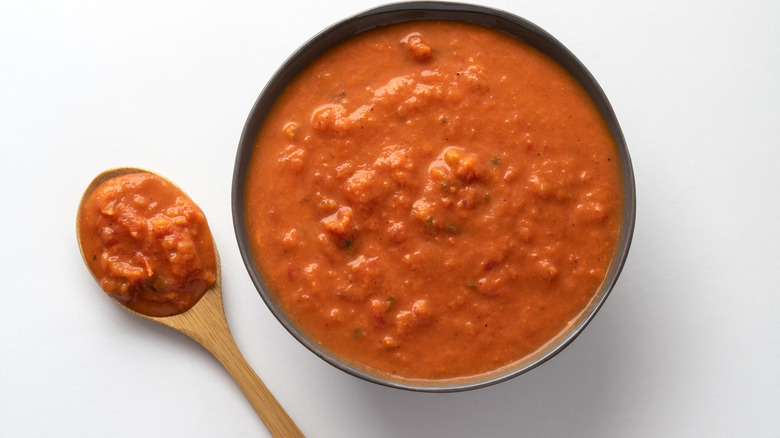
Just because you're taking your pan off the heat doesn't mean you should let everything cool down. It's really a case of removing it, pouring in the vodka, giving it a quick stir, then returning it to a slightly lower heat immediately to continue cooking. All you're doing is removing the immediate source of ignition for a moment — that is, if you're cooking over an open flame — before the alcohol is introduced. You don't want let the pot linger long off the burner because you don't want to fully interrupt the flow of simmering your sauce. If you're using an electric or induction stove, the risk is much lower because there's no exposed flame, but it is still a simple precaution that won't hurt on any type of stove.
Then, once the vodka is mixed through and the pan is back on the heat, you'll want to resist the urge to crank up the temperature to make up for the lost seconds of cooking time, because boiling point also matters when cooking a vodka pasta sauce. A gentle simmer is all you need to give the alcohol time to interact with the tomatoes before the alcohol itself evaporates. Many recipes recommend letting it simmer for at least five minutes before you move on to the next step of adding the cream. This bit of time is essential to let the harsher edge of alcohol cook off whilst allowing the vodka do its job of bringing out the taste of the tomatoes.