

Cortado Vs Macchiato: The Key Differences Explained
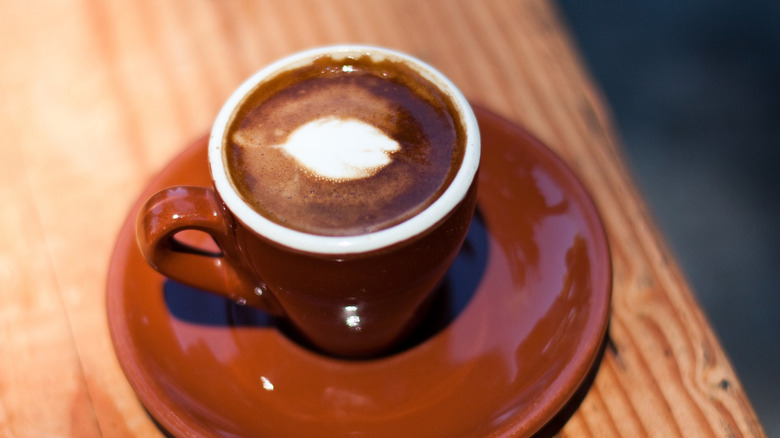
If you're a coffee drinker, you've probably encountered cortados and macchiatos at any halfway-decent cafe. Both drinks start out with the same base of one or two shots of espresso. After this, they part ways, with the amount of milk being the main difference between the two.
If you like stronger coffee, the macchiato, a modern invention, is the better choice. It surfaced in Italy in the 1980s, with dots of milk in the coffee's crema indicating the difference between a macchiato and regular espresso to cafe staff. The name comes from the Italian word for "stained" since a dash of steamed milk is added to "stain" the coffee. The espresso-to-milk ratio can vary, from 2:1 at the milky end to as much as 9:1 (just a tiny bit of milk). It's nowhere near as milky as lattes or cappuccinos.
If you like your coffee strong but a little milkier, consider the cortado. The drink hails from Spain, where it became popular among workers in the early 1900s, and has since spread around the world. Its name comes from the Spanish "cut," referring to the milk cutting the intense, acidic espresso flavor. Steamed milk is also used here, but the espresso-to-milk ratio is 1:1.
Where it gets messy: short and long macchiatos, and Starbucks

There are gray areas when it comes to these coffees, especially the way macchiatos are defined. Visit Australia and you encounter "short" and "long" macchiatos. The concept is the same, but a short macchiato is more or less what was described earlier (espresso with a dash of milk). The long macchiato is larger, with at least a double shot of espresso, more milk, and sometimes hot water to make it more like an americano (depending on the cafe's approach).
Then there are the various Starbucks "macchiatos." These are large cups of steamed milk and flavored syrup with a comparatively small amount of espresso that "stains" the milk rather than the other way around. These have existed since the '90s, so only about a decade longer than the original macchiato, but they're not the same thing. Mixing them up may irritate your barista.
The cortado hasn't drifted as much. There are variations, such as the Cuban cortadito, which also came from Spanish coffee culture but is made with sweetened espresso (and is realistically a different drink). However, you may encounter cortados on a cafe menu but receive a different version to what's described here. For example, a larger drink, although perhaps with similar milk-to-coffee ratios. If it's unclear, it's worth asking the barista before ordering so you don't get any surprises.