

Don't Settle For Burnt Cookware. Here's The Best Way To Remove Pesky Scorch Marks
We may receive a commission on purchases made from links.
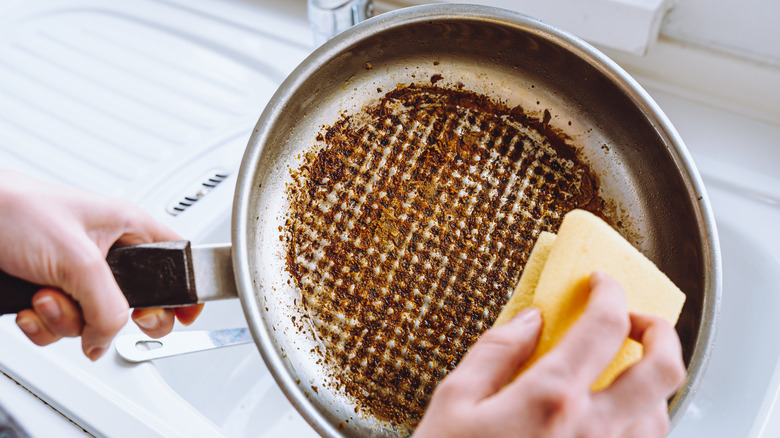
Whether you want everything in your kitchen to be spick and span or you want to turn an old pan into kitchen decor, scorch marks on your cookware can be an eyesore. But they don't have to stay that way. Chowhound spoke with Alexis Rochester, investigative chemist and owner of Chemistry Cachet, to figure out how to solve this common issue once and for all. "I recommend simmering a solution of water and either citric acid or white vinegar in the pan for about 10–15 minutes. The mild acid helps loosen burned-on residue, making it much easier to remove with gentle scrubbing," she said.
If there are stubborn marks, you'd want something that's better for a more thorough scrub — but still gentle — like a combination of baking soda paste and hydrogen peroxide. Technique also matters here. "Sprinkle baking soda on the surface, then lightly spray peroxide to form a paste. Firm, circular motions with a good sponge work best," Rochester suggested.
That said, homemade solutions can sometimes lack the right punch. In terms of store-bought products, Rochester recommends The Pink Stuff, which contains quartz, or Bar Keepers Friend, a powder cleanser that uses oxalic acid. It's also important to take into account the material of your cookware, as copper, nonstick, and cast-iron cookware can require special treatment.
Removing burnt marks depending on the material of your cookware
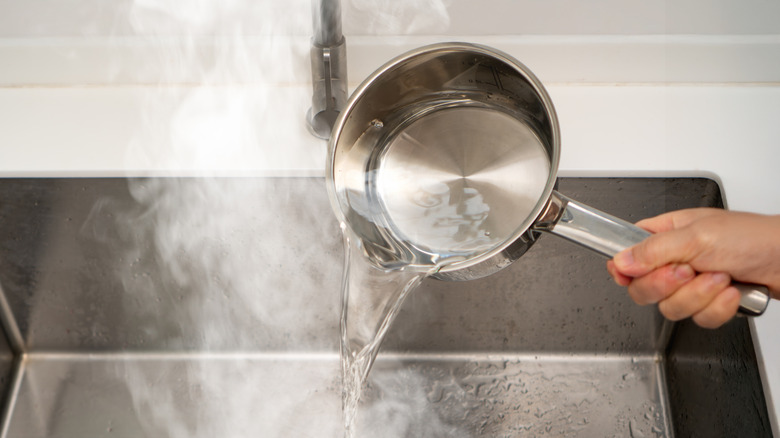
When cleaning nonstick cookware, avoid using abrasive cleaning methods that could strip the pan of its nonstick coating. Simmering a simple mixture of equal parts white vinegar, baking soda, and water can do wonders for noticeable marks. But you should also know when to give up and go to the store for a sparkly new one. If the marks remain stubborn, it might be time to retire your nonstick pan. Cast iron requires an entirely different approach. "I recommend cleaning it with hot water and a stiff brush or scraper, then drying it thoroughly and applying a very light coat of oil to maintain the seasoning," Alexis Rochester said.
If you're cooking with copper cookware, hold off on abrasive tools. Depending on its lining — whether tin or stainless steel — you might want to try other methods. For tin-lined copper, fragrance-free ammonia can do the trick. Since it can be dangerous to be exposed to the chemical for long periods of time, it's best to fill the pot or pan in question with water, bring it to a boil, add the ammonia, and then leave it outside for one or two days. For stainless steel-lined copper, use the same methods you would on stainless cookware. Keep in mind that copper tends to darken over time with regular use. While this can affect the appearance, the discoloration doesn't need to be removed.