

The Best Temperature For Cooking A Juicy Boston Butt Every Time
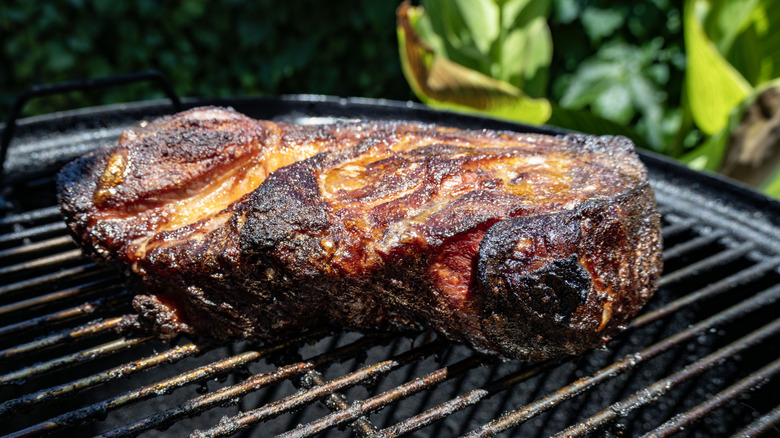
Putting together a pulled pork dinner that makes an impression — whether you're team pork shoulder or pork butt — really comes down to maximizing on juiciness. Despite what the name may suggest, Boston butt comes from the neck region of the pig's shoulder, and proves to be fatty enough to avoid drying out too quickly. One of the most important ways to guarantee its juiciness is by turning the temperature down.
The best temperatures for Boston butt depend heavily on your cooking method of choice. Two common cooking methods for pork are roasting and smoking. You can roast bone-in pork butt anywhere from 250 to 300 degrees Fahrenheit. Ensure that the pork reaches an internal temperature of 180 to 200 degrees Fahrenheit. Roasting time depends heavily on the size of the Boston butt; generally, it's best to roast your meat for around 40 minutes per pound.
If you're opting to smoke your Boston butt, go low and slow to achieve juicy meat. You'll want to keep your temperature at around 225 degrees Fahrenheit over a long cook time — typically two hours per pound. The secret also lies in not taking your meat off the smoker or out of the oven when it reaches a safe internal temperature, but instead letting it stay until it is physically tender and falling apart, which can be tested with a kebab skewer or toothpick.
Things to look out for when cooking a Boston butt for juicy results
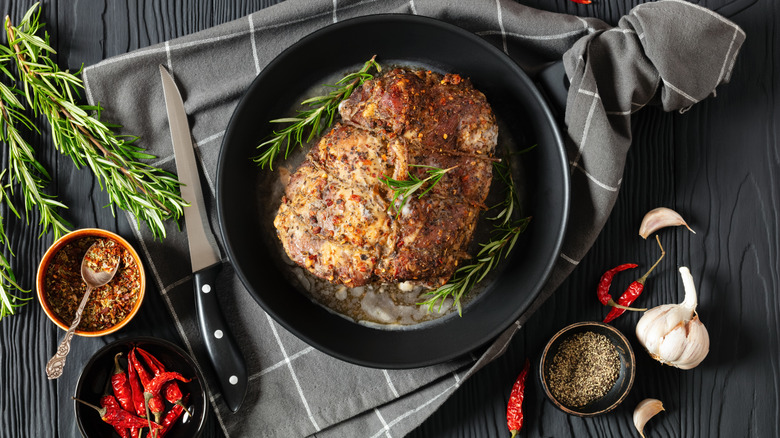
Without a doubt, you get the juiciest results when you choose the right cut of pork. Be sure to opt for a well-marbled cut of pork butt; marbling levels vary, and they have a lot to do with how succulent your meat will be. The more marbling, the more fat in the pork, which contributes to the texture. The connective tissue in the pork will dissolve when cooked slowly, leaving you with an irresistibly tender cut of meat. It's best to cook the pork with the fat side facing up, so that the melted fat seeps into the rest of the meat, guaranteeing extra juiciness.
Other than setting the right temperature, you can also consider spritzing the pork butt with apple juice or apple cider vinegar while cooking it. This will ensure that the pork retains moisture. Spray the apple cider vinegar once every hour after your Boston butt has started cooking, starting around the three-hour mark. You also can't go wrong with a meat thermometer (just make sure you know how to use it correctly), to ensure that you're being precise with your cooking. If you can't get your hands on a meat thermometer, you can tell it's ready once the meat starts to fall apart — perfectly tender.