

The Best Temperature For Transforming Sugar Into Delectable Caramel
We may receive a commission on purchases made from links.
If you're new to the magical world of making caramel, you might think the process is as easy as melting sugar. In fact, it depends on the precise temperature at which sugar will flawlessly caramelize. At 320 degrees Fahrenheit, the sugar will begin to break down into a clear, viscous liquid and then, as the temperature continues to climb, it will start to develop the compounds that give caramel its distinct color and complex flavor. By the time the temperature hits 340 to 365 degrees Fahrenheit, it will have developed a much darker color — the darkest it can go without turning bitter.
While it might be tempting to crank up the heat to high to get things moving quickly, medium heat gives you more control over how quickly the sugar changes color. This is especially important considering that once it hits the 400-degree mark, it will be bitter and burnt. If you're unsure, you can buy a candy thermometer like Craft911's for under $10 on Amazon, which can help you monitor the temperature exactly — a useful tool especially for anyone who is new at making caramel. But it's certainly not essential, especially for seasoned bakers who often rely on the changing color of the sugar instead, waiting for it to turn into a rich amber hue before turning off the heat.
The perfect caramel requires a watchful eye
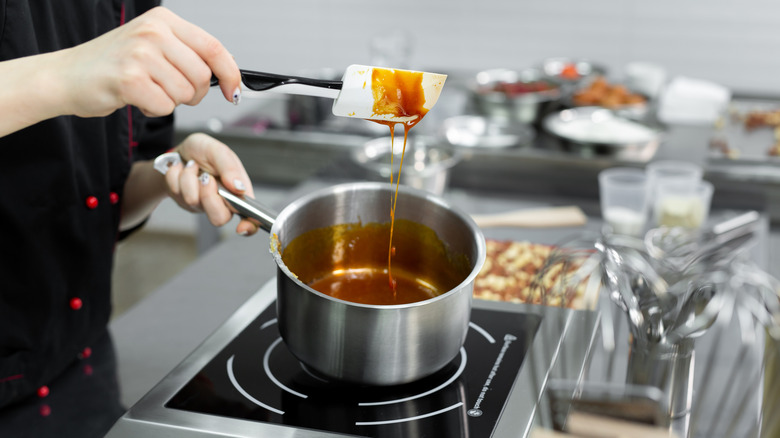
Once your caramel has reached the desired color and temperature, it's important to act quickly as the sugar will continue to cook a little even after the pan is off the heat. You want to remove it from the burner once it has turned a medium amber color. Taking it off too late risks the caramel going bitter or burning, so some chefs even put their pots in an ice bath to arrest the cooking process. If the goal is caramel sauce, then once it's off the heat, start whisking in warmed cream and butter slowly (too fast and the hot sugar might seize).
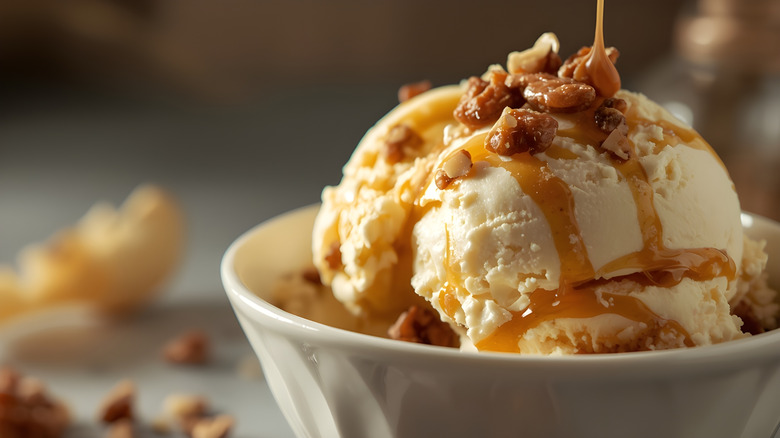
This is not a job from which you can walk away and do other things in the meantime; you need to stand by the pan, swirling it gently as it heats and keeping watch of the temperature and any changes to color. While the process is sensitive, it's not complicated. Once you've perfected homemade caramel (not to be confused with toffee), it can improve so many other sweet recipes. Drizzle it over vanilla ice cream, swirl it into brownies, or make a three-ingredient caramel apple dip for an easy party snack.