

This Lesser-Known Spanish Glassware Is Perfect For Sipping Scotch
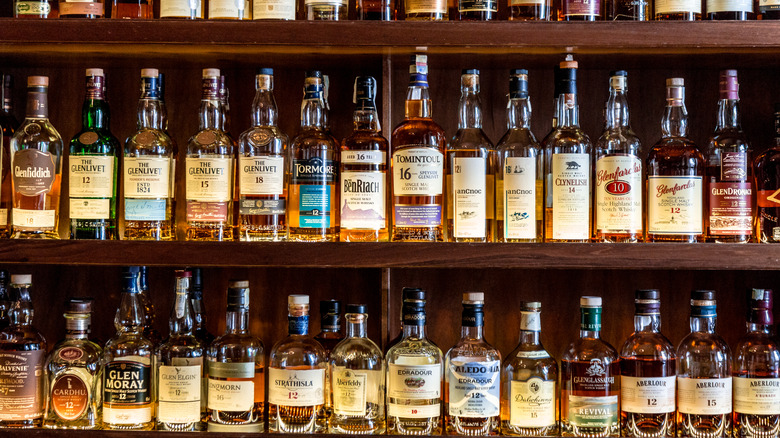
The spirited world of alcohol has its own customs and traditions. When sipping on tasty libations, the glassware adds to the enjoyment, among other things. A whisky tumbler remains a classic choice for on-the-rocks adventures, but the copita, also called the sherry glass, flies under the radar, and it's perfect for sipping scotch. The Spanish glassware has an almost slender rim that continues into a wider curved bottom, making it look similar to one used for enjoying wine.
When used for scotch, it's typically for tastings because the opening helps the pleasant aroma easily funnel through your nose, providing you with a more concentrated hint of its complexity before you even take a sip. This helps you drink scotch the correct way, which starts with savoring its fragrance. Its bottom part lets the glass be held with ease, and your palms can give the drink a slightly warmer temperature if desired. It's not usually what you reach for when sipping other spirits, but you can use a copita for tasting just about anything, from tequilas to gins.
Choosing the right glassware for enjoying scotch
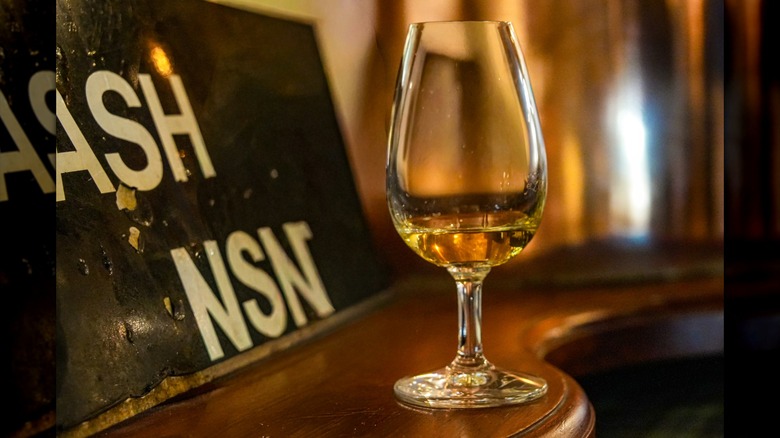
While glassware for alcoholic sips might seem like meaningless antics — though aesthetic appeal is part of the enjoyment — there are more intentions behind the designs. For instance, the popular Glencairn glass (the best glass to drink neat whisky from) creates an environment that makes swishing scotch around easier. Like the copita, it also helps the aroma reach your nose better.
On the other hand, the tumbler is ideal for enjoying spirits on the rocks because of its wide rim, but it's not exactly the best if you're looking to truly enjoy the fascinating aromas. It's a common choice for cocktails, though, because of its roomy shape. The highball glass is used for — you guessed it — highballs, or other drinks that mix spirits with various ingredients. Its shape takes ice really well, too.
Depending on what glassware you use, your scotch-drinking experience can look, taste, and smell different. A liquor's aromatic expression develops differently while changing how it lands on your taste buds. You might try the same bottle in different glasses to see how they differ, which can help you form a deeper appreciation for the art of it.