

Use The 5-1-0 Method For Perfect Pork Ribs Every Time
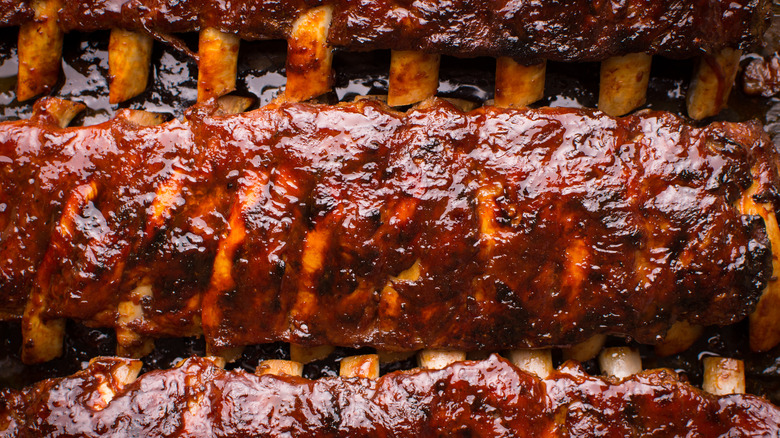
You may have heard of the 3-2-1 method for grilling the perfect pork ribs, which is an easy guide for many barbecue beginners, but there's another way called the 5-1-0 method that may be even better at delivering tender, juicy ribs. The 5-1-0 method is optimized for the characteristics of the pork's meat and the size of the ribs, making the meat tender and juicy without being too mushy, whether in the oven or in a smoker. If you want to give it a shot, try Chowhound's oven-baked barbecue baby back ribs recipe. But, when it comes time to cook, there are a number of steps that differ if you use the 5-1-0 method — though it's ultimately pretty simple.
Cook the pork ribs in a smoker (or oven) at 250 degrees Fahrenheit for five hours. You can add mop sauce (a thin, often vinegar-based liquid you brush on low-and-slow-cooked meats with a reusable barbecue mop to ensure they don't dry out) and occasionally rotate the ribs during this stage. Pull them out, spritz the ribs with more mop sauce to help them retain moisture during the final leg of their journey, wrap the ribs in foil, and put them back in for an additional hour. Rather than unwrapping and cooking again, as you would in the 3-2-1 method, let the meat rest for 15 minutes before eating. When you first employ the 5-1-0 method, you might need to experiment with precise cooking times or temperatures for the best results.
Things to consider when using the 5-1-0 method for pork ribs
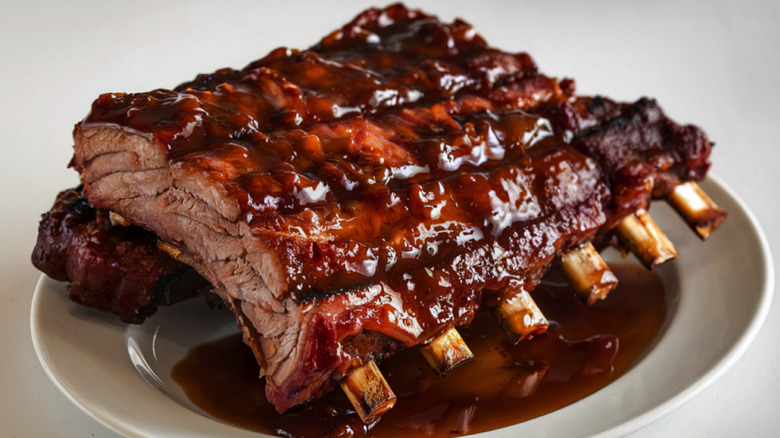
The reason the 5-1-0 method works is because pork ribs are smaller, thinner, and have leaner muscle fibers and less connective tissue than beef ribs, which are usually larger and contain more fatty marbling. That means the trapped heat of the wrapped phase breaks down the pork ribs' muscle fibers faster, decreasing the cooking time. Cooking wrapped ribs for too long can make them so tender they become mushy, making them difficult to serve and eat.
There are five main styles of pork ribs: baby back ribs from the upper rib cage, spare ribs from the side of the belly, St. Louis ribs (trimmed spare ribs), Kansas City ribs (St. Louis ribs but with cartilage), and rib tips (the trimmed ends from St. Louis ribs). The cooking times of different pork rib styles vary due to size, fat, and collagen content. Take this into account when choosing the best pork ribs for your cookout.
Baby backs are leaner and smaller and take the least amount of time to cook, reaching 190 to 205 degrees Fahrenheit internally in about three to four hours. Spare ribs, which have large bones, more meat, and more marbling and connective tissue, require about five to six hours. Trimmed St. Louis ribs take about four to five hours. As optimal unwrapped cooking time varies, check early for optimal doneness. You can use the bounce test to check: pick the rack up in the middle with metal tongs and shake it gently. If the ribs are rubbery, cook them longer; if they bend and crack easily, they're finished.