

Are Red, Yellow, Orange, And Green Bell Peppers All The Same Plant?
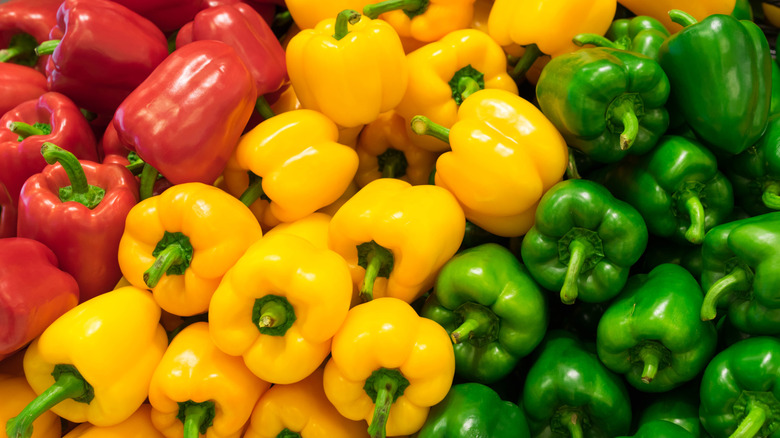
When it comes to pepper varieties, non-spicy Capsicum annuum are quite literally the bell of the ball. Available in an array of colors, their flavors vary from green and astringent to red and pleasantly sweet, with yellow and orange hovering somewhere in between. Despite their bright hues, no variation of the bell pepper has even a speck of heat. This, plus the signature bell shape that gives them their name, makes them perfect vessels for dishes such as barley and walnut-stuffed bell peppers, or for cutting into rings to make perfect fried eggs.
Though the combination of a viral tweet from 2018 and cursory knowledge of how fruit and veg ripen on the plant has fooled many of us into thinking that bell peppers ripen from green to yellow to orange to red, this actually isn't true. Almost all bell peppers start out green, but red bell peppers actually ripen from green to brown to red, while orange and yellow varieties simply ripen from green to their final color. Some bell peppers even remain green when they're fully ripe, and there are purple and white varieties as well.
That means harvesting a colorful array of bell peppers isn't reliant on the stage of ripeness, but on the seeds you plant. While you could technically say that all colors of bell pepper come from the same plant because they're all the same species, it's a misconception to assume a single pepper plant produces a rainbow of produce.
Picking a peck of vividly colored peppers for your cooking needs
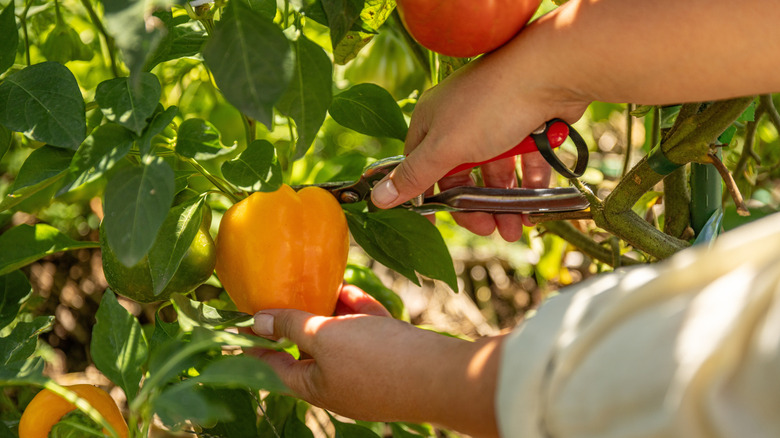
Knowing you don't get a variety of colors from a single bell pepper plant can help you plan your garden in a more practical way, based on what you like to eat. If you make a lot of salsas or grilled stuffed peppers, stick to red and green peppers since they have the most distinct flavors. However, if you're a fan of beautiful salads and colorful pickled veggies, plant one of each color to ensure your meals are as vibrant as possible.
Additionally, yellow and orange peppers both have mildly sweet, lightly bitter flavors that are great for snacking on raw, especially when they're dipped in hummus or your favorite savory ranch. Meanwhile, both white and purple varieties have fairly subtle astringent flavors that aren't as distinct as the other varieties, making them more of a visual treat than anything else.
Nutrient content also varies based on color. Green peppers are highest in lutein, which is beneficial to the eyes, while flavonoids that produce colorful pigments occur in higher levels in yellow, orange, and red peppers, with red being the most nutrient-dense. However, all varieties of bell pepper are rich in antioxidants, vitamin C, and a host of other key nutrients and minerals. Unless you need to boost a very specific vitamin or flavonoid in your diet, there are no bad choices in terms of nutrient content.