

The French Invented The Tastiest Way To Eat Vegetables (And Everyone Should Try It)
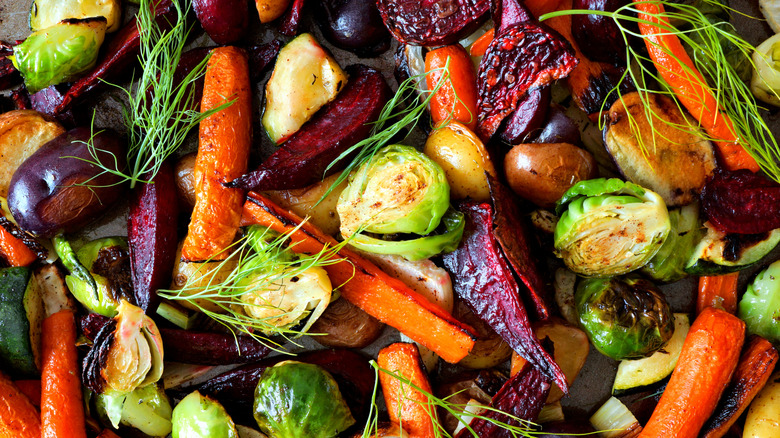
Long gone are the days when vegetables were the least exciting item on the plate. Whether you're fibermaxxing or always curious about cooking veggies that wake up the taste buds, glazing is the go-to way to bring in more flavor. The French are believed to have been the first to document the cooking method of glazing vegetables. A recipe for Vichy carrots, a kind of glazed carrot, was recorded back in 1903 when Auguste Escoffier detailed the method in his book "Guide Culinaire." The recipe used saline mineral water from the Vichy area to create an evaporated liquid that eventually left a sheen over the carrots. So the next time you're munching on some sweet and sticky glazed carrots, know that you have French culinary innovation to thank.
For those who are new to the technique, glazing involves using a medium-high heat and cooking a liquid of choice down until it evaporates and becomes thick and sticky, creating a shiny and flavorsome layer over the veggies. Other ingredients that may be added to make a glaze include a fat (think oil or butter), stock, sugar, honey, maple or date syrup, and vinegar — for a balance of sweet, sour, and savory flavors. The dry heat in an oven can also cause a glaze effect when liquids are heated and caramelize over the vegetables.
There are several vegetables, like turnips, beets, sweet potatoes, parsnips, and onions, that work particularly well with the glazing method. Glazing isn't just about a shinier look; it also lets your veggies soak up more warmth and depth, allowing you to get creative with your produce — crispy fried pomegranate-glazed sprouts, anyone?
Tips for best results when glazing vegetables
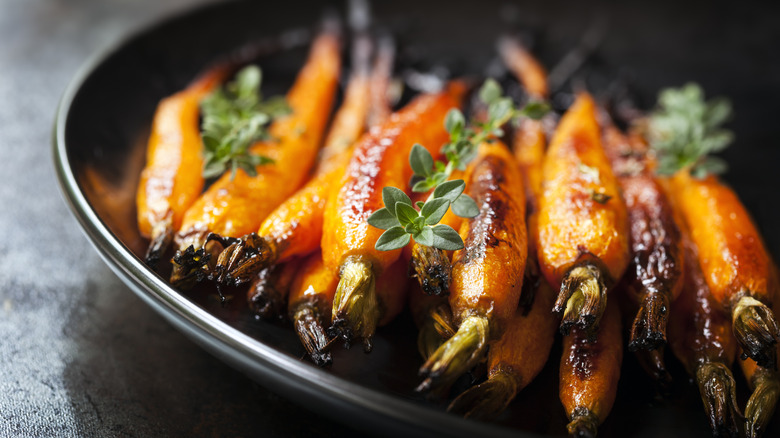
It's easy to end up with a glaze that doesn't hit the spot, or even blackens the pans instead of imbuing the veggies with rich, sticky flavor. While adding sugar can be tempting, adding it too early can cause it to burn before the vegetables are fully cooked. Try adding the sugary glaze toward the end of the cooking process — when the vegetables have about 15 minutes left. You could also try cutting down or leaving out the sugar entirely for veggies like carrots that have natural sweetness.
One way to ramp up the taste is to include other richly flavored ingredients in your glaze. Several herbs can be added to the mixture to take it up a notch from the basic recipe. Thyme and rosemary contain and release heat-stable oils that add to the dish's flavor. Additionally, miso is an ingredient that adds extra umami flavor to your veggies and pairs especially well with a honey and butter glaze. If you're looking for a kick to your glaze, look no further than Korean pantry staple gochujang to add a mix of spicy, sweet, and savory flavors to veggies like potatoes, sprouts, or eggplant.
It's best to pay extra attention when glazing cooked vegetables that are excessively water-rich like tomatoes or zucchini. The fact that they are more likely to go soft when cooked makes it difficult for the glaze to stick, instead causing the mixture to dilute. Root vegetables provide better results because their firmer texture allows the glaze to cling more effectively.