

The Best Temperature For A Light, Airy Soufflé Every Time
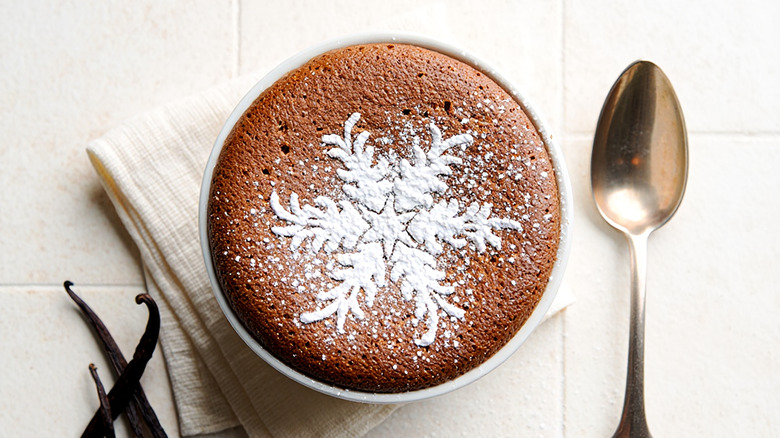
Ah, soufflé — the classic French dessert that strikes terror into the hearts of home bakers everywhere. Though a soufflé is little more than whipped egg whites and whole yolks gently folded into béchamel sauce or pastry cream, it's notoriously finicky and difficult to execute correctly. It's been said that a mistake as small as bumping into the oven or dropping a dish can instantly take these lofty desserts from light, airy perfection to dense, fallen failures.
However, it appears this legend is somewhat overblown, provided, of course, that you avoid one of the most common mistakes when making a soufflé: using the wrong temperature. Setting your temperature too high could blacken the outside of your soufflé before the center is set, while having it too low could dry out your dessert and rob it of its fluffy lift. Though there is some debate about whether 400 or 375 degrees Fahrenheit is the best option, renowned experts like the late Julia Child contended that a perfectly set soufflé comes from a well-timed temperature change.
The idea is to preheat your oven to 400 degrees to bathe your soufflé in a burst of heat that will cause the air bubbles inside the whipped egg whites to begin rapidly expanding, creating a beautiful loft. Then, you turn the temperature down 25 degrees to 375. The oven will gradually cool to this temperature, which maintains your soufflé's texture while its center becomes perfectly set.
Set soufflés for savory sides and lush desserts
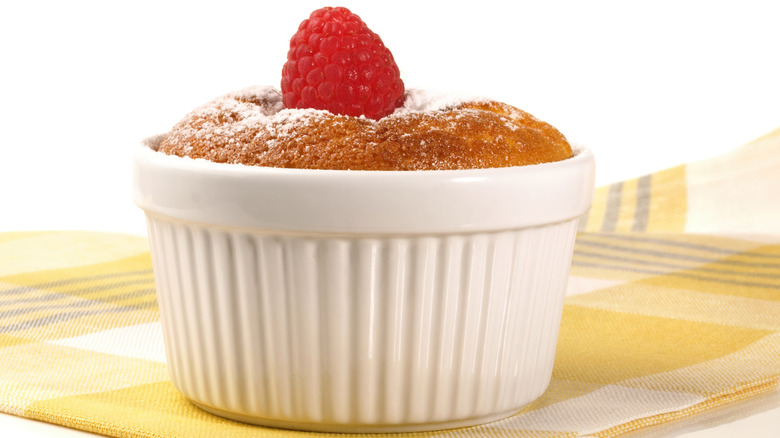
Though adjusting oven temperature is one of the best wasy to ensure your soufflés are always light and airy, all is not lost if you forget to turn the temperature down or absentmindedly preheat your oven to 375 degrees Fahrenheit instead of 400. If you leave the temperature at 400, your soufflé will be finished baking in about 30 minutes with a golden brown outer shell and a center that's a bit loose. This doesn't mean that your soufflé is undercooked. In fact, some people prefer the contrast of a creamy, warm center against the fluffy surrounding layers.
However, if you prefer that your soufflé be set in the middle and don't mind a little less loft, 375 degrees is the way to go. At this lower temperature, your soufflés will take around 10 minutes longer to bake, resulting in a dessert that's a little lighter in color, slightly less tall, and with an even consistency all the way through. If you do decide to go with one temperature over the other rather than dropping the temperature as previously described, you may also benefit from using different temperatures for different types of soufflés.
For instance, a creamy, warm center might be delicious in an oatmeal breakfast soufflé or a dark chocolate soufflé, like a slightly more sophisticated lava cake. However, this might be off-putting in a savory recipe, where a more even bake is preferred. A soufflé with ingredients like bacon or cheese may benefit from a lower temperature and longer bake time.