

Make Meatballs 10x Better With This Creamy Ingredient
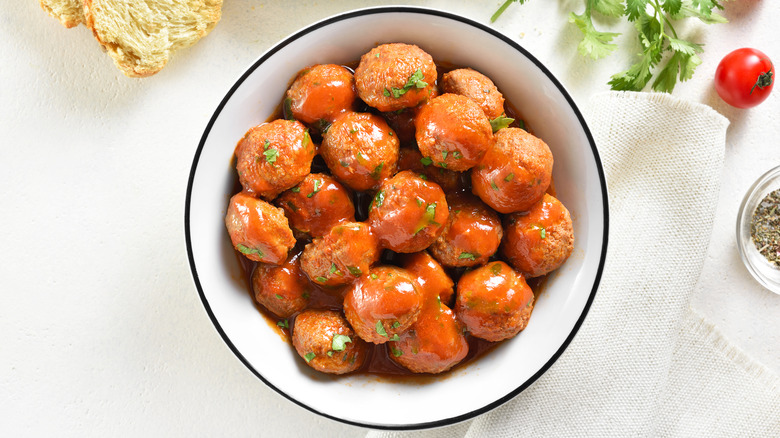
Ideally, meatballs should have a few qualities. They should, of course, be meaty as well as flavorful. But beyond this, they should also be moist and tender. Now, the first two descriptors are relatively easy to check off. Making your meatballs with meat (or a meat substitute if you want to enjoy a vegetarian or vegan version of that ever so delicious pasta topper and sub sandwich filler) is simple enough. Seasonings can also be added in a jiffy, and extra steps like reserving some of the meatball mix for a flavorful sauce will help elevate them with little effort. However, adding moisture to your meatballs is another story entirely and can be a relatively difficult task. That is, if you don't have any ricotta on hand.
If have some ricotta (not to be confused with cottage cheese) in your fridge, well you're in luck, because this fresh cheese might just be the key to the most moist meatballs you've ever had. Now, in terms of flavor, most of the ricotta you'll find in stores is relatively mild. So it won't affect the flavor of your meatballs in a significant way. It will, however, make your meatballs incredible tender and soft, even if you slightly overcook them (we've all done it). To add it, simply use 1 cup of ricotta for every pound of meat and mix it into your meatball mixture. And there you have it, super soft and juicy meatballs to enjoy.
Making the most of ricotta in meatballs
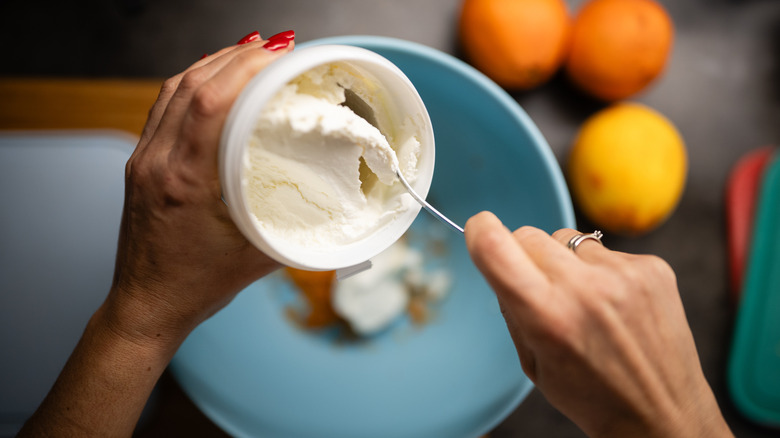
There are other hacks like mixing in a few extra egg yolks to make meatballs tender. However, not only does ricotta add the same bit of moisture to your meatballs, it does so without making them overly dense. Adding additional eggs to your meatballs, on the other hand, can make them all dense and mushy. Ricotta makes a particularly great addition to chicken- or turkey-based batches which might, due to their lean nature, be in need of some tenderness. Not only will ricotta add much needed fat in these recipes, but its light, mild taste won't overshadow your other seasonings.
Now, there are a few things you'll want to keep in mind before adding a dollop of this fresh cheese to your next batch. For starters, you should stick to whole milk ricotta rather than skim or part skim, as these lower fat options may make for a runny, incohesive mess. You'll also want to make sure not to add too much ricotta to your recipe, as overdoing it can make your meatballs too loose or mushy, and that's just no good. You can always can start by adding a ½ cup of ricotta per pound of meat and see how it suits your fancy before working your way up to a full cup. Perhaps this experimentation may be unexpected, but if it means better meatballs, it's worth a try.