

The Best Way To Store Half An Onion For Later
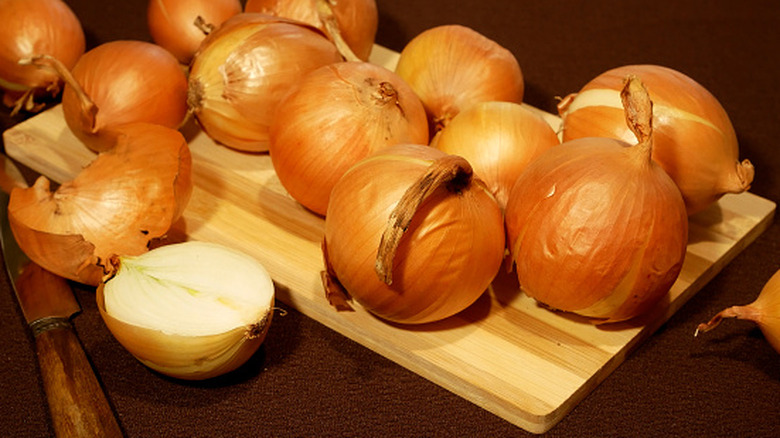
When you're looking for ways to store a leftover half of an onion, there's no shortage of advice online — put it in water; no, wrap it in cling wrap; actually, place it cut-side down on a plate. The only issue is, few of these ideas are reflected in food safety or produce storage guidance.
Popular tips, such as placing the cut side of any type of onions (except for scallions) in a shallow dish of water, seem like they should work in theory, but when it comes to maintaining freshness and reducing odor, there's no proof they work any better than storing them in a well-sealed container in the fridge.
A rigid glass container or tightly sealed glass jar work best since plastic may absorb the smell of the onion. Failing this, plastic Tupperware or zip-top food storage bags — with as much air pressed out as possible — are the next best options. While this may not be the most exciting kitchen storage trick, sometimes, the simpler method really is the one worth sticking to.
Why the simplest solution for storing an onion half is the best
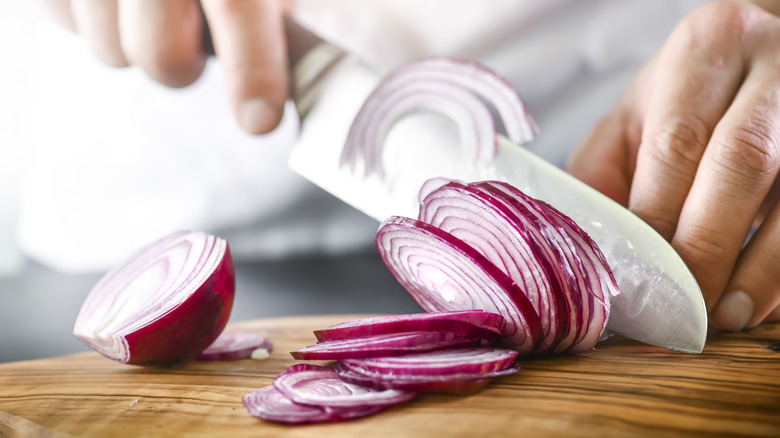
Have you ever pulled half an unwrapped onion from the fridge and found it dry, shriveled, or even rubbery? An airtight container is one of the best storage methods to slow down that drying out process by ensuring it comes into as little contact with air as possible, which keeps the onion fresher for longer. Plus, an airtight container has another big advantage: cutting an onion releases odor-causing sulfur compounds, and a sealed container helps keep those compounds contained so your kitchen stays smelling its best.
Cling wrap does an alright job at covering up the exposed sides of the onion, but it doesn't always create a perfect seal, so air can still reach the exposed surface. A tightly sealed Tupperware, jar, or zip-top bag instead creates a much more consistent barrier. Once your onion is properly stored, you can expect it to stay edible for up to a week. Although, like any food storage recommendation, you should always check for any signs it's gone bad before eating, such as a slimy texture, soft spots, mold, or an unpleasant odor. But, as long as it still looks and smells fresh, it should stay ready in the fridge for another meal, helping you avoid food waste.