

What's The Average Shelf Life Of Mustard?

A little bit bitey and savory (or sweet, depending on your preferred variety), and the perfect way to top off a hot dog, you depend on your favorite mustard to add flavor to a ton of different foods. If you've been hitting up your reliable, go-to bottle of mustard that takes up residence on the shelf inside the door of your fridge for longer than you can remember, it's smart to think about how long the condiment actually stays good — and it's longer than you might think. Mustard is typically stamped with an expiration or "best by" date, but on average, it can last a year longer than the date on the package after it's been opened and stored in the refrigerator. (Honey mustard can last for up to two years past this date.)
Mustard that hasn't been opened and is sitting, sealed, in your pantry can last anywhere from one to three years, depending on the type you have. Dijon and honey mustard are on the higher end here than American and Chinese mustard varieties, showing how high concentrations of certain ingredients — specifically, those that add salt or acid — help mustard hold up over time. (And honey, of course, is remarkably long-lived with its high sugar and low moisture content.) Dry mustard — an absolute pantry staple — can last up to two years. If you're dedicated enough to make your own mustard, know that shelf life can vary largely, ranging from a week to a year in the fridge and one day in the pantry, so it's smart to err on the side of caution and use it up quickly.
Tips and tricks to help your mustard stay fresh — and how to know when it's time to toss it
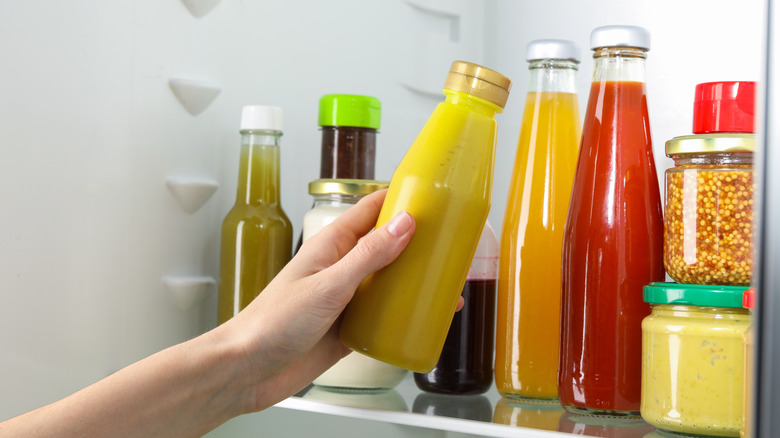
Storage is key when it comes to helping your mustard stay fresh over time. Once the jar is opened, it needs to be refrigerated (make sure it's sealed tightly to keep air out). While leaving it out on the counter or in the pantry won't necessarily make it spoil quickly, it can make your mustard lose flavor. Where you keep it in the fridge matters, too. While most of us store condiments on the door's shelves (guilty), the bottom shelf at the back of the fridge is actually the coldest spot. Revamping your fridge storage doesn't have to be a huge pain — using a clear plastic shoebox is a clever way to store condiments and maximize fridge space, and it'll help you get your mustard out of the door shelves.
While mustard can last an incredibly long time compared to other condiments in your fridge, it won't last forever. There are a few signs that it's past its prime, including any visible mold, weird coloring, strange smells, or leaking from its container. Even if your mustard hasn't quite gone bad, the flavor can lose some of its potency over time, so it's smart to snag a new jar if it's been years since you've replaced the one that's been a mainstay of your condiment collection.