

Scotch Vs Irish Whiskey: The Flavor Difference Explained
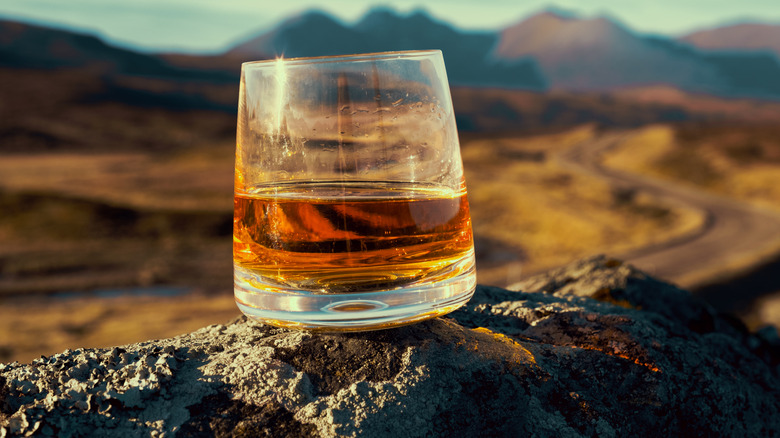
It's often debated whether Ireland or Scotland invented whiskey. While Ireland may have an earlier known record of distilling, Scotland gets credit for maturing the process and growing its popularity worldwide. The differences in process begin with the naming convention, as the two nations spell the spirit name differently – the Irish spell it whiskey while the Scottish spell it whisky — but the two also vary in taste. Irish whiskey tends to be a lighter-drinking dram with fruit-forward notes, whereas Scotch whisky is more complex with a heavier, oily texture. There are, of course, subtle differences within each of the two types and you'll find exceptions across specific bottles, blends, and distilleries, but the differentiation is a solid start for your own whiskey journey.
This flavor difference can be attributed to the whiskey-making process of each nation. Scotch whisky is governed by the rules of the Scotch Whisky Association and Irish whiskey by the Irish Whiskey Technical File. While neither stipulates the number of times the spirit must be distilled, the majority of Scotch whiskies are distilled twice, while Irish whiskey is often triple distilled. In general, a triple-distilled whiskey is smoother, less viscous, and easier to drink. The flavor complexity of scotch is largely associated with the five discrete whisky-making regions of Scotland lending their unique characteristics to the spirit. And because scotch is usually only distilled twice, those flavor and aromatic characteristics are strong. Scotch tends to have earthy and mossy notes, often because of the naturally growing peat that's used when drying the malted barley.
Other steps that separate scotch and Irish whiskey
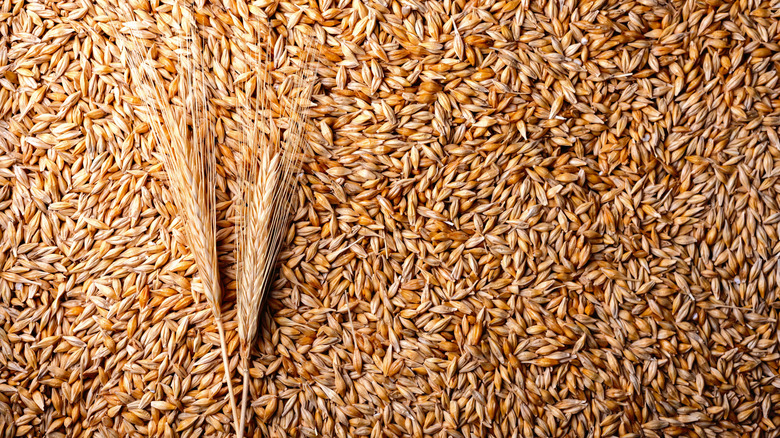
When pinning scotch versus Irish whiskey, you must consider the main ingredient: barley. The two key types of scotch are single malt and blended whisky. The former uses malted barley coming from a single distillery. The latter is a blend of single malt and other single grain whiskies (Aldi's Highland Black is a surprisingly tasty example). Irish distilleries — in part due to a tax levied on malted barley — use more unmalted barley. One type of Irish whiskey without a scotch counterpart is single pot still whiskey: a combination of malted and unmalted barley distilled in a single pot still. Malted barley lends notes of vanilla along with toasty notes, while unmalted barley makes for sharp fruit notes.
Another difference between scotch and Irish whiskey is the barrel or cask where the spirits age. The Scotch Whisky Association stipulates that only oak barrels can be used to age scotch. Such stipulations do not exist for Irish whiskey and distillers get away with lots of experimentation as a result, using different wood varieties and casks that previously aged sherry, wines, rum, and other spirits to enhance fruit and spice notes.
In the end, it may be a bit unfair to try to narrow down the taste differences to only scotch versus Irish whiskey, as each category can easily be subdivided. However, certain consistent traits can help you better understand what sets the two apart. If your whiskey-appreciation journey is just beginning, consider starting with Irish whiskey before moving on to scotch so you're better prepared for those more complex and funky notes.