

It's Time To Stop Believing This Blueberry Myth Once And For All
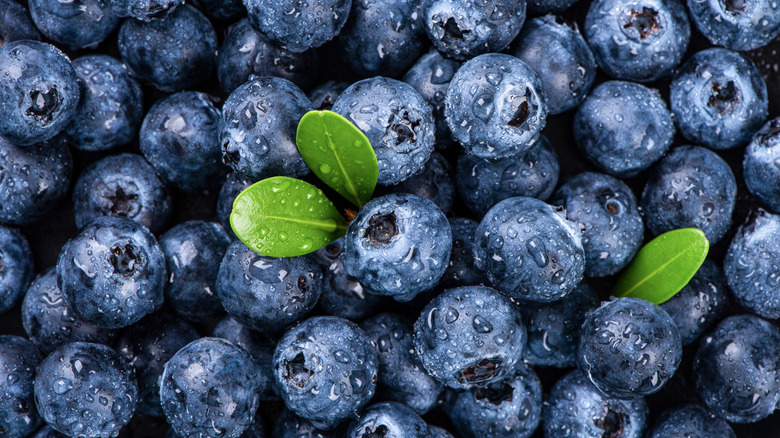
Sweet, tangy, and wonderfully juicy blueberries are some of summer's most incredible treats. Whether savored as a snack on their own, baked into a mouthwatering breakfast cake, or transformed into a beautifully rich port sauce for roast pork, they can easily find their way into countless recipes. But choosing the tastiest pint of blueberries at the store requires some knowledge. What many people do is listen to their initial instinct and pick the plumpest blueberries available in the store. It seems this may just be the perfect time to debunk the myth that bigger blueberries are better.
Florencia Cusumano, head chef at New York City's Butler bakeshop, told Tasting Table in an exclusive talk that bigger doesn't always mean better. "Oversized blueberries can be watery and dull in flavor, while smaller ones often carry a more concentrated sweetness," Florencia Cusumano said. There's no doubt that bigger blueberries have a higher water content. Yet, their flavor is influenced by a wide range of factors, such as growing conditions, soil quality, storage methods, and last but not least — the variety itself. So, if you're looking for blueberries with a more concentrated flavor, opt for smaller cultivars such as Top Hat or Northcountry. Top Hat berries are about a ½ inch in diameter, and Northcountry berries are roughly a ¼ to ⅜ inch in diameter.
Wild blueberries (Vaccinium anguistifolium) are also berries, though they're not the same as cultivated varieties. In fact, they are a totally different species. They taste different and are known for their concentrated sweet-tart flavor, thanks in part to their higher skin-to-pulp ratio. About ⅓ the size of larger cultivated varieties, wild blueberries are only widely available in regions where they're harvested during the short summer season.
A blueberry's color can tell you a lot about its flavor
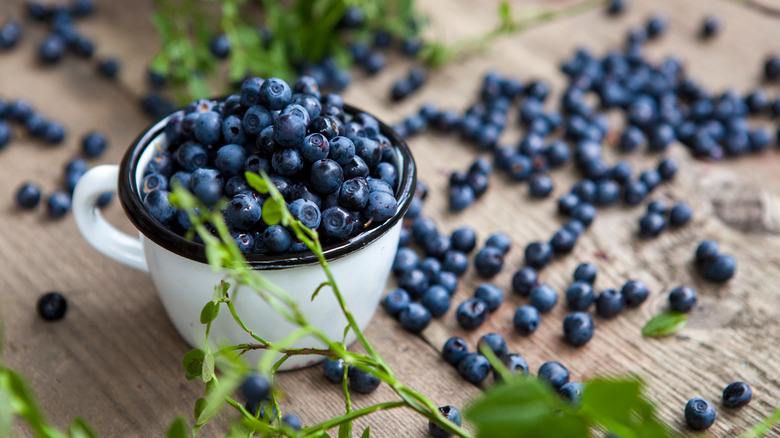
It can take up to 90 days for the berries to fully mature. Producers usually harvest them once their sugar content reaches about 13%, and then ship them off to markets. But not all blueberries ripen at the same time. This is why it's essential to pay close attention to the berry's color. Evaluating color is the simple way to check blueberries for peak ripeness.
That said, the best blueberries are deep, uniform blue to blue-purple, given they've had enough time to fully ripen and develop their sweetness. If the container has berries with red or green patches, it means they were likely picked too early. Considering that blueberries are non-climacteric, meaning they don't ripen after harvest, underripe berries will never develop the sweetness or flavor you're probably hoping for. At the same time, a light white-gray coating (called bloom) on the fruit is also a good indicator that the berries are fresh. This waxy layer's role is to protect the fruit from moisture loss and spoilage.
Ultimately, before adding the carton to your cart, take a moment to inspect the blueberries inside. If they seem crushed, or if there's excess juice or moisture at the bottom of the packaging, they're most likely starting to spoil. The blueberries you'll want to purchase are firm, plump, and completely dry. So next time you're shopping for blueberries, don't judge them by size alone.
Static Media owns and operates Chowhound and Tasting Table.