

Why There's Simply No Need For Granite Countertops In Your Kitchen Anymore
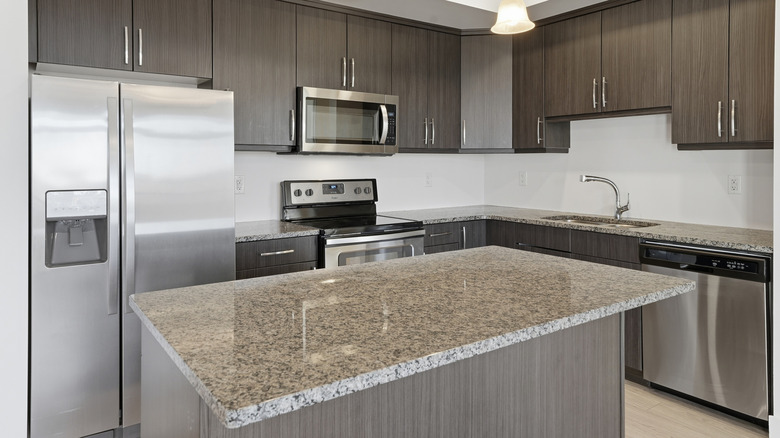
Granite countertops have plenty of advantages. They're quite durable, relatively heat-resistant (they can withstand temperatures of up to 480 degrees Fahrenheit) and on top of that, they bring a beautiful look to any kitchen. However, despite the qualities, this natural stone is no longer the go-to choice for many customers. Plus dark granite colors including black, charcoal, and deep green are losing popularity big time. But why is that? Even though there's no single reason, granite actually has more drawbacks than many of today's other countertop materials.
First of all, granite is naturally porous. This means that it has small holes (also known as pores) in its structure that can absorb moisture and liquids. Because of this, granite needs to be properly sealed — and resealed every few years. Unsealed granite can lead to stains from oil, wine, coffee or even sauces, and can promote bacterial growth. In addition, air can make its way through the pores, too. While granite sealing itself isn't particularly expensive compared to other kitchen renovation costs, it can add anywhere from $300 to well over $1,000 to a countertop's overall cost. Trying to save on sealing by cutting corners can also lead to hygiene issues.
What's more, because granite is a natural stone, it's incredibly heavy. A standard granite slab weighs about 20 pounds per square foot, which kind of makes installation difficult. Hence, it typically requires a professional hand, which adds another 45 to 100 bucks per square foot to the price. Ultimately, granite isn't immune to chips or cracks. When that happens, repairs aren't just difficult, but also incredibly pricey (up to around $800 per chip, depending on the size and its location).
Countertops with less upkeep
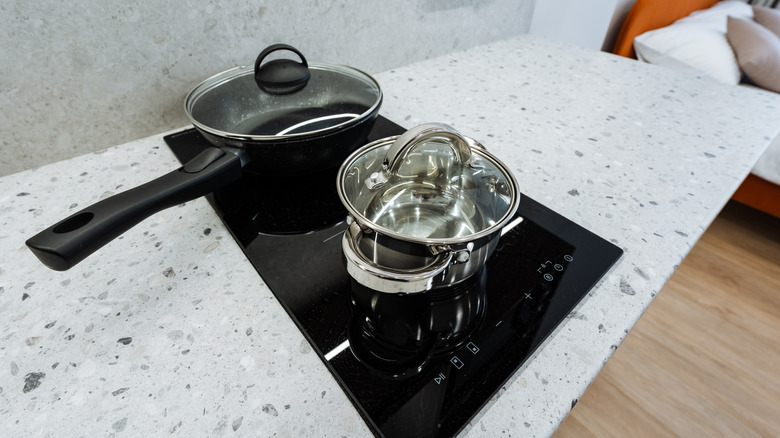
With granite countertops fading in popularity due to obvious reasons, homeowners are increasingly moving to other durable, low-maintenance alternatives. Quartz countertops, made of natural quartz crystals mixed with resins and polymers, have recently emerged as a popular choice. Quartz is non-porous, stain-resistant, and its surface never needs resealing. Quartz countertops don't need harsh cleaning chemicals. The right way to clean quartz counters involves nothing but mild dish soap and a microfiber cloth.
Meanwhile, porcelain countertops are yet another rising favorite. They feature exceptional scratch, heat, and UV resistance. This unique material is a refined ceramic created by heating kaolin clay and feldspar at extreme temperatures of around 2,600 degrees Fahrenheit. It's stronger than granite, and suitable for both indoor and outdoor kitchens.
Homeowners aiming for a more luxurious look could opt for quartzite, a metamorphic rock which consists of 90% quartz at minimum. It's exceptionally durable, easy to maintain and features great heat resistance. An added bonus is that it's available in a wide range of colors. Another option is Dekton, which is an excellent pick for busy homes – heavy kitchen use doesn't stand a chance against this ultra-durable countertop. Made by combining quartz, porcelain and glass, the raw material is exposed at 2,200 degrees Fahrenheit. It is then compressed under 25,000 tons of pressure. It boasts outstanding durability, heat and scratch resistance, stain protection, UV resistance and a non-porous finish. With so many choices, ditch the old-fashioned marble and pick a countertop that better suits your lifestyle.