

Not Mayo, Not Ketchup: Add 10x The Flavor To Your Plain Burgers With This Creamy Condiment

If there's one thing burger devotees covet more than juicy patties and toasty buns, it's ways to introduce even more flavor to the iconic American sandwich. The tastiest burgers begin with the best beef blend, which hovers around 20% to 40% fat content. Once they're grilled, griddled, or smashed, classic toppings, such as lettuce, tomato, and all of the standard condiments, follow to bring even more freshness, crunch, salinity, spice, and sometimes sweetness. Even a mild zag from the expected can further enliven your burger repertoire, and aioli is just the silken, garlicky blend to make your meat even more memorable.
Aioli isn't too far afield from the mayonnaise you're already familiar with (that's part of what makes it so great on a burger), but the difference between mayo and aioli is not merely the addition of the latter's aromatic garlic, but also the absence of egg. Because aioli's two basic ingredients (garlic and extra virgin olive oil) can be a bit of a challenge to emulsify into its intended creamy constitution, some folks add egg as a kind of cheat code. That's fine, provided you can evade the aioli inspectors, but just know the result is technically flavored mayo rather than aioli proper. Should you wish to wade into the spreadable world of real-deal aioli for your next burger night, it's not impossible to create your own with a little patience and aggression.
Making aioli for better burgers at home
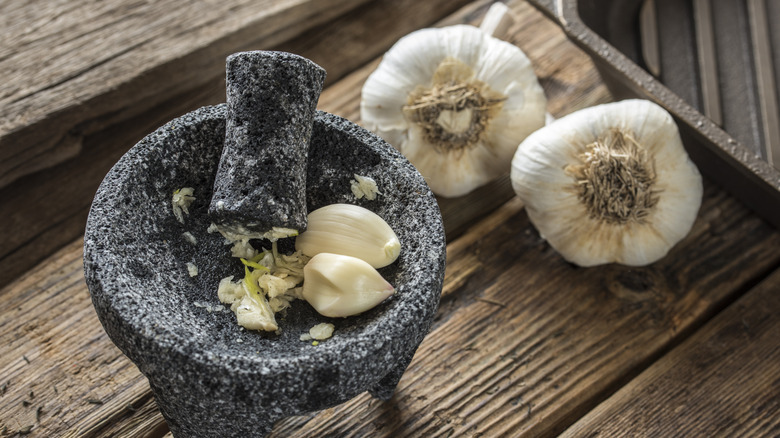
While everyday mayo almost instantly transforms from its egg, oil, and acid base into the condiment we all know and love (or sometimes famously loathe) with the quick zap of an immersion blender, aioli requires a little more hands-on finesse. You also need a mortar and pestle, arm strength endurance, and maybe a little pent up frustration to grind out as you mash a few garlic cloves into a paste. A rough chop before you get to work can make them break down a little faster.
Once those cloves are somewhat smooth, introduce your extra virgin olive oil about 1 teaspoon at a time. The mix starts to become creamy between the pressure of your tools. Some recipes call for a pinch of salt, which acts as an abrasive to further help the garlic turn to paste, and a little lemon juice, which brightens up the pungent allium. The whole process should only take about 15 minutes, and it creates a bold condiment that's even more satisfying every time you can tell a guest, "that's not mayo. It's aioli." Aioli innovators may want to introduce even more ingredients to the mix, such as hot chiles or verdant herbs — but you may need to come up with yet another name for the stuff if you do.
The best ways to enjoy aioli-enhanced burgers
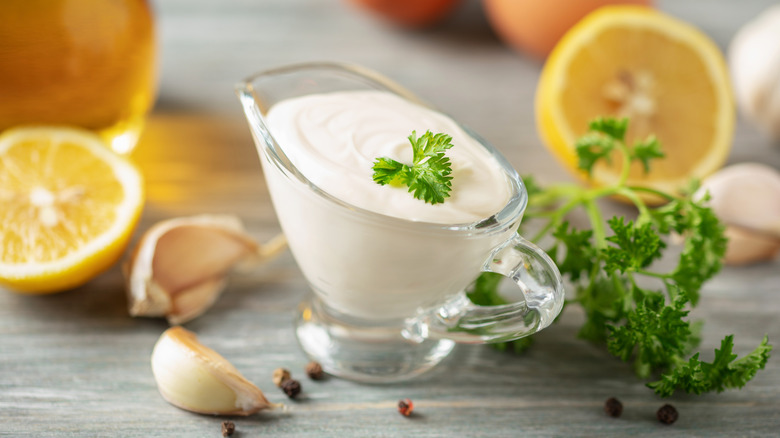
For an optimal aioli burger experience, use the spread like you would any other condiment. Spoon a dollop directly on your bun or patty, press it all together, and bite right in. Emulsified garlic and oil can separate, or "break," if you add the newly married mix to something piping hot, but burger temps begin dropping as soon as you remove them from your heat source, so the aioli should hold up just fine by the time you're ready for toppings. That also means you should only add aioli to buns post-toasting, lest it begin to lose its creamy composition and instead melt into the bread.
Also, recalibrate your burger accoutrement for an ideal aioli experience. Garlic can be quite pungent, and also a little hot, so if you typically love mustard with those same qualities, skip it in this case. Aioli also mostly gets muddled should you mingle it with mayo, and it certainly competes with stronger cheeses. Blue cheese and aioli may appeal to some palates, for example, but it's more likely to create an overwhelming profile overall. Consider something milder, such as Swiss, to better amplify the fruits of your labor.