

Don't Wrap Your Brisket Too Early — Here's The Best Temperature To Do It
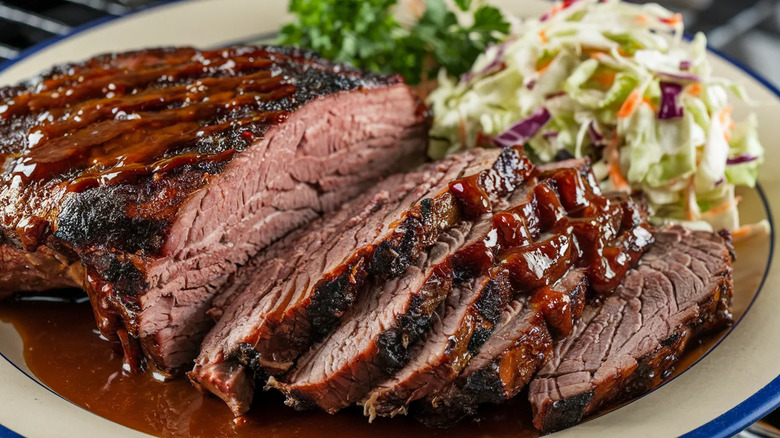
You may have witnessed the debate among BBQ brisket enthusiasts about whether or not to wrap a brisket. The pit masters that do recommend it offer a tried-and-true technique that involves timing and using the right wrap to suit your tastes. One of the most important aspects of wrapping a brisket is to do it when it reaches the right internal temperature: 165 to 170 degrees Fahrenheit.
If you're cooking at the best temperature for a juicy brisket, which is about 225 degrees Fahrenheit for 1 ½ hours per pound, wrapping the brisket at the 165 to 170 degree internal temperature range will prevent "the stall," though each piece of meat may vary slightly. When the stall occurs, the meat stops cooking and cools down because of moisture on meat's surface that evaporates. This can take place for hours if you don't wrap the meat. Wrapping insulates it from the smoke's heat, so you can increase the temperature of your smoker, which will keep the brisket cooking without drying it out.
Wrapping at the optimal temperature creates the right conditions for moisture to be retained. If you wrap the brisket when it's too hot, the meat will probably dry out, and can potentially develop a blackened, bitter bark. In addition, when following the most useful guidelines for preparing a tender, smoked brisket, one suggestion is that wrapping the meat too early can steam the bark, making it soggy. Be aware that there are caveats even when wrapping a brisket properly, so additional variables need to be worked out to obtain the most desirable results.
More variables to consider when wrapping a brisket
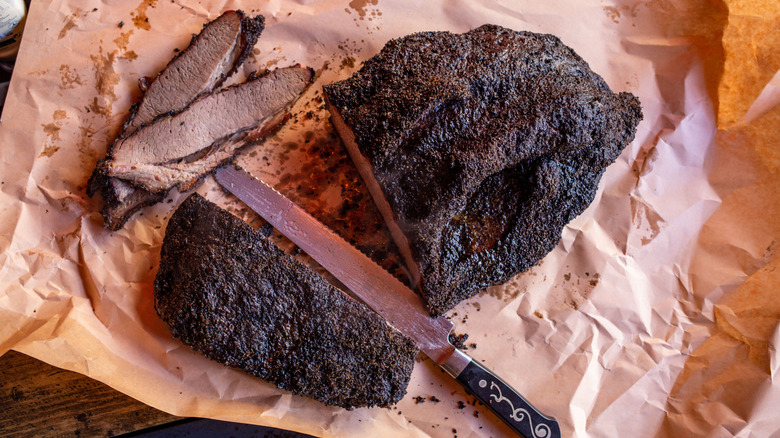
One thing to consider is when evaporation from the surface of the brisket begins to stop the cooking process, it can affect the formation of the bark; moisture from the wrap can soften the bark and affect its appearance. The desired look and feel is a mahogany-colored crust that has been infused with flavor from the Maillard reaction, which creates the aromas and flavors of cooked meat. When the wrapped brisket has been cooked to the expert-recommended 202 degrees Fahrenheit, remove the wrap and cook the brisket at about 225 degrees Fahrenheit or higher for about 30 to 40 minutes to re-crisp the bark.
In addition, wrapping the brisket keeps wood smoke away from the meat, which can make the brisket's flavor less smoky. However, as the brisket absorbs smoke for the first few hours of cooking, you will only lose a small amount of that overall flavor. Another practice you'll find being debated among pit masters is whether to wrap brisket in foil or butcher paper. Using the wrong BBQ wrap will make your bark soft instead of crisp, so many cooks recommend using peach- or pink-colored varieties of butcher paper, which indicates it's unbleached. This porous butcher paper allows steam to escape, unlike foil, which lets the smoky flavor into the wrapped meat and maintains crispness. Advocates of the "Texas Crutch" prefer foil, which makes the meat incredibly juicy. Whatever method you prefer, waiting for the right time and temperature to wrap your brisket will help you prepare a mouthwatering, tender meal.