

The Wrong BBQ Wrap Is Turning Your Bark Soft Instead Of Crisp. Here's The Fix
We may receive a commission on purchases made from links.
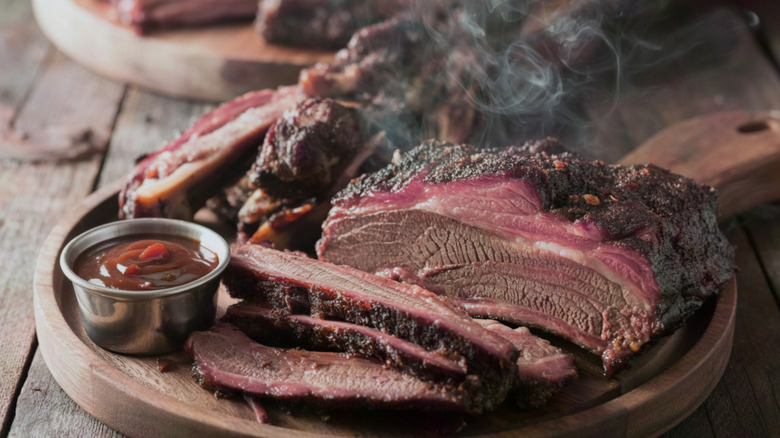
Part of the appeal of barbecued meat is its combination of juicy interior, smoky essence, and a crispy crust. Chefs often endeavor to develop these qualities to perfection, and a crisp bark can define the dining experience. So, while brisket is considered the most difficult cut of barbecue to get right, you can reach this coveted state by using proven techniques to make sure you're not unintentionally softening the outer bark.
There are a number of mistakes that will ruin a brisket's texture. To make the best barbecue brisket, many pitmasters recommend wrapping the brisket to create juicy, tender meat. One method is known as The Texas Crutch, in which pitmasters use foil to wrap meat. While this helps the beef to become incredibly tender and shortens cooking time by retaining heat, it also encourages moisture to accumulate on the outside of the beef, which softens the beef's outer layer and makes the bark soggy. This can make your barbecue taste more like a smoke-flavored roast.
To create a crispy bark, use what professional chefs call peach paper, which is actually a peach- or pink-colored variety of steak paper, also called butcher paper. The color is present because it's an unbleached, natural paper. It's treated by adding sizing, a vapor barrier that forms the wet strength of the paper, so it doesn't disintegrate when it becomes moist. Peach paper also allows steam to escape because it is porous, unlike foil. This allows smoky flavor into the wrapped meat, while releasing the steam encourages the moisture to dissipate, crisping up the exterior.
How to wrap barbecue for flavor and crispy bark
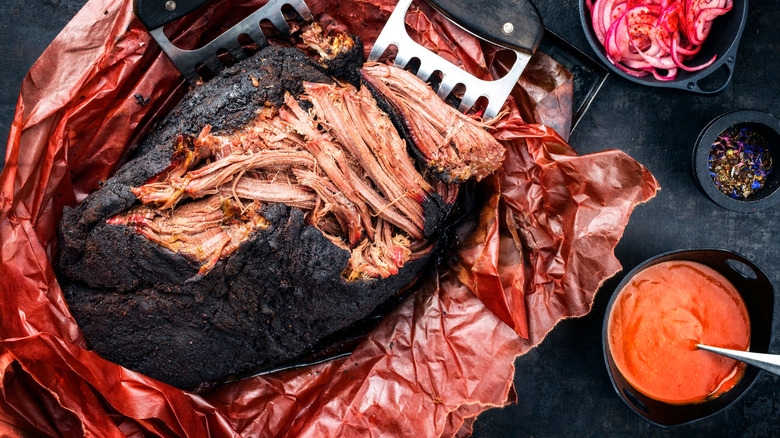
Wrapping barbecue at the right time will encourage it to develop robust flavor, tenderness, and a crispy bark. The best temperature to wrap meat is between 160-170 degrees Fahrenheit, or when about 25% of the cooking time remains. At this temperature, moisture begins to evaporate from the meat, and a phenomenon called the stall occurs, during which the meat's temperature plateaus. Wrapping the meat in pink paper allows the moisture to escape, shortening the stall period and tenderizing the meat. Keeping pink paper wrapped around the meat loosely allows more even moisture to escape and helps to make the sought-after perfect bark. If you're striving to make barbecue that can stand up to some of the best barbecue brisket across the U.S., using pink paper along with the best cooking practices may bring you close.
If you plan to use pink paper for your barbecue, make sure it's an FDA food-grade product to avoid chemicals and other things you don't want touching your food. In addition, since there are many kinds of steak paper, use a variety that's made for heat, as there are varieties made for the freezer as well. To really optimize your use of pink paper, consider using it as a prep surface to get your meat ready, and purchase an attractive brand on which to serve your barbecue. If you're searching for pink paper on Amazon, consider the $20, 18-inch-by-175-foot roll of Bryco Goods Pink Butcher Paper.