

What Are Dino Ribs And How Do They Compare To Pork Ribs?
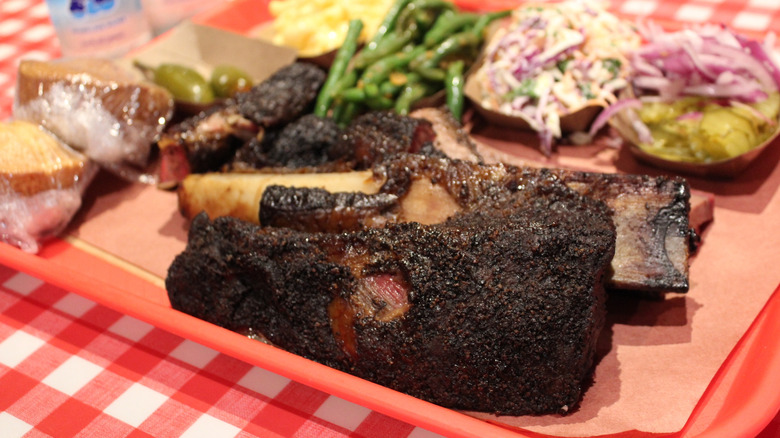
When we think of ribs, we might picture a thick slab of tender meat coated in barbecue sauce. But have you ever considered that not all ribs are created equal? There are plenty of variations, from baby back ribs to spare ribs, and short ribs to plate ribs. The latter — plate ribs, that is — are also often referred to as dino ribs because of their massive size. And they differ greatly from the typical pork ribs you might find at your favorite barbecue joint.
The most obvious difference between dino ribs and pork ribs is that they come from two different animals. Pork ribs, as the name suggests, come from pigs. Dino ribs come from cows. Dino ribs are more comparable to short ribs than pork ribs because they're thick, robustly flavorful, and tender beef ribs that take plenty of time to cook. If you're unsure whether to serve pork ribs or dino ribs at your next barbecue, consider the differences between the two and what it takes to prepare each, including the time and cost.
Dino ribs are expensive and large
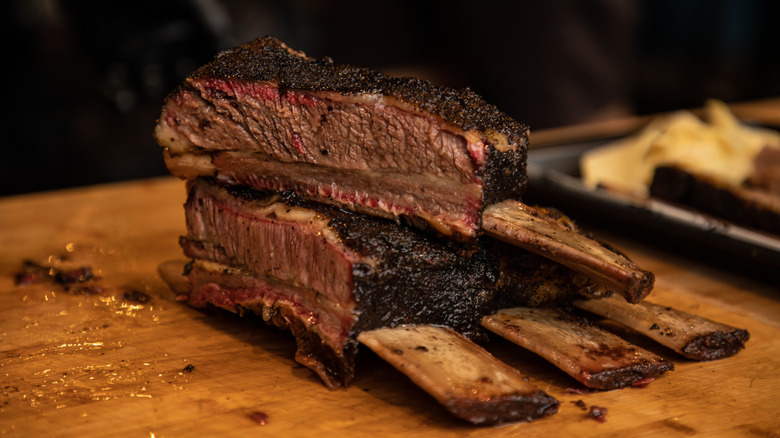
When you picture a typical slab of barbecue ribs, you're likely picturing about a dozen bones — enough to serve two people. But dino ribs only have about three to four bones per rack due to their massive size (which is also how they earned the nickname "dino ribs"). A single rack of dino ribs can weigh up to 8 pounds, and while some of that is bone, a lot of it is meat. To wit: A single four-rib slab can serve up to six people.
Dino ribs are tender and full of rich, marbled fat; they come from right below the ribeye on a cow, which explains their marbling. And when given the time to cook properly, they're delicious. You want them to reach an internal temperature of around 200 degrees Fahrenheit to create the most tender meat, so depending on the cooking method, they can take up to eight hours to cook. Importantly, they are expensive. If you're hosting a large party, dino ribs probably aren't the best cut to serve due to both cost and cook time. While prices will vary depending on the cow and where you buy them, a 4-pound rack could cost anywhere from around $36 at local markets around the Gulf Coast to more than $80 from specialty online suppliers. Plus, since they're more of a specialty cut that isn't as easy to find at a standard grocery store, you might have to make a special trip to the butcher.
What's the difference between dino ribs and pork ribs?
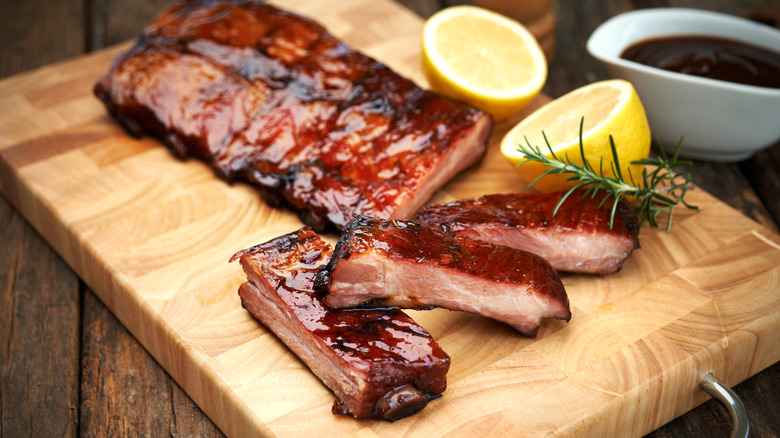
The biggest difference between pork and dino ribs (besides the animal) is their size. A slab of St. Louis pork ribs might contain around a dozen ribs, and all of those combined might only weigh between 2 and 3 pounds. You'd need around 20 St. Louis pork ribs to equal the weight of one rack of dino ribs. A slab of baby back ribs, which are slightly leaner than St. Louis ribs, also weighs about 2 to 3 pounds.
Pork ribs offer more bang for your buck than dino ribs, and they don't take as much time to cook, making them a more forgiving choice for an easygoing backyard barbecue. A slab of baby backs from your local grocery store might cost around $3.79 per pound (on the East Coast, at least), so for a 3-pound rack, you're looking at about a third of the price of a rack of dino ribs.