

What Happens When You Render Fat?
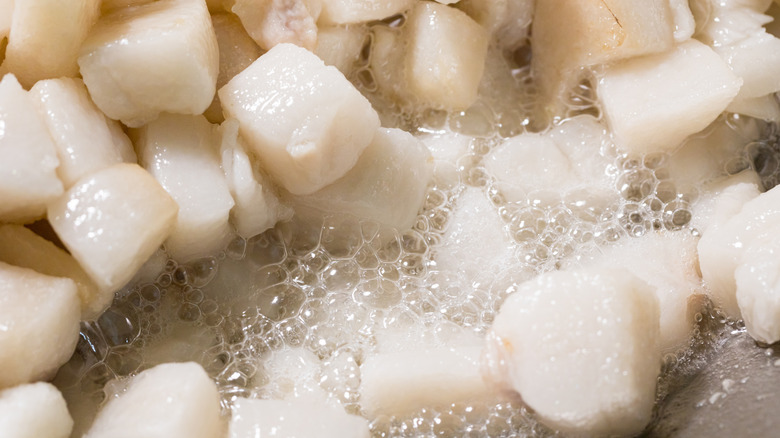
If you peruse recipes for savory dishes with any regularity, chances are, you've encountered some that use rendered fat as an ingredient. Rendered fat is what you get when you heat animal fat, extracting the moisture to create a shelf-stable, flavor-boosting addition to your dishes. But what exactly happens during the rendering process?
When fat is cooked, the natural water the meat contains dissipates, while the applied heat breaks down connective tissues, creating small, crunchy pieces. The connective tissues are the culprits behind rendered fat, which is the bright-hued "golden liquid" that seeps out from these pieces. However, rendered fat is only achieved when you cook meat low and steady for a long time, to minimize the risk of burning. The process can take up to nine hours, though the overall timeframe depends on different factors — including how much fat the meat contains as well as the temperature you cook it at.
At first try, it might be a bit tricky to determine if you've finished rendering the fat. Fortunately, there are signs to look out for, like the fat shrinking compared to its original size, which happens slowly as it heats. The golden color of the rendered fat is another telltale sign, but that can only be found when dry rendering, where you don't add water to the meat as it heats. Whether you're rendering beef fat in a slow cooker or yielding one from bacon in a pan, there are many reasons why it's worth all the effort, and it's not just about the flavor.
Why you should render fat
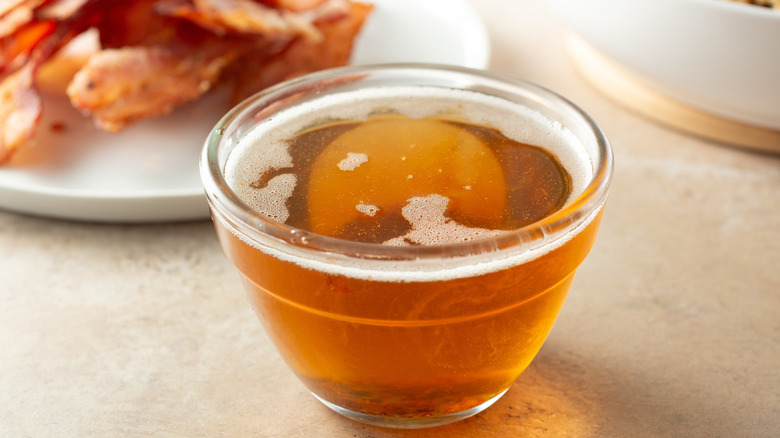
There are many reasons why people swear by rendered fat. For one, it adds richness and complexity to any dish — which is why some people use beef tallow for cooking. Rendered fat also creates a delightfully crispy texture on whatever you cook in it. When using it for fried chicken, you'll bite into a crisp outer layer, while the center remains juicy and soft. It's the same case when you cook fried eggs in bacon grease rather than butter. The yolk will stay soft and runny, while the fringe will produce a nice, satisfying crisp. As such, rendered fat is a common frying companion, thanks to its high smoke point and stable shelf life.
Another bonus is that using rendered fat can save you a few bucks. Rendering fat will take some time, sure, but it also won't cost you anything if you save animal fat from other dishes you make. Rendered fat can also last you for over a year in the fridge, making it a handy kitchen ingredient that you can just grab anytime you need a flavor boost. So, even the long hours it takes to make it will pay off.