

Don't Buy Baby Back Ribs Until You Check For This — It Could Ruin Your Meal
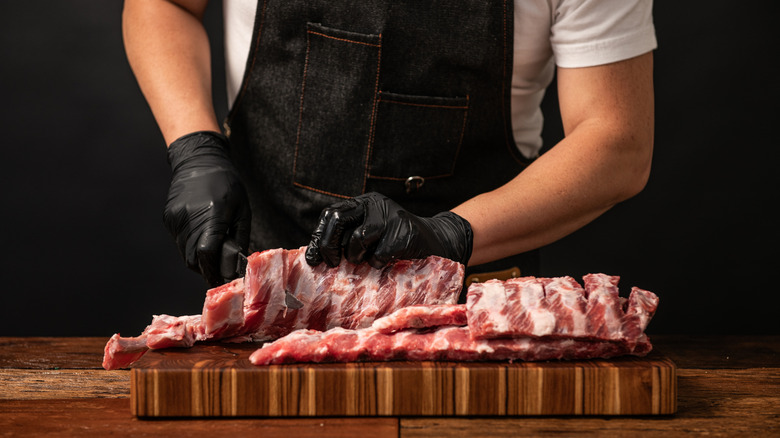
As the iconic 1990s Chili's commercial goes, "I want my baby back/baby back/baby back/Chili's baby back ribs ..." It's one of those classic old-school jingles that instantly gets stuck in your head, even if you haven't heard it in decades. But while baby back ribs — from Chili's or otherwise — are known for being tasty and tender, not every rack is worth adding to your cart. (And there are certainly some other cuts of ribs worth prioritizing, especially if you're budget-conscious.)
When shopping for a slab of baby back ribs, you'll always want to give them a once-over and check in particular for points of exposed bone. These are known as "shiners." You're probably purchasing the ribs in anticipation of a succulent, meaty meal — not one where you're struggling to get the barest bite of meat off of what is mostly bone — so you'll want to leave ribs with shiners on the shelf.
A shiner doesn't mean there's necessarily an issue with the meat itself; rather, it's a sign that it hasn't been ideally processed: The butcher cut the ribs too close to the bone. Not only does this result in a less flavorful meal, but it could also cause difficulties when cooking, as the meat will likely fall off the bone during the process (and not in a good way). Even if the ribs remain intact, the thinner layer of meat associated with shiners makes them more likely to dry out, resulting in a disappointing meal anyway.
What to do if your ribs have shiners
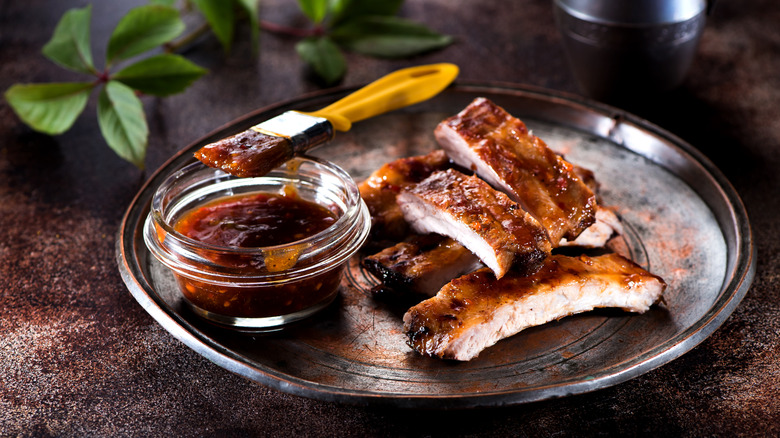
Even if you know to avoid shiners, some barbecue enthusiasts have reported finding hidden shiners in the middle of a multi-pack of ribs. So there may come a time that you find yourself with shiner-riddled ribs on your kitchen counter, no matter how carefully you check your meat. While this is annoying, it doesn't mean you can't still enjoy a delicious meal. Just be extra-careful during the cooking process to make sure the ribs don't dry out. For example, don't try to cook them too fast, or at too high of a temperature.
Experts agree that patience is a virtue when it comes to cooking ribs. Use a thermometer to judge when the ribs have reached the optimal temperature so you don't risk overcooking them. Finally, don't rush to eat your ribs right away; rather, let them rest about 10-15 minutes before slicing into them. Not only does this make the meat easier to cut, it gives the muscle fibers a chance to "relax" after cooking, allowing the moisture to flow back through the meat rather than seeping out onto the counter.
Besides shiners, there are a couple other things you'll want to avoid when buying ribs. If the edges of the ribs look dry on the shelf or if the fat is yellowish instead of white, opt for a different package. While yellow fat in beef may simply be a sign of a grass-fed diet, yellow fat in pork could indicate that the meat is oxidizing and isn't as fresh as it could be. This doesn't mean the meat is unsafe, but it does mean you can likely get a better quality meal from a fresher rack.